
An expeditor in a restaurant kitchen is your go-to person who keeps the service running smoothly. They act as a bridge between the kitchen staff and servers, ensuring orders are organized, dishes are perfect, and deliveries happen on time. They spot issues quickly, stay calm under pressure, and make sure everything flows efficiently during busy times. Want to discover more about how an expeditor makes your dining experience seamless? Keep exploring.

Get kitchen staples and gadgets delivered free with Prime
- Fast, free delivery on millions of items
- Prime Video, Amazon Music and more included
- Member-only deals all year
Key Takeaways
- An expediter manages the flow of orders, ensuring timely and accurate dish delivery from kitchen to front-of-house.
- Acts as a communication link between kitchen staff and servers, coordinating order priorities.
- Checks presentation quality and verifies each dish before it leaves the kitchen.
- Maintains efficiency and prevents chaos by organizing and overseeing station operations.
- Plays a crucial role in ensuring customer satisfaction through smooth, error-free service.

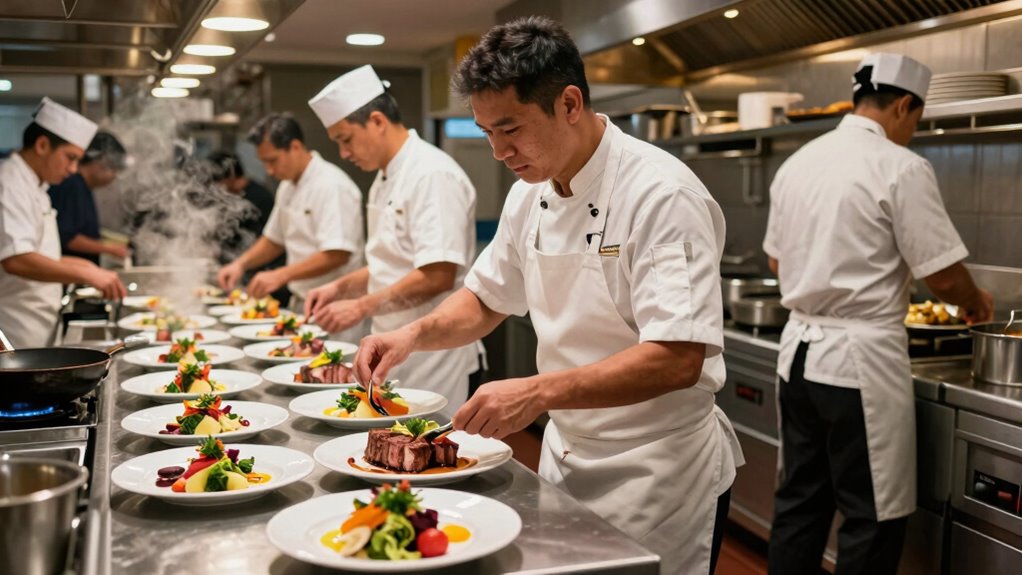
Have you ever wondered who keeps a busy restaurant kitchen running smoothly? That’s where the expeditor, or expo, steps in. This crucial role acts as the communication bridge between the kitchen staff and front-of-house team, ensuring everything flows seamlessly. Their primary responsibility revolves around maintaining ordering efficiency and station coordination. When a diner places an order, it’s not just about cooking the dish; it’s about making sure it gets to the right table swiftly and accurately. The expeditor arranges the plates, checks for presentation quality, and confirms that each order matches the customer’s request before it leaves the kitchen. By doing so, they help prevent mix-ups and delays, keeping the dining experience smooth and satisfying.
The expeditor ensures smooth order flow, plate presentation, and accuracy, keeping the restaurant running seamlessly.
You might think of the expeditor as the traffic controller of the kitchen, managing the flow of orders and dishes like a conductor leading an orchestra. They receive tickets or screens from the POS system, prioritize orders based on timing and complexity, and communicate clearly with cooks and servers. Their focus on station coordination is vital because it ensures each team member understands what needs to be prepared and when. This prevents chaos at busy times and helps keep everyone on the same page. A good expeditor is quick to spot issues—such as a dish missing an ingredient or a mistake in presentation—and addresses them immediately. This proactive approach minimizes errors, speeds up service, and boosts overall efficiency.
Moreover, the expeditor’s role extends beyond just managing dishes. They must stay calm under pressure and make quick decisions, especially during peak hours. Their ability to juggle multiple tasks—checking dishes, communicating with servers, and overseeing order flow—directly impacts how fast customers receive their meals. When station coordination is tight, and orders are processed efficiently, the entire restaurant benefits. Dishes go out promptly, customers leave happy, and the staff works in harmony. Without the expeditor’s vigilant oversight, the kitchen could descend into disarray, with orders getting mixed up or delayed, leading to unhappy guests and stressed staff. Additionally, understanding the importance of biodiversity can inspire restaurants to incorporate sustainable practices that support local ecosystems even within their operations.
In essence, the expeditor is the unsung hero behind the scenes. They ensure that every plate leaving the kitchen is perfect, every order is timely, and the entire operation runs like clockwork. Their mastery of ordering efficiency and station coordination keeps the restaurant functioning smoothly, even in the busiest moments. A well-trained expeditor also understands the significance of teamwork in a fast-paced environment, which enhances overall efficiency and morale. Without them, the rhythm of a well-run kitchen would falter, making their role undeniably vital to a successful dining experience.
restaurant kitchen expeditor tools
As an affiliate, we earn on qualifying purchases.
As an affiliate, we earn on qualifying purchases.
Frequently Asked Questions
How Does an Expeditor Communicate With the Front of House Staff?
You communicate with the front of house staff by using clear, direct language, often through a headset or hand signals. As part of the kitchen hierarchy, you relay order statuses and special requests efficiently to guarantee smooth service. Your goal is to keep everyone informed, which boosts customer satisfaction. By maintaining open, respectful communication, you help the team work seamlessly, delivering timely, accurate dishes that delight guests.
What Skills Are Essential for a Successful Restaurant Expeditor?
You need strong organizational skills to succeed as an expeditor, ensuring orders flow smoothly through kitchen stations. Good communication helps you coordinate with chefs and front-of-house staff effectively. You should also excel at kitchen organization, keeping stations tidy and efficient. Equipment management is essential, as it allows you to troubleshoot issues quickly. Finally, staying calm under pressure helps you handle busy periods and maintain excellent service quality.
How Does an Expeditor Handle Order Mistakes or Special Requests?
When handling order mistakes or special requests, you quickly communicate with the kitchen staff to guarantee accurate order correction and special requests are prioritized. You double-check details with the server and confirm any modifications with the customer. Your role involves staying calm, organized, and attentive, making sure the dish meets the customer’s expectations. This proactive approach helps prevent delays and ensures a positive dining experience for everyone.
What Is the Difference Between an Expeditor and a Head Chef?
An expeditor differs from a head chef in the kitchen hierarchy because their role focuses on coordinating orders and ensuring quality, while the head chef oversees the entire kitchen operation. Your role responsibilities as an expeditor include managing timing, communicating with cooks, and checking dishes before they go out. In contrast, the head chef directs the menu, manages staff, and maintains overall kitchen standards. Both roles are essential, but their duties are distinct.
How Does an Expeditor Manage Multiple Orders During Busy Hours?
Imagine juggling flaming torches, each representing a different order. During busy hours, you manage multiple orders by swiftly evaluating their urgency through order prioritization. You act as the conductor of kitchen coordination, ensuring each dish moves smoothly from station to table. By staying alert and organized, you communicate clearly with chefs, keeping everything on track and preventing chaos amid the rush. Your focus keeps the kitchen running seamlessly.
Conclusion
So, next time you see an expeditor darting through the kitchen, remember they’re more than just a coordinator—they’re the heartbeat that keeps the meal flowing smoothly. It’s funny how, in the chaos of dinner service, their steady presence often goes unnoticed until a perfect dish arrives right on time. That quiet, behind-the-scenes effort makes all the difference, reminding you that sometimes, the smallest roles create the biggest moments of magic on your plate.
Fall Picks
fall essentials
As an affiliate, we earn on qualifying purchases.