
Glycol chillers keep beverage lines cool by using a vapor compression cycle. You have a compressor that squeezes refrigerant vapor, raising its temperature and pressure. The refrigerant then releases heat in the condenser and becomes liquid. As it passes through an expansion valve, it cools rapidly before absorbing heat in the evaporator, which chills the glycol. This cooled glycol flows through the lines, maintaining consistent temperature and product quality. If you continue, you’ll discover how each component works together seamlessly.
Key Takeaways
- Glycol chillers use a vapor compression cycle to keep beverage lines cool by circulating a glycol mixture.
- The system compresses refrigerant vapor, which releases heat in the condenser, then cools and expands to absorb heat in the evaporator.
- The evaporator cools the glycol, which then absorbs heat from the beverage lines, maintaining a consistent temperature.
- Sensors and controllers optimize compressor operation for quick response and precise temperature control.
- This process ensures beverages stay at the desired temperature, preventing overheating or freezing and ensuring product quality.
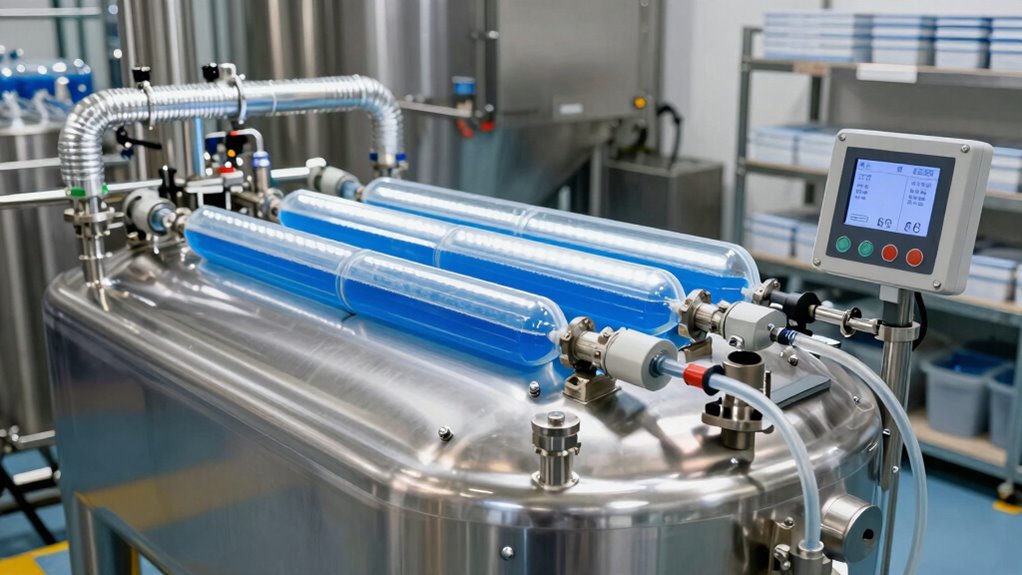
If you’re looking to keep your industrial processes or HVAC systems running smoothly, glycol chillers are an indispensable tool. These systems help maintain precise temperature control, which is crucial in many applications, especially in beverage line cooling. At their core, glycol chillers use a vapor compression cycle to efficiently transfer heat away from the liquid that cools your products or environment. Understanding how this process works can help you troubleshoot, optimize, and better appreciate the technology behind beverage cooling systems.
Glycol chillers utilize vapor compression to precisely control temperature in beverage cooling applications.
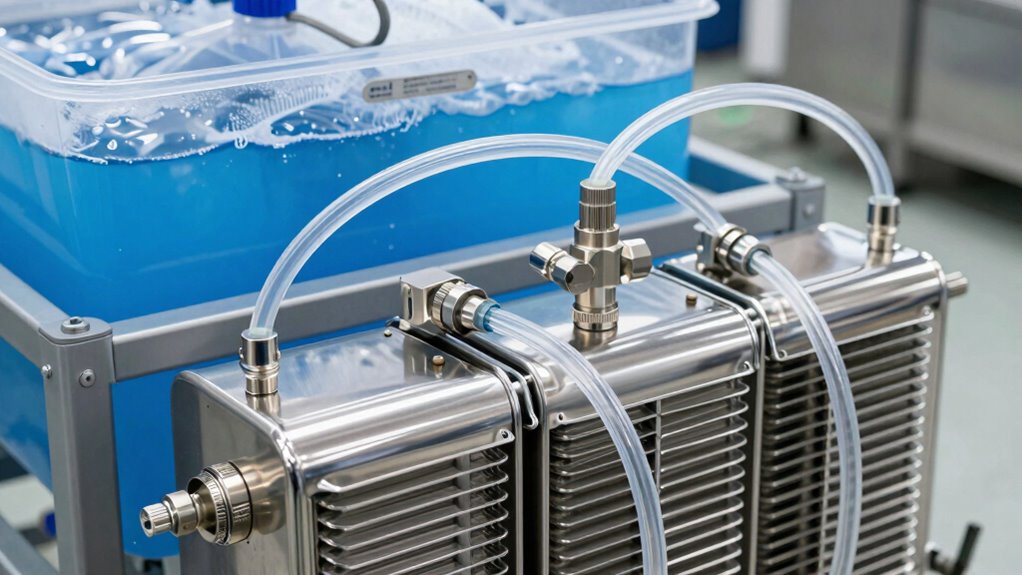
The vapor compression cycle is the backbone of most glycol chillers. It involves four main components: a compressor, condenser, expansion valve, and evaporator. The compressor compresses refrigerant vapor, raising its temperature and pressure. This hot, high-pressure vapor then travels to the condenser, where it releases heat to the surrounding environment and condenses into a high-pressure liquid. From there, the refrigerant passes through the expansion valve, where its pressure drops suddenly, cooling it considerably. This cold, low-pressure refrigerant then enters the evaporator, which is immersed in the glycol loop. As the refrigerant evaporates, it absorbs heat from the glycol, effectively lowering its temperature.
This cycle is continuous, providing a reliable means of temperature regulation. As the glycol circulates through the beverage lines or cooling coils, it absorbs heat from the product or environment, then returns to the chiller to be cooled again. Because vapor compression systems can be precisely controlled, you can maintain consistent temperatures, which is critical for quality and safety in beverage production. The ability to fine-tune the compressor’s operation or adjust refrigerant flow ensures your cooling system responds quickly to changing conditions, preventing overheating or freezing.
Furthermore, the efficiency of vapor compression systems means you can achieve effective cooling without excessive energy consumption. Modern chillers incorporate sensors and controllers that monitor temperature levels and adjust compressor activity accordingly, optimizing performance. This precise temperature regulation not only improves product quality but also reduces operational costs. Whether you’re managing a small craft brewery or a large beverage manufacturing line, understanding the vapor compression process helps you select the right chiller capacity and troubleshoot issues before they impact production.
Frequently Asked Questions
How Often Should Glycol Solutions Be Replaced?
You should replace glycol solutions every 1 to 2 years, depending on usage and maintenance. Regularly check glycol concentration and pH stability, as these are essential for peak performance. If the concentration drops or pH becomes unstable, it’s time for a replacement. Properly maintaining your glycol solution ensures efficient cooling and prevents corrosion, extending the lifespan of your beverage line system.
What Are Common Signs of Chiller Failure?
If your chiller starts making loud compressor noise, it’s a warning sign of potential failure. For example, a restaurant noticed increased noise and refrigerant leaks, which indicated a failing compressor. Common signs include unusual noises, refrigerant leaks, and temperature inconsistencies. These issues suggest that your glycol chiller might need maintenance or repair before it completely breaks down, ensuring your beverage line stays properly cooled.
Can Glycol Chillers Operate in Extreme Temperatures?
Yes, glycol chillers can operate in extreme temperatures, thanks to their temperature tolerance features. They’re designed to handle a wide range of conditions, ensuring your beverage lines stay cool even in harsh environments. However, operating outside their specified temperature range can increase environmental impact and reduce efficiency. Always check the manufacturer’s guidelines to maintain peak performance and minimize environmental footprint when using glycol chillers in extreme temperatures.
Are There Environmentally Friendly Glycol Options?
Think of eco friendly glycol as the gentle river that sustains a thriving ecosystem. Yes, there are biodegradable coolants designed to reduce environmental impact. These environmentally friendly glycol options, like biodegradable coolants, break down naturally without harming the planet. They offer a sustainable alternative, helping you run your cooling systems responsibly. By choosing eco friendly glycol, you effectively protect the environment while maintaining efficient beverage line cooling.
What Maintenance Is Required for Optimal Performance?
To keep your glycol chiller running at its best, regularly check the glycol concentration to prevent freezing or corrosion. You should also perform system calibration periodically to ensure accurate temperature control. Clean the coils and filters to maintain efficiency, and inspect for leaks or wear. Proper maintenance extends equipment lifespan and ensures consistent cooling, so stay proactive and follow your manufacturer’s recommended service schedule.
Conclusion
Now that you understand how glycol chillers work, you’re armed with the secret dance behind beverage cooling. Like a steady heartbeat, the system keeps your drinks perfectly chilled, turning chaos into calm. With this knowledge, you can confidently manage your setup, ensuring every sip is just right. Think of glycol chillers as the silent maestro, orchestrating coolness in harmony. Stay cool, stay confident, and let the chill flow effortlessly through your line.