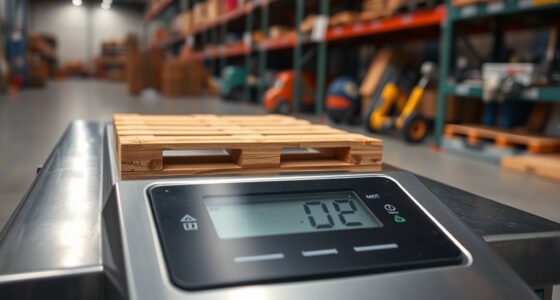
Holding capacity is about how much inventory or work-in-progress your system can store or handle at once, while throughput focuses on how many units or tasks you complete in a given time. You need to balance both: increasing capacity without improving throughput can lead to excess stock, and boosting throughput without enough capacity can cause delays. To optimize operations, understanding these differences helps you avoid inefficiencies—learn more about how to manage and align them effectively.

Get kitchen staples and gadgets delivered free with Prime
- Fast, free delivery on millions of items
- Prime Video, Amazon Music and more included
- Member-only deals all year
Key Takeaways
- Holding capacity refers to the maximum inventory or work-in-progress a system can store or handle; throughput measures how many units are processed in a given time.
- Holding capacity focuses on storage limits, while throughput emphasizes processing speed and operational efficiency.
- Increasing holding capacity without improving throughput can lead to excess inventory and higher costs.
- Optimizing throughput involves streamlining processes to increase the number of completed units or tasks efficiently.
- Balancing both ensures inventory levels match processing capacity, preventing bottlenecks and operational inefficiencies.
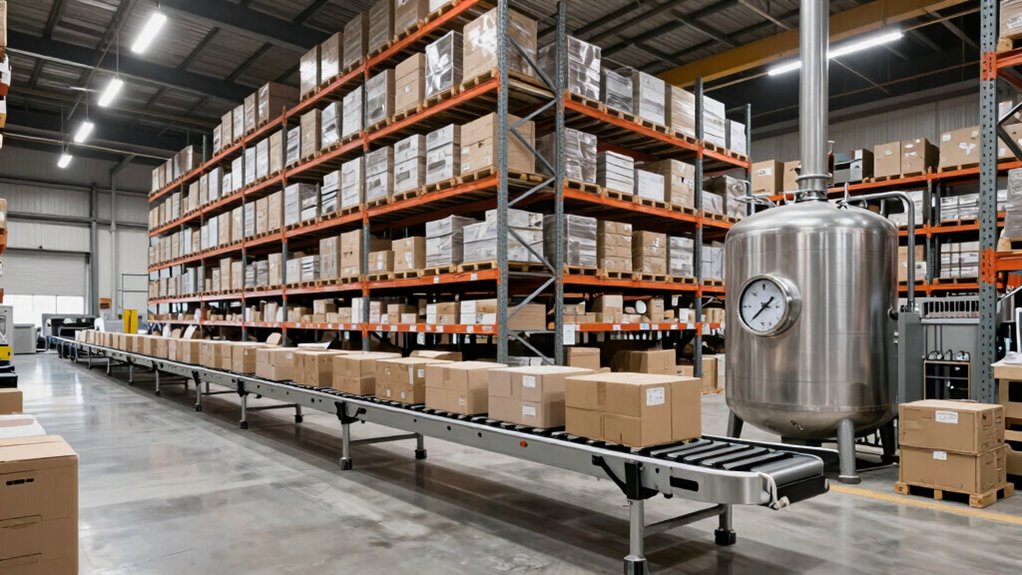
Understanding the difference between holding capacity and throughput is essential for optimizing any process or system. These concepts are critical in areas like inventory management and process optimization, where efficiency directly impacts your bottom line. Holding capacity refers to the maximum amount of inventory or work-in-progress items your system can store or handle at any given time. It’s about how much your operation can physically or practically hold without causing delays or disruptions. Throughput, on the other hand, measures how many units or tasks your system can complete within a specific period. It’s about the speed and efficiency of your process—how quickly you can convert inputs into finished products or services.
If you confuse these two, your efforts to improve your operation might fall flat. For instance, increasing holding capacity without improving throughput can lead to excess inventory, higher storage costs, and potential bottlenecks. Conversely, focusing solely on throughput without considering holding capacity might cause your system to become overwhelmed, leading to delays, quality issues, or even system failure. To truly optimize your process, you need to balance both. This means understanding how much inventory your system can handle comfortably and how fast it can produce or process items without sacrificing quality or incurring unnecessary costs.
Effective inventory management hinges on this balance. When you know your holding capacity, you can set appropriate stock levels, avoid overstocking, and reduce waste. Improving process optimization involves analyzing your throughput and identifying ways to streamline operations, eliminate bottlenecks, and increase output. By doing so, you guarantee your system runs smoothly and efficiently, meeting demand without excessive inventory buildup. Additionally, recognizing system limitations can help prevent overextension and ensure sustainable growth. Incorporating capacity planning strategies can further enhance your ability to adapt to changing demands and avoid system overloads. Moreover, understanding these concepts can help in making data-driven decisions that optimize overall operational performance.
It’s important to recognize that increasing throughput doesn’t always mean you should push the system harder. Sometimes, it involves refining workflows, upgrading equipment, or implementing better scheduling. Similarly, expanding holding capacity might require investing in larger storage or better layout planning. The key is to align these two factors so that your system remains agile and responsive, minimizing idle time and maximizing productivity.
Ultimately, understanding the difference between holding capacity and throughput helps you make smarter decisions. Whether you’re managing inventory levels or process flow, keeping these concepts clear ensures that your operations are both cost-effective and capable of meeting customer demands. When you strike the right balance, you’ll find your processes become more streamlined, your inventory costs decrease, and your overall efficiency improves markedly.
As an affiliate, we earn on qualifying purchases.
Frequently Asked Questions
How Do Holding Capacity and Throughput Impact Overall System Efficiency?
Holding capacity and throughput directly influence your system efficiency by shaping inventory management and process optimization. Higher holding capacity allows you to store more items, reducing delays, while increased throughput speeds up production, minimizing bottlenecks. Balancing both guarantees smooth operations, reduces costs, and boosts overall productivity. When you optimize these factors, you can meet demand more effectively and improve your system’s performance, leading to better customer satisfaction and competitive advantage.
Can Holding Capacity Be Increased Without Affecting Throughput?
Sure, you can increase holding capacity without affecting throughput, but it’s a delicate dance. Ironically, storage optimization and capacity expansion often seem like simple fixes, yet they can complicate flow if not managed wisely. By carefully optimizing storage and selectively expanding capacity, you maintain your system’s speed while holding more. The trick is balancing these two, ensuring that increasing storage doesn’t unintentionally slow down your throughput.
What Industries Most Commonly Analyze Holding Capacity Versus Throughput?
You’ll find that industries like manufacturing, logistics, retail, and healthcare most commonly analyze holding capacity versus throughput. In inventory management and supply chain operations, understanding this helps optimize stock levels and processing speeds. By examining these metrics, you can identify bottlenecks, improve efficiency, and balance inventory with demand. This analysis guarantees smoother workflows and better resource allocation, ultimately boosting overall productivity and customer satisfaction.
How Does Technology Influence Holding Capacity and Throughput?
Imagine technology as a skilled conductor guiding an orchestra—your inventory management and process optimization. It streamlines operations, boosts holding capacity by accurately forecasting demand, and accelerates throughput by reducing bottlenecks. Advanced automation and real-time data act like a compass, helping you adjust resources swiftly. In doing so, technology transforms your system into a well-coordinated symphony, maximizing efficiency while ensuring you can hold enough inventory to meet customer needs without overstocking.
Are There Trade-Offs Between Maximizing Holding Capacity and Throughput?
Yes, there are trade-offs between maximizing holding capacity and throughput. When you focus on storage optimization, increasing holding capacity may slow down throughput because more items are stored, making retrieval less efficient. Capacity constraints force you to balance between holding enough inventory and maintaining quick processing. To optimize, you need to carefully manage storage space and workflow, ensuring neither holding capacity nor throughput is compromised excessively.
Conclusion
Understanding the difference between holding capacity and throughput is like tuning a finely crafted engine—you need both to run smoothly. Holding capacity is your reservoir, storing potential, while throughput is the engine’s power, driving progress forward. When you balance these two, you guarantee your system flows like a well-oiled machine, maximizing efficiency without risking bottlenecks. Mastering this harmony lets you navigate complex processes with confidence, turning potential into real-world success.
NFL season / tailgating Picks
team gear
As an affiliate, we earn on qualifying purchases.