

Menu rationalization means you’re reviewing and refining your menu to boost efficiency, reduce costs, and improve customer satisfaction. You identify popular dishes, analyze ingredients for profitability, and eliminate or modify less successful items. This process simplifies kitchen prep, speeds service, and helps control inventory. By focusing on well-performing offerings, you guarantee better resource use and higher profits. Keep exploring to discover how this strategy can transform your restaurant’s operations and customer experience.

Get kitchen staples and gadgets delivered free — and shop member deals
- Fast, free delivery on millions of items
- Access to Prime Big Deal Days deals on October 6–7
- Prime Video, Amazon Music and more included
Key Takeaways
- Streamlining menu items to focus on popular, profitable dishes and eliminate underperformers.
- Analyzing sales data and customer feedback to optimize menu offerings.
- Simplifying kitchen operations by reducing ingredient variety and preparation complexity.
- Improving cost control and profitability through strategic menu adjustments.
- Enhancing customer satisfaction and sustainability by aligning menu with trends and eco-friendly practices.
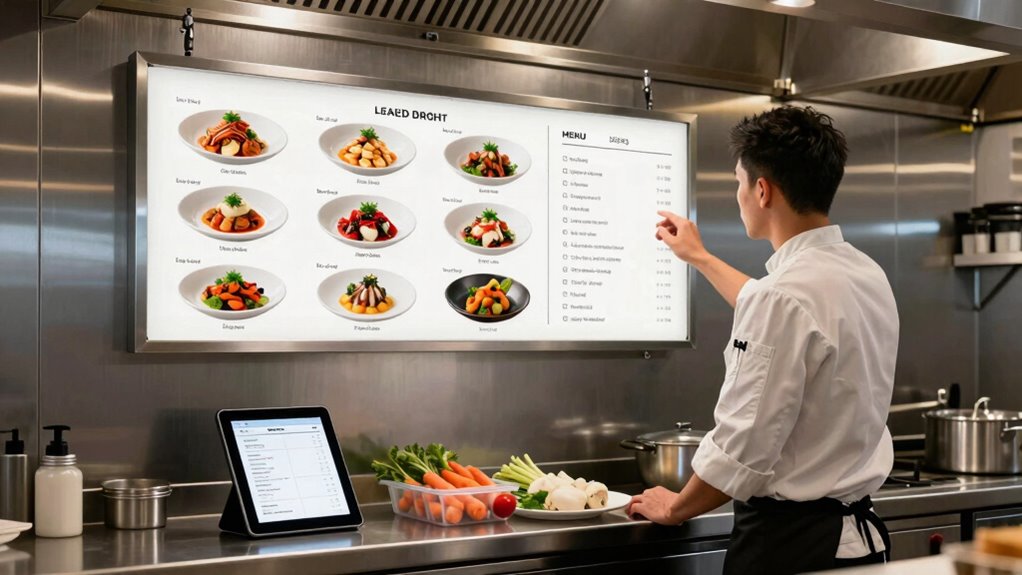
Menu rationalization has become a pivotal strategy for restaurants aiming to streamline operations, reduce costs, and enhance customer satisfaction. When you hear about this process, it’s all about carefully reviewing your menu to identify which items truly resonate with your customers and which don’t. You’ll conduct ingredient analysis to understand the cost, complexity, and profitability of each dish. This involves examining the ingredients used, how often each dish is ordered, and how well it aligns with your restaurant’s overall concept. The goal is to eliminate or modify items that don’t perform well or that require costly or complicated ingredients, freeing up resources to focus on your most popular offerings. Incorporating product comparisons can help you choose the best ingredients and suppliers for your menu.
Menu rationalization helps streamline operations and focus on customer favorites to boost efficiency and satisfaction.
Understanding customer preferences plays an essential role in menu rationalization. You need to know what your guests want and expect when they visit. This means paying attention to sales data, gathering feedback, and observing ordering trends. If certain dishes are consistently underperforming, it’s a clear signal to reconsider their place on your menu. Conversely, if some items are flying off the shelves, you’ll want to guarantee they’re featured prominently, possibly expanding their options. By aligning your menu with customer preferences, you make it easier for guests to find what they want, which enhances their overall experience and increases the likelihood of repeat visits. Additionally, considering biodiversity in ingredient sourcing can contribute to a more sustainable and environmentally friendly menu. Incorporating sustainable sourcing practices can also appeal to environmentally conscious customers and bolster your restaurant’s reputation.
Streamlining your menu isn’t just about cutting items; it’s about optimizing the entire offering for efficiency and quality. With ingredient analysis, you can identify ingredients that are used in multiple dishes, allowing you to buy in bulk and reduce waste. Simplifying your menu also means fewer kitchen complexities, which can speed up service times and reduce errors. When you remove unnecessary or redundant dishes, your kitchen staff can focus on perfecting the dishes that matter most, leading to higher quality and consistency. Furthermore, efficient inventory management plays a key role in maintaining a lean operation and minimizing spoilage. This approach can also help prevent overstocking and understocking, which are common issues in restaurant inventory management.
Moreover, menu rationalization can improve your cost control. By analyzing the profitability of each item, you’ll see where to cut or adjust pricing. Removing low-margin dishes or those with expensive ingredients helps you improve your overall profitability. This process also gives you the chance to introduce new, more profitable dishes that better match your target audience’s preferences. In the end, menu rationalization isn’t just about trimming the fat; it’s about creating a smarter, more focused menu that benefits your operation and delights your customers.
restaurant menu analysis software
As an affiliate, we earn on qualifying purchases.
As an affiliate, we earn on qualifying purchases.
Frequently Asked Questions
How Often Should a Restaurant Review Its Menu for Rationalization?
You should review your menu for rationalization every three to six months. Regular menu updates help identify which items aren’t selling well, allowing you to streamline your offerings. During these reviews, focus on ingredient management to eliminate costly or underperforming dishes, reducing waste and improving efficiency. Staying proactive guarantees your menu stays fresh, profitable, and aligned with customer preferences, ultimately boosting your restaurant’s overall performance.
What Metrics Are Best for Evaluating Menu Item Performance?
You should evaluate menu item performance using sales trends and ingredient analysis. Sales trends show which dishes are popular and profitable, helping you identify bestsellers and underperformers. Ingredient analysis reveals cost efficiency and waste levels, guiding you to optimize ingredients and reduce waste. Combining these metrics allows you to make data-driven decisions, streamline your menu, and improve overall profitability by focusing on high-performing, cost-effective items.
How Can Menu Rationalization Improve Overall Restaurant Profitability?
Menu rationalization boosts your restaurant’s profitability by streamlining offerings, reducing ingredient costs, and minimizing waste. You focus on ingredient optimization by removing underperforming items, which simplifies your menu and decreases complexity. This allows you to better manage inventory, speed up service, and improve overall efficiency. As a result, you cut costs and increase sales, leading to higher profit margins while providing customers with a more focused, quality dining experience.
What Are Common Challenges Faced During Menu Rationalization?
You face challenges like maintaining ingredient consistency and managing supplier negotiations during menu rationalization. Ensuring ingredients stay uniform across dishes can be tough, especially with seasonal changes. Negotiating with suppliers for better prices or reliable delivery adds complexity, potentially impacting menu choices. Balancing cost savings while maintaining quality requires careful planning, clear communication, and strong supplier relationships to successfully streamline your menu.
How Does Menu Rationalization Impact Customer Satisfaction?
Menu rationalization can improve your customer satisfaction by streamlining choices, leading to quicker, more enjoyable dining experiences. When you simplify your menu, customers find it easier to pick their favorites, which boosts their loyalty. Plus, focusing on quality over quantity enhances overall dining satisfaction. This thoughtful approach not only keeps customers happy but also encourages repeat visits, strengthening their loyalty and making each dining experience memorable.
Conclusion
As you refine your menu, picture a well-tended garden—each dish a carefully chosen flower, vibrant and purposeful. Removing the overgrown weeds makes space for the brightest blooms, drawing customers in with clarity and quality. With fewer, stronger options, your kitchen becomes a well-oiled machine, serving up freshness and consistency. This thoughtful curation transforms your restaurant into a inviting oasis, where every plate tells a story and every bite leaves a lasting impression on your guests.
NFL season / tailgating Picks
team gear
As an affiliate, we earn on qualifying purchases.







![A Visual Guide To Europe’s Most Popular Olive Oil Varieties, From Koroneiki To Picual [MAP]](https://theuglykitchen.com/wp-content/uploads/2026/10/a-visual-guide-to-europe-s-most-popular-olive-oil-varieties-from-koroneiki-to-pi-featured-260x140.jpg)