If you’re choosing between spiral and planetary mixers, it’s about how they move and develop dough. Spiral mixers rotate a spiral hook at slow speeds, kneading heavy dough evenly and efficiently, which is perfect for bread and pizza. Planetary mixers have a central agitator moving in a planetary motion, handling lighter batters or multiple tasks, but may not develop dense dough as thoroughly. To discover the key differences and how each impacts your baked goods, keep exploring.
Key Takeaways
- Spiral mixers excel at kneading dense, heavy doughs with steady, slow motion for uniform gluten development.
- Planetary mixers are versatile, suitable for lighter batters, creams, and a variety of ingredients, with adjustable speeds.
- Spiral mixers operate at slow speeds to prevent overheating and ensure consistent dough texture; planetary mixers offer speed control.
- For large batches of high-gluten dough, spiral mixers deliver superior dough consistency; planetary mixers are better for diverse, lighter mixes.
- Proper matching of mixer type to dough characteristics enhances product quality and operational efficiency.
Are you trying to decide between spiral and planetary mixers for your baking or manufacturing needs? Understanding how each mixer affects dough consistency and mixing speed can help you make the right choice. Both types are popular in bakeries and food production, but they serve different purposes based on the nature of your ingredients and your workflow.
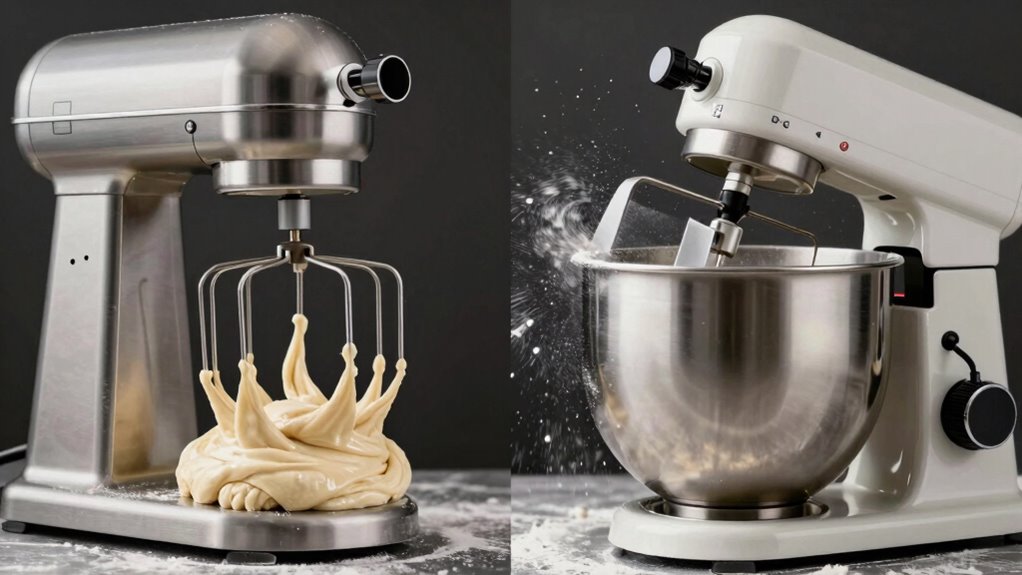
Spiral mixers excel at handling large batches of thick, heavy doughs like bread or pizza. Their design involves a spiral agitator that rotates while the bowl remains stationary or moves in a complementary motion. This setup guarantees thorough kneading without overworking the dough, leading to a consistent dough texture. The spiral’s continuous, steady motion promotes even gluten development, which is essential for achieving the desired dough consistency. When it comes to mixing speed, spiral mixers operate at relatively slow speeds to prevent overheating and to allow the dough to develop properly. This slower pace isn’t a drawback; it’s vital for creating the right dough structure, especially when working with dense or high-hydration recipes.
Spiral mixers ensure thorough kneading with slow, steady motion for perfect dough consistency.
In contrast, planetary mixers feature a central agitator that moves in a planetary motion—rotating on its axis while orbiting around the bowl. This design makes them ideal for mixing a wide variety of ingredients, from batters and creams to doughs that don’t require intense kneading. Because of their versatile motion, planetary mixers can mix at a range of speeds, from slow to fast, giving you greater control over the mixing process. Faster speeds are perfect for incorporating air into lighter batters or whipping ingredients, while slower speeds help develop smoother doughs or emulsions. However, this versatility can sometimes compromise dough consistency if used improperly, especially with dense doughs, which might not be as thoroughly kneaded as in a spiral mixer.
Choosing the right mixer depends on your priorities. If you need to produce large quantities of bread dough with a consistent, well-developed gluten structure, a spiral mixer offers the best dough consistency through its slow, steady kneading action. On the other hand, if your bakery or kitchen creates a variety of products—requiring different mixing speeds and techniques—a planetary mixer provides flexibility, though it may require more attention to achieve ideal dough quality. Additionally, considering the mixing technology can help you select equipment that maximizes efficiency and dough integrity.
Ultimately, understanding how each mixer influences dough consistency and mixing speed lets you optimize your production process. Think about what types of dough you handle most often and how much control you need. By matching your needs to the right equipment, you’ll ensure better results, higher quality products, and more efficient operations.
Frequently Asked Questions
Which Mixer Type Is Best for Gluten Development?
You should choose a spiral mixer for better gluten development because it offers gentle, consistent mixing that enhances dough elasticity. Its slower mixing speed allows gluten strands to form properly without overworking the dough. Unlike planetary mixers, spirals minimize the risk of overmixing, resulting in a better rise and texture. If you’re aiming for ideal gluten development, a spiral mixer is your best choice to achieve strong, elastic dough.
How Do Cleaning Requirements Differ Between Spiral and Planetary Mixers?
You might think cleaning is straightforward, but spiral mixers actually pose more maintenance challenges due to their enclosed gear systems, requiring thorough disassembly and careful cleaning protocols. Planetary mixers are easier to clean because their components are simpler and more accessible, reducing time and effort. Proper cleaning guarantees hygiene and prolongs equipment lifespan, so knowing these differences helps you plan maintenance routines effectively and avoid potential damage or contamination.
Can Both Mixers Handle Large Batch Sizes Efficiently?
Both mixers can handle large batch sizes efficiently, but their mixing capacity varies. Spiral mixers excel at processing bigger batches quickly because of their powerful, continuous operation, making them ideal for high-volume production. Planetary mixers also handle large batches, but their mixing capacity is typically smaller and better suited for versatile, detailed mixing tasks. Your choice depends on your required batch size and the type of mixing needed.
What Are the Energy Consumption Differences?
You’ll find spiral mixers generally more energy-efficient because they require less electricity to operate over time due to their design, which minimizes power consumption during mixing. In contrast, planetary mixers tend to have higher power consumption because they use more intensive motor power for thorough mixing. When comparing electricity efficiency, spiral mixers usually save energy, making them a better choice for long-term operation and lower energy costs.
Are There Specific Dough Types Better Suited for Each Mixer?
You’ll find that spiral mixers excel with dense, high-gluten doughs like bread or bagel dough because they promote better gluten formation and maintain dough consistency. Planetary mixers are more versatile, handling softer, delicate doughs such as pastry or cake batter without overworking the gluten. For ideal results, choose a spiral mixer for sturdy doughs and a planetary mixer for lighter, more delicate mixtures.
Conclusion
Choosing between spiral and planetary mixers can seem tricky, but understanding your needs makes it simple. If you’re worried about handling tough dough, a spiral mixer’s powerful design will be your best friend. Don’t let concerns about size or cost hold you back—think of it as an investment that saves you time and effort in the long run. Whichever you pick, you’ll be confidently creating perfect dough with the right tool in hand.