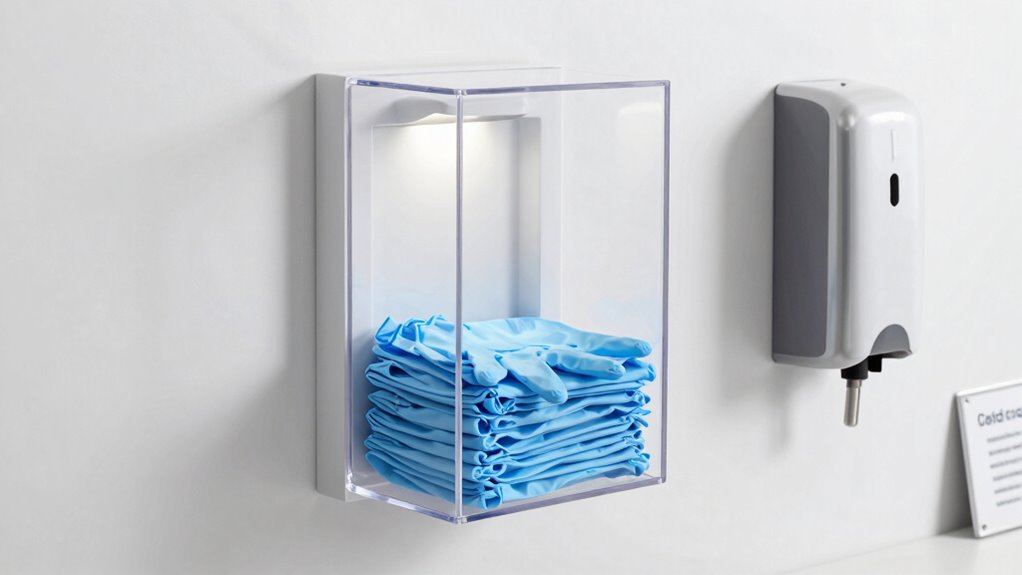

Installing glove dispenser stations is a small change that greatly boosts compliance and infection control. By making gloves easily accessible and visible, you encourage staff and visitors to use them consistently, helping prevent cross-contamination. Proper placement and clear signage make gloves quick to grab, streamlining workflows and reinforcing hygiene routines. This simple setup creates a safety-focused environment, reducing lapses in safety measures. Keep exploring to discover how this tiny change can make a big impact.

Get kitchen staples and gadgets delivered free with Prime
- Fast, free delivery on millions of items
- Prime Video, Amazon Music and more included
- Member-only deals all year
Key Takeaways
- Compact glove dispensers improve accessibility, encouraging consistent use and reducing the time needed to retrieve gloves.
- Clear signage and strategic placement boost staff compliance with hygiene protocols.
- Easy-to-use designs promote frequent glove access, supporting infection control efforts.
- Regular maintenance ensures the dispenser remains stocked, maintaining hygiene standards.
- Small, unobtrusive setups integrate seamlessly into busy environments, fostering a safety-oriented culture.
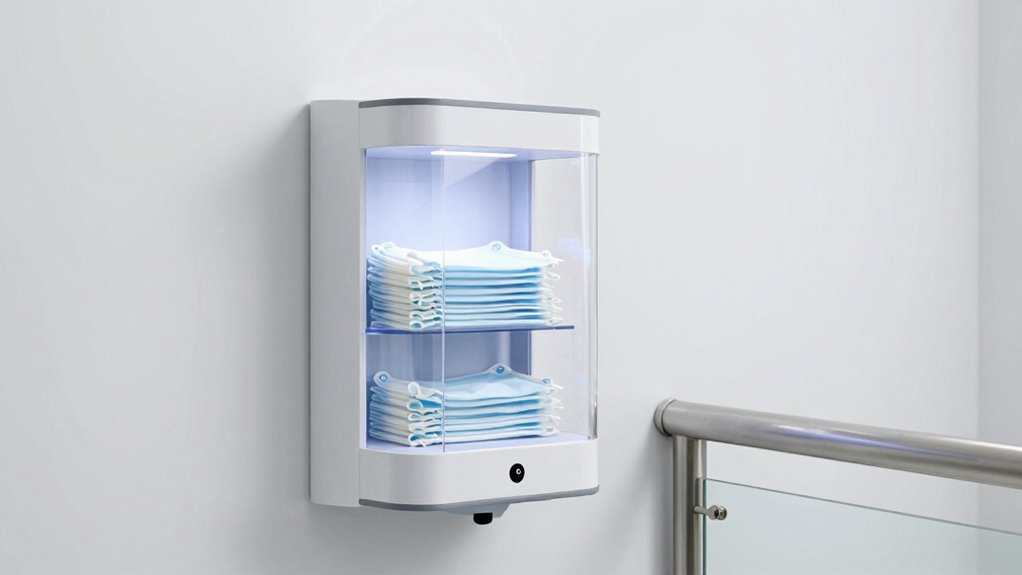
Glove dispenser stations have become indispensable in maintaining hygiene and safety in various settings, from healthcare facilities to food service areas. These small but essential setups play a significant role in promoting proper hand hygiene and strengthening infection control practices. When you have a glove dispenser station in place, it’s easier for staff and visitors alike to access gloves quickly and conveniently. This accessibility encourages consistent glove use, which is critical for preventing the spread of germs and bacteria. By making gloves readily available, you remove barriers that might otherwise cause lapses in infection control, such as forgetting to bring gloves or searching for them in inconvenient locations.
Having a well-placed glove dispenser station also sends a visual reminder of hygiene protocols. It subtly reinforces the importance of hand hygiene and proper glove usage, especially in high-risk environments. When gloves are easily accessible, people are more likely to wear them at the right times, reducing the chance of cross-contamination. This simple setup supports a culture of safety, where infection control becomes part of everyday routines rather than an afterthought. It’s about creating an environment where everyone understands that preventing infection is a shared responsibility, and accessible glove stations are a key component of that effort.
Accessible glove stations reinforce hygiene routines and promote a culture of safety in high-risk environments.
Another advantage of glove dispenser stations is that they help streamline workflows. Instead of staff wasting time searching for gloves or handling contaminated surfaces to retrieve them, they can simply grab a pair from the dispenser. This efficiency not only saves time but also minimizes the chance of contamination during glove retrieval. When gloves are consistently used, the risk of transmitting infectious agents decreases markedly, which is especially critical in healthcare settings where vulnerable populations are present. By reducing unnecessary hand contact with contaminated surfaces, glove dispenser stations directly support better hand hygiene practices and overall infection control measures. Additionally, proper placement and design of these stations can further enhance compliance and ease of use. Proper placement can also maximize accessibility, making it even easier for users to adhere to safety protocols. Creating clear signage and instructions around these stations can further boost user compliance by providing visual cues and guidance. Incorporating user-friendly features such as easy-to-open dispensers and intuitive layouts can further promote frequent glove use. Implementing regular maintenance and restocking routines is also essential to ensure the stations remain effective and appealing to users.
Moreover, these stations can be customized to suit specific needs, whether it’s the size of the dispenser, the type of gloves provided, or the placement within a space. Proper placement ensures maximum visibility and ease of access, encouraging regular glove use. When combined with signage or reminders, a glove dispenser station becomes a powerful tool to boost compliance with hygiene protocols. In tight or busy environments, the convenience of grabbing gloves from a nearby station can be the difference between adherence and neglect. Ultimately, these small setups serve as a tangible reminder that hand hygiene and infection control are priorities, helping you foster safer, cleaner environments with minimal effort.
disposable glove dispenser station
As an affiliate, we earn on qualifying purchases.
As an affiliate, we earn on qualifying purchases.
Frequently Asked Questions
How Often Should Glove Dispenser Stations Be Refilled?
You should refill glove dispenser stations regularly, ideally daily or whenever you notice low stock. Proper glove storage guarantees the gloves stay clean and accessible, while consistent dispenser maintenance prevents jams and malfunctions. By checking your stations frequently, you guarantee they’re always stocked, which boosts compliance and safety. Remember, a well-maintained dispenser encourages proper glove use, so make it part of your daily routine to keep everything stocked and functioning smoothly.
Are Glove Dispensers Suitable for Outdoor Use?
Sure, glove dispensers are perfect for outdoor use—if you enjoy frequent replacements! Their outdoor durability and weather resistance vary, so not all are suited for the elements. You’ll want a dispenser specifically designed to withstand rain, sun, and wind. Otherwise, you’ll find yourself constantly refilling, fighting against the weather’s relentless assault. Choose wisely, or your outdoor glove station may become a fleeting, soggy memory.
What Materials Are Glove Dispensers Typically Made Of?
You’ll find glove dispensers are typically made from durable materials like high-impact plastic, stainless steel, or aluminum. These materials guarantee dispenser durability, especially in high-traffic or outdoor environments. Many manufacturers now focus on material sustainability, using eco-friendly plastics or recycled metals to reduce environmental impact. Choosing a dispenser made from these sustainable materials helps you maintain functionality while supporting environmentally responsible practices.
Can Glove Dispenser Stations Be Customized for Branding?
Think of glove dispenser stations as blank canvases waiting for your branding brushstrokes. Yes, you can customize them for branding, turning them into eye-catching displays. With various branding options and custom design features, you can showcase your logo, colors, or message. This personalization not only boosts your brand visibility but also encourages compliance, making it clear that safety and professionalism are priorities in your space.
How Do Glove Dispensers Prevent Contamination?
You prevent contamination by using glove dispensers that promote proper hand hygiene and contamination control. These stations minimize touch points, so you only grab a single pair of gloves without touching the rest. This reduces the risk of cross-contamination. By encouraging staff to follow hygiene protocols, glove dispensers help maintain a cleaner environment, ensuring gloves are used correctly and effectively, ultimately supporting overall infection prevention efforts.
Conclusion
By choosing a glove dispenser station, you’re planting a sturdy seed in your infection control garden. It’s a small setup that sprouts big improvements in compliance, making hand hygiene effortless and consistent. Just as a well-placed lighthouse guides ships safely to shore, your dispenser station directs staff seamlessly towards better practices. Embracing this tiny upgrade transforms your space into a fortress of safety, ensuring everyone’s well-being and steering your facility toward a healthier, more protected horizon.
NFL season / tailgating Picks
team gear
As an affiliate, we earn on qualifying purchases.