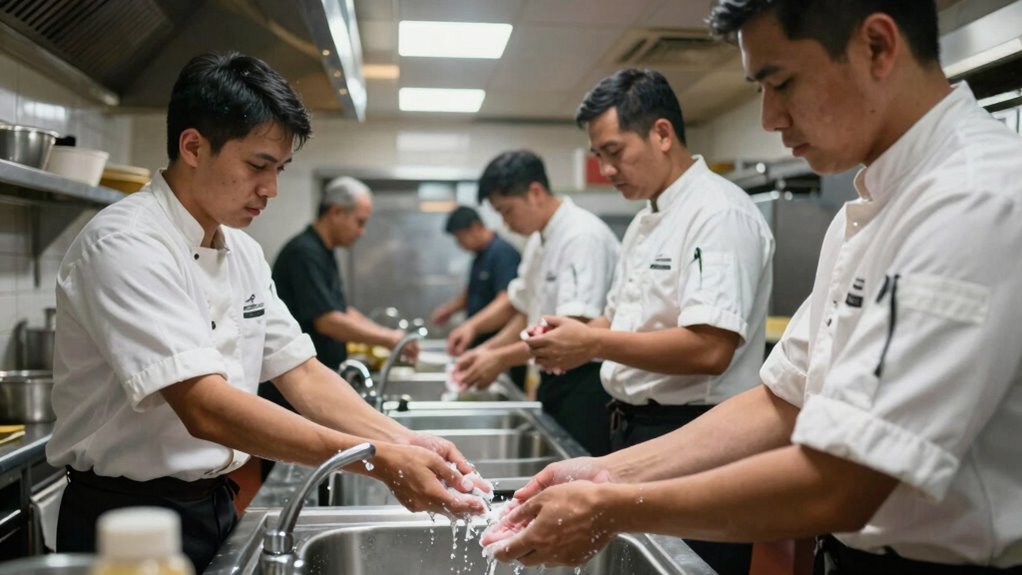

During busy service, you often feel pressured to keep up with quick meal turnovers, which can cause handwashing to slip your mind. Stress, fatigue, and multitasking make it harder to follow protocols, especially when sinks are inconvenient or cluttered. Speed takes priority over thorough hygiene, leading to overlooked steps. Maintaining good habits in these moments is tough, but understanding how workflow and environment impact compliance can help. There’s more to discover on how to stay consistent even during hectic times.

Get kitchen staples and gadgets delivered free with Prime
- Fast, free delivery on millions of items
- Prime Video, Amazon Music and more included
- Member-only deals all year
Key Takeaways
- High pace and multitasking increase the likelihood of overlooking proper hand hygiene.
- Staff may prioritize speed and service over thorough handwashing during busy periods.
- Inconvenient sink locations or cluttered stations discourage timely handwashing.
- Fatigue and stress impair memory and adherence to hygiene protocols.
- Insufficient training or lack of reinforcement reduces compliance under pressure.
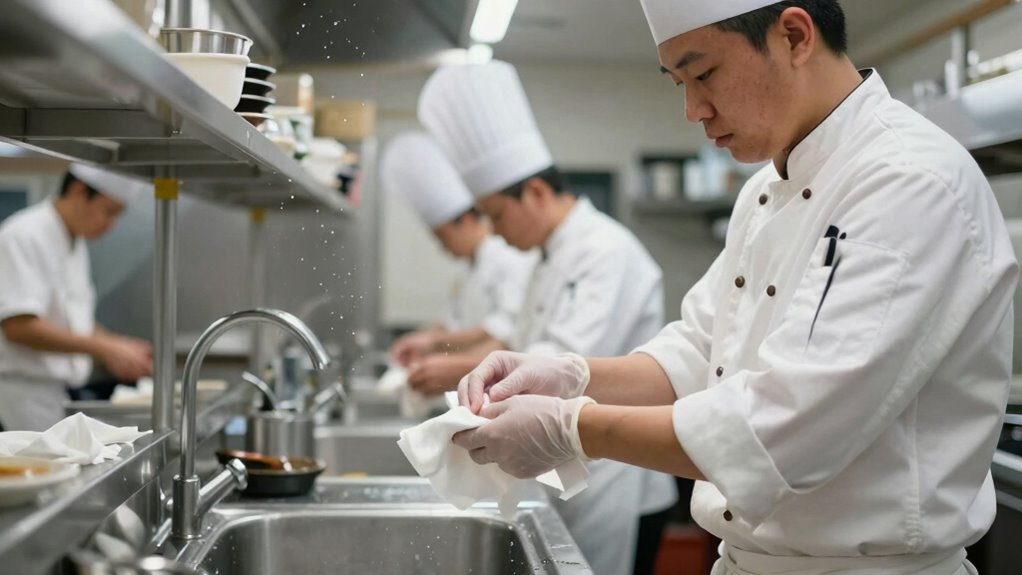
Have you ever wondered how busy service shifts impact handwashing habits among staff? When the pace picks up, it’s easy for even the most diligent team members to overlook proper hand hygiene. During these hectic times, staff training plays an essential role in reinforcing the importance of consistent handwashing. If your team isn’t well-versed in protocols or if training isn’t ongoing, it becomes even harder to maintain compliance amid the chaos. Training sessions that are clear, practical, and regularly refreshed help staff understand why hand hygiene remains vital, even when they’re juggling multiple tasks. Without this reinforcement, it’s natural for handwashing to slip as staff focus on keeping up with customer demands and meal timings. Promoting a culture of hygiene ensures that good practices are embedded into daily routines, regardless of how busy it gets.
Ongoing staff training is crucial for maintaining hand hygiene during busy service shifts.
Workflow efficiency is a double-edged sword during busy shifts. While streamlined processes aim to save time, they can inadvertently contribute to lapses in hand hygiene. When your team is pressed for time, they may see handwashing as a step that can be temporarily skipped to meet service deadlines. This is especially true if the workflow isn’t designed with infection control in mind—if stations are cluttered, or if handwashing stations are inconveniently located, staff may avoid them to save seconds. Improving workflow efficiency means creating systems that support quick, easy access to sinks and hand sanitizers, making hand hygiene an integral part of the routine rather than an extra task. Incorporating infection control principles into workflow design helps reinforce the importance of hygiene even during peak periods. Additionally, implementing visual cues such as signage can serve as constant reminders for staff to prioritize hand hygiene. Moreover, ongoing training and supervision can help ensure compliance is maintained despite the pressures of busy service. It’s also helpful to recognize that technological solutions like hands-free faucets or automatic sanitizer dispensers can further streamline hygiene practices.
The reality is that during busy periods, the human factor comes into play. Fatigue, stress, and multitasking can lead to forgetfulness or complacency. Staff may prioritize speed over thoroughness, unintentionally neglecting handwashing. That’s why ongoing staff training must include strategies for maintaining hygiene under pressure, emphasizing that quick handwashing is better than skipping it altogether. Reinforcing this message through visual cues, reminders, and leadership example can help embed good habits, even during peak times.
Ultimately, the challenge is balancing workflow efficiency with safety protocols. When your team is well-trained and your processes are designed to support hand hygiene, compliance tends to stay higher during those demanding shifts. The goal isn’t just to train staff once but to foster a culture where handwashing is automatic, regardless of how busy things get. By proactively addressing workflow challenges and investing in continuous staff training, you create an environment where hand hygiene remains a priority—no matter how hectic service becomes.
hands-free automatic soap dispenser
As an affiliate, we earn on qualifying purchases.
As an affiliate, we earn on qualifying purchases.
Frequently Asked Questions
How Does Staff Training Impact Handwashing During Busy Times?
Staff training directly impacts handwashing during busy times by boosting motivation and improving training effectiveness. When you invest in clear, consistent training, your team feels more confident and responsible, even during hectic service. This, in turn, encourages better compliance. Motivated staff are less likely to skip handwashing, understanding its importance. Effective training guarantees everyone knows proper procedures, making it easier to maintain hygiene standards despite the rush.
Are There Specific Areas Where Handwashing Compliance Drops Most?
You might notice handwashing compliance drops most in areas with high odor control concerns or glove usage. During busy times, staff often rush through tasks, neglecting proper hand hygiene after glove removal or in zones with strong odors. This coincidence can lead to overlooked handwashing, increasing contamination risks. To improve, make certain clear protocols are followed, even during peak hours, emphasizing the importance of hand hygiene in every critical area.
What Role Does Kitchen Layout Play in Hand Hygiene Adherence?
Kitchen layout greatly impacts your hand hygiene adherence. Poor ergonomics can make reaching sanitation stations inconvenient, leading to skipped handwashing. When stations are strategically placed near high-touch areas and workstations, you’re more likely to wash your hands consistently. A well-designed kitchen encourages good habits by reducing movement and effort, ensuring you can maintain proper sanitation practices even during busy service. Proper kitchen layout supports your commitment to hygiene.
How Do Customer Perceptions Influence Staff Handwashing Behavior?
Customer attitudes greatly influence your staff’s handwashing behavior. When customers visibly value hygiene, their perception influence encourages staff to adhere more strictly to handwashing protocols. Conversely, if customers seem indifferent or overlook hygiene standards, staff may feel less motivated to follow proper hand hygiene, especially during busy service. Recognizing this dynamic helps you foster a culture where both staff and customers prioritize cleanliness, improving overall compliance and food safety.
Are There Technological Solutions to Monitor Hand Hygiene Compliance?
Remote monitoring with smart sensors revolutionizes how you track hand hygiene compliance. These devices provide real-time data, ensuring you catch slips instantly—no more relying on memory or manual checks. Smart sensors automatically detect when staff wash their hands, making compliance as effortless as breathing. This technology turns hand hygiene management into a seamless, foolproof system, helping you maintain top cleanliness standards even during the busiest, most chaotic shifts.
Conclusion
So, next time the rush hits and chaos ensues, remember that maintaining handwashing habits is your secret weapon against a tsunami of germs. Don’t let the busy service sweep your hygiene standards away like leaves in a hurricane. Your commitment isn’t just a small act — it’s a mighty shield protecting everyone you serve. Stay vigilant, because in the battle against infection, your hands are your most powerful weapon. Keep washing, keep safe.
NFL season / tailgating Picks
team gear
As an affiliate, we earn on qualifying purchases.