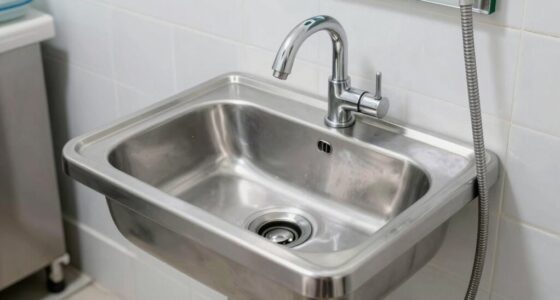
To guarantee proper hand hygiene, place sinks at accessible heights for everyone and include enough space for easy use. Position stations near restrooms, food areas, and high-traffic zones to encourage frequent handwashing. Include touchless soap dispensers, accessible paper towels or dryers, and clear signage reminding users to wash thoroughly. Comfortable water temperatures and proper waste disposal also matter. If you want to design effective stations, keep exploring these key features and placement tips.
Key Takeaways
- Sinks should be accessible, properly positioned, and provide sufficient space for all users, including those with disabilities.
- Water controls must allow easy adjustment to a comfortable temperature for effective handwashing.
- Handwashing stations require touchless soap dispensers, accessible paper towels or hand dryers, and nearby waste receptacles.
- Signage and strategic placement near entrances, restrooms, and food prep areas encourage proper hand hygiene habits.
- Overall design should promote ease of use, safety, and accessibility to ensure consistent and effective hand hygiene.
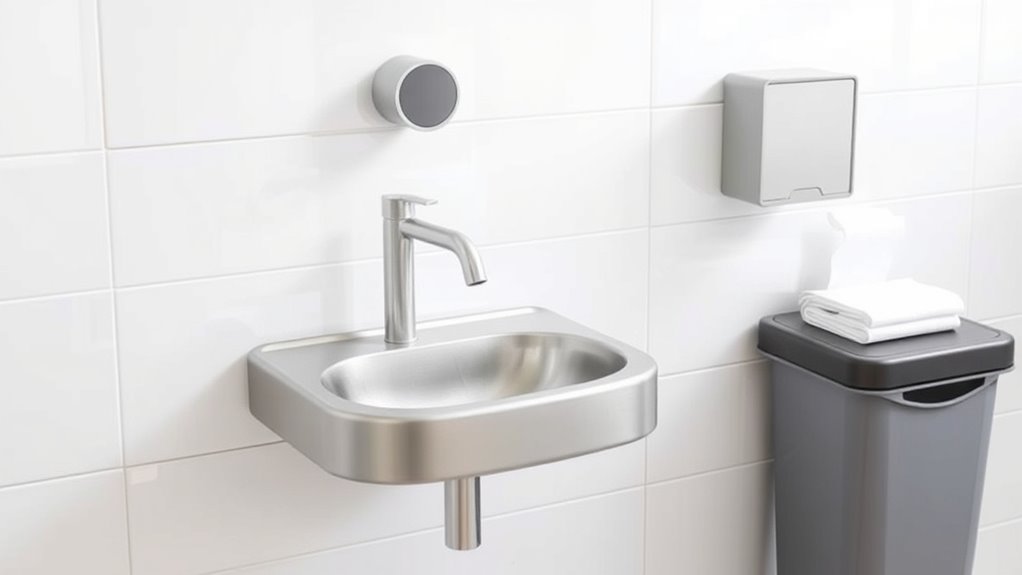
Proper handwashing is essential for maintaining hygiene and preventing the spread of germs, especially in public and workplace settings. To achieve effective hand hygiene, the placement and design of handwashing stations matter considerably. One key aspect is ensuring that sinks are accessible to everyone, including individuals with disabilities or limited mobility. Sink accessibility means placing sinks at appropriate heights and ensuring there’s enough space around them for easy use. When sinks are difficult to reach or use, people are less likely to wash their hands properly, which increases the risk of contamination. Installing sinks in convenient locations—near restrooms, food prep areas, or high-traffic zones—encourages frequent handwashing and reduces germ transmission.
Accessible sinks at appropriate heights and locations promote effective handwashing for all.
Another vital factor is water temperature. You should ensure that the water temperature is comfortable and can be easily adjusted if needed. Neither boiling hot nor icy cold water promotes proper handwashing. Hot water helps remove oils and microbes more effectively, but it shouldn’t be so hot that it causes discomfort or burns. Ideally, the water temperature should be warm enough to encourage thorough washing without risking injury. Proper controls, like thermostatic mixing valves, can help maintain consistent and safe water temperatures. When people find the water comfortable, they’re more likely to wash their hands thoroughly and for the recommended duration. Additionally, water temperature control plays a significant role in promoting proper hand hygiene.
In addition to water temperature and sink accessibility, the design of your handwashing stations should include other important features. These include soap dispensers placed within easy reach, paper towels or hand dryers for drying, and waste receptacles nearby. The soap dispenser should be touchless if possible, reducing the chance of cross-contamination. Proper signage reminding users to wash their hands thoroughly and for at least 20 seconds can also boost compliance. The placement of these stations should be strategic—ideally near entrances, food prep areas, and restrooms—so that people are prompted to wash their hands at critical moments.
Ultimately, the goal is to make handwashing stations user-friendly and accessible, encouraging consistent hygiene practices. By paying attention to sink accessibility and water temperature, you create an environment where everyone feels comfortable and motivated to wash their hands properly. This not only helps protect individual health but also reduces the spread of germs throughout your facility, making it safer and healthier for everyone.
Frequently Asked Questions
Are Portable Handwashing Stations Compliant With Regulations?
Yes, portable handwashing stations can be compliant with regulations if they meet the necessary standards. You need to guarantee they adhere to portable compliance and station regulations, including proper water flow, soap, and paper towel access, as well as adequate drainage. Regular maintenance and proper placement are essential. When these criteria are met, portable stations serve as a valid and compliant solution for maintaining hygiene standards in various settings.
How Often Should Handwashing Stations Be Sanitized?
You should sanitize handwashing stations at least every four hours to maintain proper hand hygiene. Studies show that regular sanitation reduces germ spread by up to 80%. To guarantee cleanliness, establish consistent sanitation schedules, especially during busy periods. This routine keeps surfaces sanitary, minimizes cross-contamination, and promotes better health and safety for everyone. Remember, frequent cleaning is essential for effective sanitation and maintaining a healthy environment.
Can Hand Sanitizers Replace Handwashing Stations Entirely?
You can’t rely entirely on hand sanitizer instead of a handwashing station. While hand sanitizer helps reduce germs, it has limitations and doesn’t eliminate all bacteria or viruses like soap and water do. A handwashing station offers a thorough clean, which sanitizer can’t fully replicate. So, for effective hygiene, use hand sanitizer as a supplement, but don’t replace a proper handwashing station altogether.
What Are the Costs Associated With Installing Handwashing Stations?
Are you wondering about the costs involved? Installing handwashing stations can be pricey upfront, with installation costs varying based on type and location. You’ll also face ongoing maintenance expenses for soap, water, and cleaning supplies. Do you see how these costs add up over time? While initial setup might seem steep, investing in proper stations promotes hygiene and safety, ultimately saving you from costly health issues later.
Are There Specific Requirements for Children’s Handwashing Stations?
Yes, there are specific requirements for children’s handwashing stations to guarantee child safety and effective station design. You should install lower sinks and fixtures to accommodate children comfortably, making certain they can reach water and soap easily. The station should also have non-slip surfaces and smooth edges to prevent injuries. Proper placement is vital, making sure the station is accessible and visible to promote good hygiene habits among children.
Conclusion
Ensuring proper handwashing station placement and requirements is essential for health and safety. Did you know that proper hand hygiene can reduce respiratory illnesses by 16%? By following guidelines and strategically placing stations, you prevent the spread of germs and protect everyone. Remember, a well-placed handwashing station isn’t just a requirement; it’s a critical step in creating a safer environment for all. Make hand hygiene a priority—you’ll see the difference.