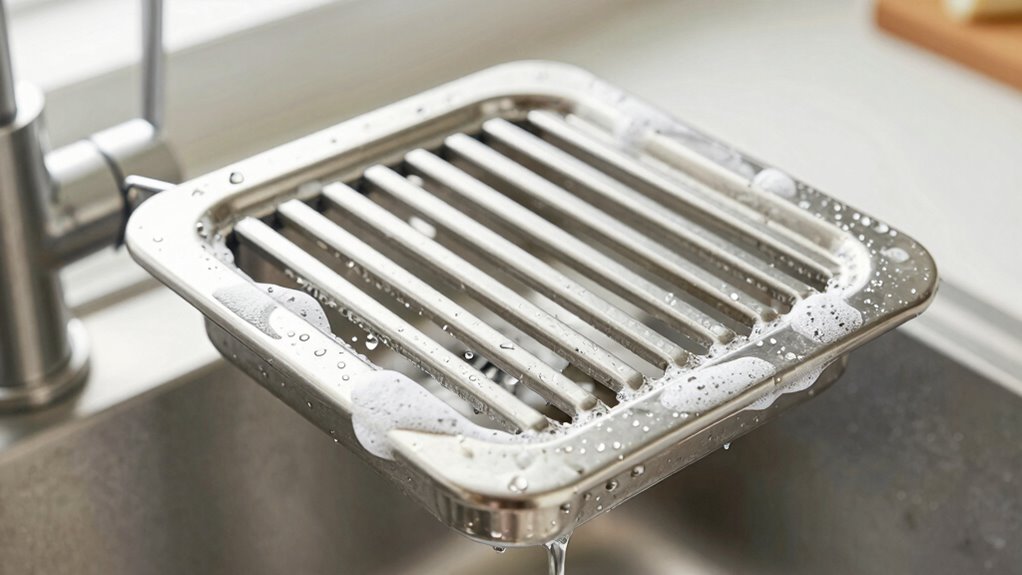

To keep your baffle filters free of greasy buildup and odors, follow a regular cleaning schedule—at least monthly, or more often if your kitchen is busy. Remove the filters carefully, soak them in hot soapy water, and scrub gently with a soft brush. Rinse thoroughly and let them dry before reinstalling. Staying consistent with this routine prevents drips and foul smells. Keep going to discover more expert tips for ideal filter maintenance.
Key Takeaways
- Inspect filters visually at least monthly for grease buildup to determine cleaning frequency.
- Establish a regular cleaning schedule, such as weekly or bi-weekly, based on cooking volume.
- Remove filters carefully, following manufacturer instructions, for effective cleaning and maintenance.
- Use hot water, dish soap, and a soft brush to thoroughly clean filters and prevent grease accumulation.
- Consistently maintaining the cleaning routine prevents drips, odors, and reduces fire hazards in the kitchen.
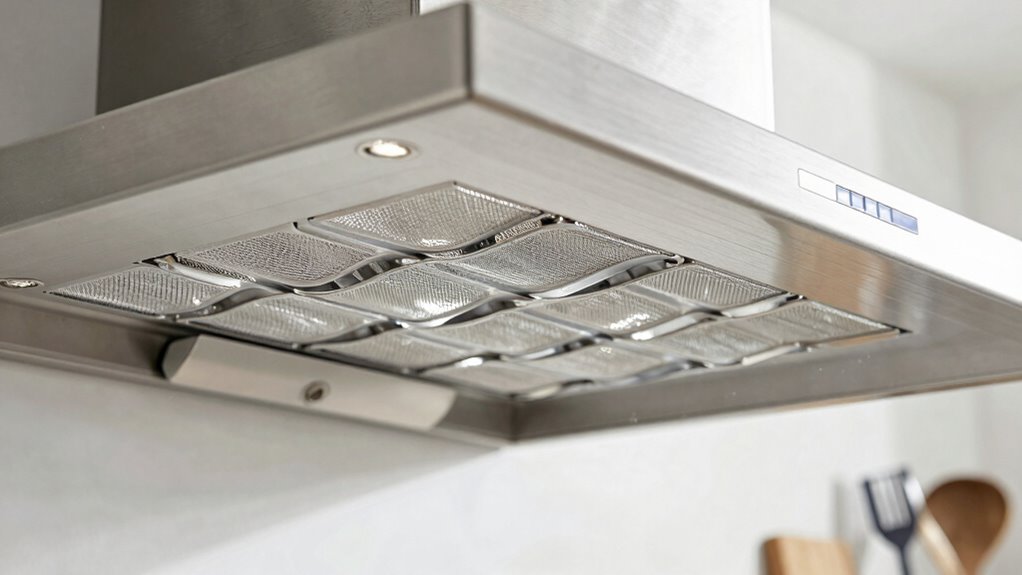
Have you ever wondered how some kitchen exhaust systems efficiently trap grease and smoke? The secret often lies in the quality of the filters used, particularly baffle filters. These filters are designed to improve airflow while catching grease particles, preventing them from settling in ducts and causing unpleasant odors or fires. Proper installation is vital—start by ensuring the filter fits snugly into your exhaust hood, avoiding gaps that can let smoke and grease escape. When installing, follow manufacturer guidelines carefully, and consider consulting a professional if you’re unsure. A secure fit not only maximizes efficiency but also prolongs the lifespan of your filter.
Proper installation of baffle filters ensures optimal airflow and prevents grease buildup in your kitchen exhaust system.
Once installed, maintaining your baffle filters is key to keeping your kitchen safe and odor-free. Creating a maintenance checklist makes it easier to stay on top of cleaning duties. Regularly inspect the filters for grease buildup; a quick visual check can reveal when they need cleaning. Typically, cleaning should be done at least once a month, but if your kitchen sees heavy cooking, more frequent cleaning might be necessary. When cleaning, remove the filters carefully, following the installation tips provided by the manufacturer to avoid damage. Use hot water, dish soap, and a soft brush to scrub away grease—avoid harsh chemicals that can degrade the filters. Rinsing thoroughly and letting them dry completely before reinstalling prevents mold and odors from developing. Additionally, understanding how filter design impacts grease capture can help you choose the most effective options for your kitchen.
A consistent maintenance routine not only prevents grease drips and foul smells but also enhances the overall efficiency of your exhaust system. Neglecting cleaning can cause grease to accumulate, which hampers airflow and increases fire risk. Additionally, dirty filters can emit unpleasant smells that permeate your kitchen and adjoining spaces. Checking your filters regularly ensures you catch buildup early, making cleaning easier and more effective. Remember, well-maintained baffle filters extend their lifespan and save you money in the long run.
Incorporating these installation tips and sticking to a maintenance checklist ensures your kitchen remains a safe, odor-free environment. Properly installed and regularly cleaned baffle filters do their job silently, trapping grease and smoke effectively. When you prioritize maintenance, you avoid drips, smells, and potential fire hazards. So, make it a habit to inspect, clean, and replace filters as needed. This simple routine keeps your kitchen fresh and safe, letting you focus on cooking without worry. With the right care, your baffle filters will continue to perform efficiently, protecting your space and maintaining a clean, pleasant environment for everyone.
Frequently Asked Questions
How Often Should I Replace My Baffle Filters Entirely?
You should replace your baffle filters entirely every 6 to 12 months, depending on usage and buildup. Regular filter replacement is essential for maintaining peak performance and preventing drips and odors. Follow a proper maintenance schedule by cleaning your filters every 1-3 months, and replace them when they show signs of significant wear or damage. This proactive approach ensures your ventilation stays efficient and odor-free.
Can I Use Regular Dish Soap to Clean Baffle Filters?
Yes, you can use regular dish soap to clean baffle filters. Imagine your filters soaking in warm water mixed with a few drops of dish soap, breaking down grease and grime like magic. Avoid harsh cleaning agents, as they can damage the filters. Gentle dish soap is effective, safe, and easy to use—just scrub gently with a soft brush, rinse thoroughly, and your filters will look like new and stay odor-free.
Are Baffle Filters Effective Against All Types of Kitchen Odors?
Baffle filters are effective at reducing many kitchen odors by improving airflow efficiency and trapping grease, but they don’t absorb all types of odors. Strong or lingering smells may still escape, so you might need additional methods like activated charcoal filters or regular cleaning to fully eliminate odors. Maintaining your baffle filters ensures maximum performance, helping to minimize smells and keep your kitchen air fresh and clean.
What Signs Indicate My Baffle Filter Needs Professional Maintenance?
Ever notice persistent odors or see visual damage on your filter? These signs mean your baffle filter needs professional maintenance. When odors linger despite cleaning, or if you spot cracks, discoloration, or warping, it’s time to call in experts. Don’t ignore these clues—delaying service can lead to decreased efficiency and further damage. Regular professional checks ensure your filter stays in top shape, keeping your kitchen fresh and safe.
Do Baffle Filters Require Special Cleaning Tools or Solutions?
You don’t need special cleaning tools or solutions for your baffle filters. Simply use a soft brush or cloth to scrub away grease and debris, and warm soapy water or a mild cleaning solution to do the job. Avoid harsh chemicals or abrasive tools that could damage the filters. Regularly cleaning with basic supplies guarantees your filters stay effective, odor-free, and free of drips.
Conclusion
Now that you know the secret to keeping your kitchen fresh—regularly cleaning those baffle filters—you’re almost there. But what happens if you let things slide just a little? The drips, smells, and buildup might sneak up on you when you least expect it. Stay vigilant, stick to your schedule, and enjoy a spotless, odor-free cooking space. Trust me, a little effort now can save you from surprises later. Are you ready to take control?