
Hood suppression systems in commercial kitchens detect fires caused by grease buildup on hoods, filters, and ducts through heat or smoke sensors. Once triggered, they quickly release chemical agents like dry chemicals or foam to cool flames and cut off oxygen, suppressing the fire fast. Regular maintenance guarantees the system works reliably and prevents grease from causing delays. To discover how proper upkeep and safety strategies protect your kitchen, keep exploring the key steps involved.

Get kitchen staples and gadgets delivered free with Prime
- Fast, free delivery on millions of items
- Prime Video, Amazon Music and more included
- Member-only deals all year
Key Takeaways
- Installed above cooking appliances to monitor heat, smoke, and grease buildup that can ignite fires.
- Sensors detect fire signs, triggering the automatic discharge of chemical suppression agents.
- The agents cool flames, cut off oxygen, and suppress fires quickly upon detection.
- Regular maintenance ensures sensors and nozzles function properly for reliable activation.
- Proper cleaning and upkeep prevent grease buildup, reducing the risk of fire activation.
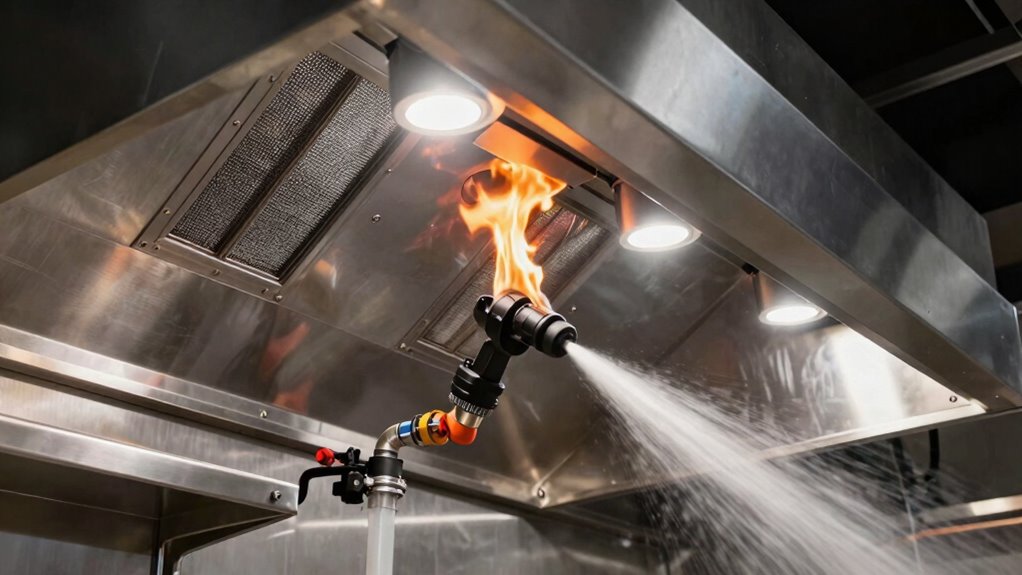
Have you ever wondered how commercial kitchens prevent fires from cooking grease and oil? It’s a crucial question, especially considering how quickly a small grease fire can escalate into a dangerous blaze. That’s where hood suppression systems come into play. These systems are designed to detect, suppress, and prevent fires before they spread, ensuring the safety of everyone in the kitchen. To keep these systems effective, proper system maintenance is essential. Regular inspections, testing, and servicing help guarantee that the suppression system functions correctly when it’s needed most.
Proper maintenance of hood suppression systems ensures quick, effective fire response and keeps your commercial kitchen safe.
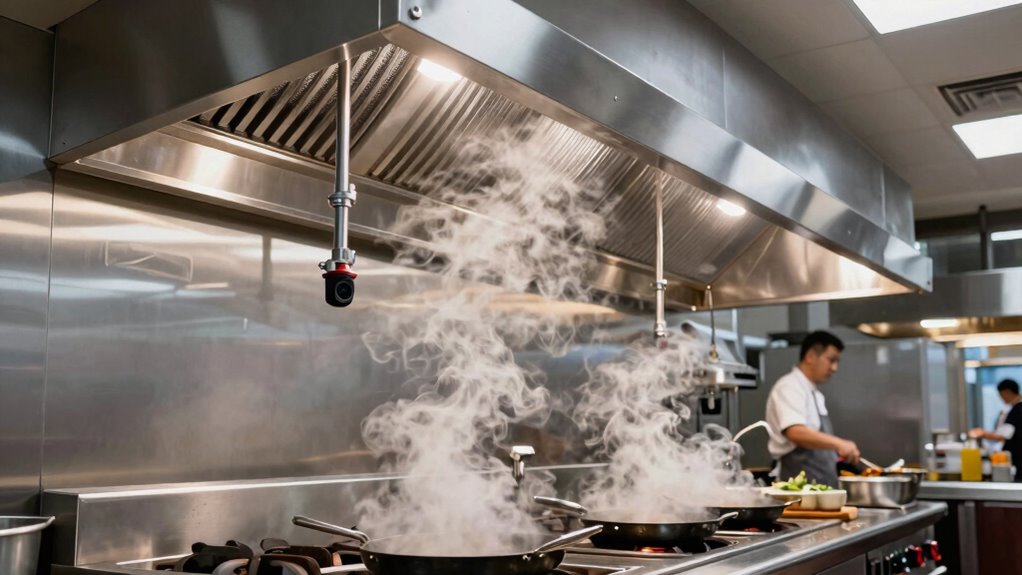
When a fire ignites in a commercial kitchen, it often starts with a buildup of grease and oil on hoods, filters, and exhaust ducts. The hood suppression system is strategically installed above cooking appliances to monitor for signs of fire, such as heat or smoke. When a fire is detected, the system’s sensors trigger a series of actions. First, a chemical agent, typically a dry chemical or foam, is discharged through nozzles directly onto the fire. This agent quickly cools the flames, cuts off the oxygen supply, and suppresses the fire before it can spread. The system is designed to activate automatically, providing rapid response that minimizes damage and reduces the risk of injury.
The effectiveness of a hood suppression system depends heavily on proper system maintenance. Over time, the nozzles can become clogged or the sensors may malfunction if not regularly checked. Dust, grease, and debris can impair detection, leading to delayed activation or false alarms. Routine maintenance involves inspecting the system components, cleaning filters, testing the activation mechanisms, and replacing any worn or damaged parts. Keeping the system in top condition ensures it will respond reliably during an emergency. Additionally, because grease buildup can affect fire safety, regular cleaning of the hood, filters, and ducts is essential to prevent fire hazards. Regularly updating your knowledge about fire safety standards can help ensure compliance and optimal performance. Proper training for staff on fire safety protocols also enhances the overall safety of the kitchen environment. Furthermore, understanding the components of suppression systems can aid in effective maintenance and troubleshooting. Implementing a maintenance schedule for these systems ensures consistent performance and early detection of potential issues.
In addition, fire prevention strategies include regular cleaning of the hood, filters, and ducts to remove grease buildup that could fuel a fire. Fire prevention isn’t just about installing the right equipment; it’s about maintaining it and practicing good cleaning routines. When you prioritize system maintenance, you’re investing in the safety of your staff and the longevity of your kitchen equipment. A well-maintained hood suppression system is a crucial part of a thorough fire prevention plan, providing peace of mind that, in the event of a fire, your kitchen is prepared to respond swiftly and effectively.
commercial kitchen hood suppression system
As an affiliate, we earn on qualifying purchases.
As an affiliate, we earn on qualifying purchases.
Frequently Asked Questions
How Often Should Hood Suppression Systems Be Inspected?
You should inspect your hood suppression system at least every six months, but more frequent maintenance schedules are recommended if your kitchen sees heavy use. Regular inspections guarantee all system components, like nozzles and detection devices, are functioning properly. Staying on top of these checks helps prevent malfunctions during emergencies, guaranteeing your system responds quickly and effectively when needed. Always follow local codes and manufacturer guidelines for maximum safety.
Are Hood Suppression Systems Required in All Commercial Kitchens?
You’re probably glad to hear that hood suppression systems are often a must-have for many commercial kitchens. They play a key role in fire safety by quickly suppressing flames and preventing disasters. Regular equipment maintenance guarantees they work when needed most. While regulations can vary, most jurisdictions require these systems in kitchens with cooking appliances, giving you peace of mind and a safer environment for everyone working there.
What Types of Fires Do Hood Suppression Systems Protect Against?
Hood suppression systems protect against grease fires and other kitchen fires by using fire extinguishing agents, typically through chemical suppression. When a fire occurs, the system automatically activates to release these agents, smothering flames quickly. This prevents fire spread and minimizes damage. Chemical suppression is particularly effective for grease fires, which are common in commercial kitchens, keeping both staff safe and the establishment compliant with safety regulations.
Can Hood Suppression Systems Be Customized for Different Kitchen Setups?
Did you know that over 60% of kitchen fires could be better managed with customized suppression systems? You can absolutely tailor hood suppression systems to fit your specific kitchen layout. Customization options include adjusting nozzle placement, sensor sensitivity, and system size, ensuring ideal fire protection. This flexibility helps you meet safety codes and improves response times, no matter your kitchen’s unique design or cooking equipment.
What Is the Typical Lifespan of a Hood Suppression System?
You should expect a hood suppression system to last around 10 years with proper maintenance. Fire suppression regulations recommend annual inspections and regular testing to guarantee it functions correctly. Following maintenance best practices, like cleaning nozzles and checking components, helps extend its lifespan. Keep up with these practices to prevent system failure, ensure safety, and comply with regulations, ultimately protecting your kitchen from fire hazards.
Conclusion
Think of your commercial kitchen hood suppression system as a vigilant guardian, always ready to leap into action at the first sign of trouble. It silently works behind the scenes, snuffing out fires before they can grow, like a firefighter on standby. By understanding how it operates, you’re better equipped to keep your kitchen safe and running smoothly. Remember, this system isn’t just equipment—it’s your kitchen’s silent protector, ensuring your culinary world stays safe and fire-free.
Halloween Picks
halloween
As an affiliate, we earn on qualifying purchases.