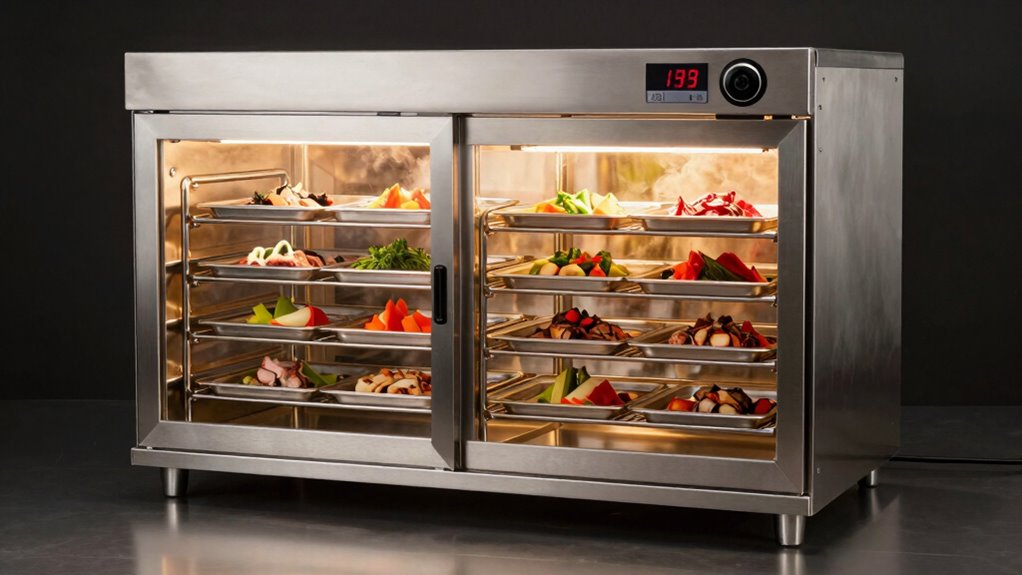

To prevent your food from drying out and becoming unsafe, keep hot holding cabinets within a safe temperature range of 140°F to 165°F. Monitor the temperature closely using controls and alarms, and avoid holding food too long, which can compromise quality and safety. If temperatures fall below 140°F, bacteria can grow rapidly, while over 165°F can dry out your food. Staying within these limits guarantees your food stays safe and tasty—learn more to master proper management.
Key Takeaways
- Maintain temperatures between 140°F and 165°F to keep food safe and prevent drying out.
- Regularly monitor and record cabinet temperatures to ensure compliance with safety standards.
- Use alarms or digital controls to alert staff if temperatures fall below 140°F or exceed 165°F.
- Limit holding times to prevent over-drying and bacterial growth, discarding food after recommended durations.
- Proper staff training and strict temperature management are essential to avoid overholding and ensure food quality.
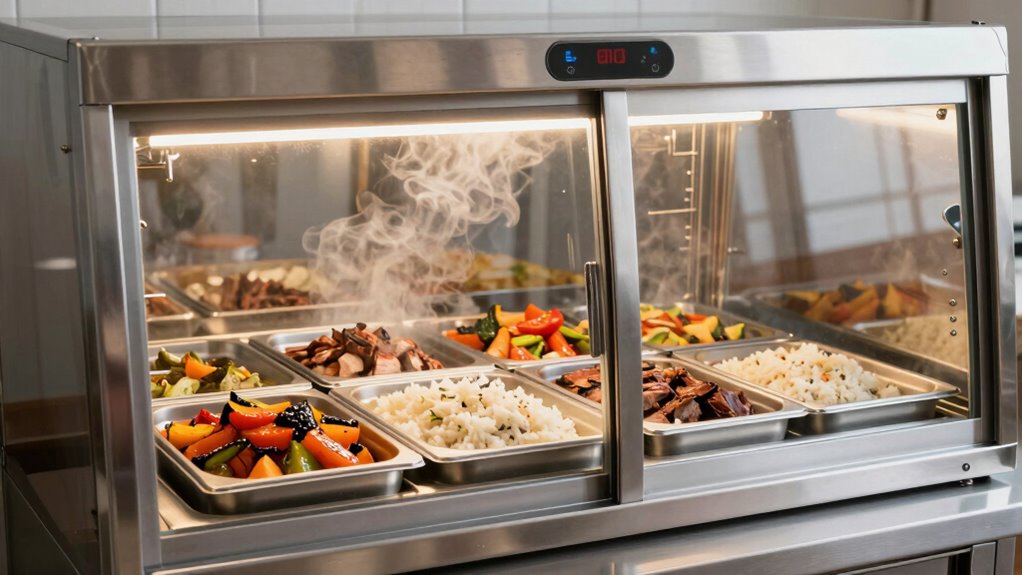
Have you ever wondered how restaurants keep food hot and safe until it’s served? The secret lies in effective temperature control within hot holding cabinets. These specialized units are designed to maintain the right temperature range, ensuring that food stays both hot and safe for consumption. Proper food safety practices demand that food doesn’t fall into the danger zone, typically between 41°F and 135°F, where bacteria can rapidly multiply. Hot holding cabinets are your frontline defense against this risk, provided you understand and follow their safe operating limits.
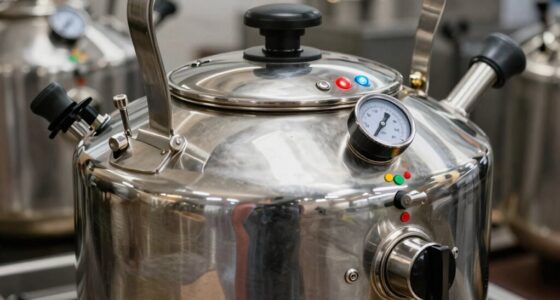
Hot holding cabinets maintain safe temperatures, preventing bacteria growth and ensuring food stays hot and fresh.
At the core of a hot holding cabinet’s effectiveness is consistent temperature control. When you set the unit correctly, it creates a stable environment that keeps cooked foods at safe temperatures without drying them out or compromising quality. Most cabinets operate within a temperature range of 140°F to 165°F, which is ideal for maintaining food safety without overcooking or drying out the food. If the temperature dips below the safe zone, bacteria can grow quickly, increasing the risk of foodborne illness. Conversely, if the temperature is too high, the food can dry out or become overcooked, affecting texture and flavor.
Monitoring and adjusting temperature settings are essential in ensuring each batch of food stays within safe limits. Many hot holding cabinets come equipped with digital controls and alarms that alert you if temperatures fall outside the safe range. This technology takes the guesswork out of maintaining food safety, allowing you to respond swiftly and prevent potential hazards. Regularly checking these settings and recording temperatures also helps guarantee compliance with health regulations and standards.
Another key aspect of food safety in hot holding cabinets is avoiding overholding food. Even though these cabinets are designed to keep food hot, leaving food in them for too long can compromise quality and safety. Overheld food can become dry, develop an unappealing texture, or even harbor bacteria if kept at unsafe temperatures for extended periods. To avoid this, establish clear holding times and train staff to discard or replenish foods that have been held beyond recommended durations. Implementing proper temperature monitoring protocols can further reduce risks and ensure consistent safety practices.
In essence, your responsibility is to use hot holding cabinets correctly, maintaining precise temperature control and adhering to safe holding times. This approach ensures the food remains safe, flavorful, and appealing until it reaches the customer. When you prioritize food safety through vigilant temperature management, you protect your patrons’ health and uphold your establishment’s reputation for quality. Proper use of these cabinets isn’t just about convenience; it’s a critical component of safe culinary practices that keeps everyone protected.
Frequently Asked Questions
What Are the Common Signs of a Malfunctioning Hot Holding Cabinet?
You’ll notice signs of a malfunctioning hot holding cabinet when you see temperature fluctuations or inconsistent heating. If the food isn’t staying warm or if the cabinet seems to struggle maintaining a steady temperature, it’s a clear warning. Unusual noises or frequent on-off cycles also indicate issues. Regularly check the temperature gauges and listen for irregular sounds to catch problems early and guarantee food safety.
How Often Should Hot Holding Cabinets Be Inspected for Safety?
You should inspect hot holding cabinets at least weekly to guarantee safety. Regular maintenance scheduling helps catch issues early, preventing food from falling below safe temperatures. Studies show that improperly maintained equipment accounts for 30% of food safety violations in commercial kitchens. By following a consistent inspection frequency, you can reduce risks, maintain compliance, and ensure food stays hot and safe for your customers.
Can Hot Holding Cabinets Be Used for Cold Food Storage?
Hot holding cabinets aren’t designed for cold storage, so you shouldn’t use them to keep food cold. These units focus on temperature regulation to maintain hot foods at safe temperatures, typically above 135°F. Using them for cold storage can lead to unsafe temperatures, risking bacterial growth. Instead, use proper refrigeration units for cold storage, ensuring food stays at the right temperature and remains safe to eat.
What Maintenance Is Required to Keep Cabinets Within Safety Limits?
Did you know that improper maintenance can cause hot holding cabinets to lose up to 20% efficiency? To keep them within safety limits, you should perform regular calibration checks to guarantee temperature accuracy and inspect door seals for damage or leaks. These steps help maintain consistent temperatures, prevent food safety issues, and ensure your equipment operates reliably, ultimately protecting your customers and your business.
Are There Specific Certifications or Standards for Safe Hot Holding Cabinets?
Yes, there are specific certification standards for safe hot holding cabinets, guaranteeing safety compliance. Look for models that meet NSF/ANSI standards or UL listings, which verify that the equipment adheres to safety and performance guidelines. These certifications help you confirm the cabinet’s reliability, energy efficiency, and capacity to maintain safe food temperatures. Always choose units with recognized certifications to ensure compliance and safeguard your customers’ health.
Conclusion
Remember, hot holding cabinets are essential for keeping food safe, but only if you stick to the safety limits. Don’t think you can just leave food in there all day—bacteria will still grow if you cross the line. By following proper time and temperature guidelines, you guarantee your food stays safe and delicious. So, trust the rules; your customers and reputation depend on it. Safety isn’t optional—it’s your best ingredient.