
When hot holding fails, you should immediately assess how long the equipment has been out of service and quickly remove unsafe food. Reheat items to at least 165°F, or discard anything that’s unsafe. Train staff to monitor temperatures and respond confidently during such incidents. Record actions taken and inspect equipment to prevent future failures. Staying prepared and knowing proper steps helps you protect your customers. For detailed strategies, keep exploring this essential safety information.

Get kitchen staples and gadgets delivered free — and shop member deals
- Fast, free delivery on millions of items
- Access to Prime Big Deal Days deals on October 6–7
- Prime Video, Amazon Music and more included
Key Takeaways
- Quickly assess how long the equipment has been malfunctioning and identify affected food items.
- Remove any food below safe holding temperatures and determine whether to reheat, discard, or serve.
- Reheat food to at least 165°F if it is still safe to serve, or discard unsafe items to prevent foodborne illness.
- Document the incident details, including actions taken and temperatures, for compliance and review.
- Inspect and repair equipment promptly, communicate with staff, and review safety procedures to prevent future failures.
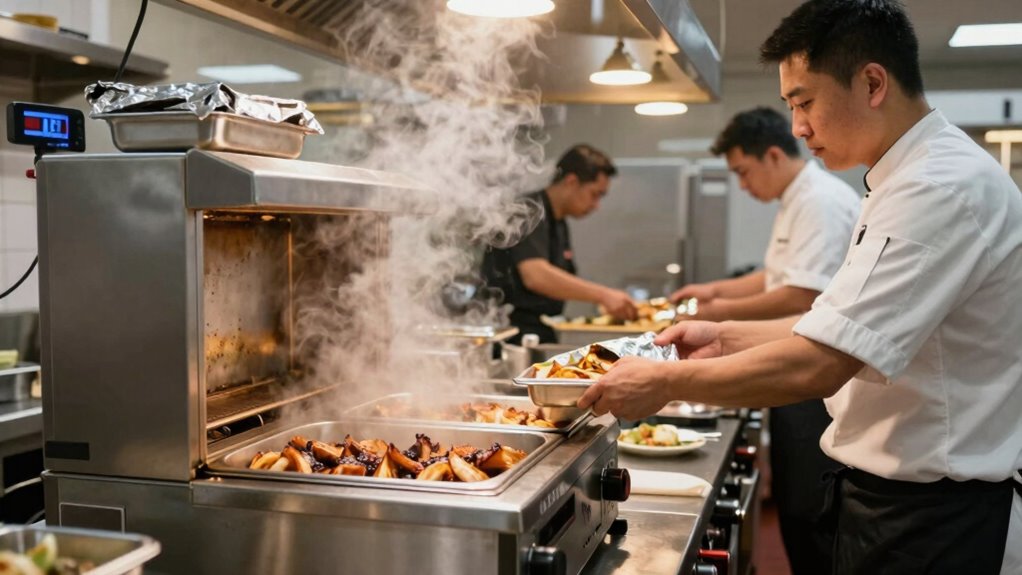
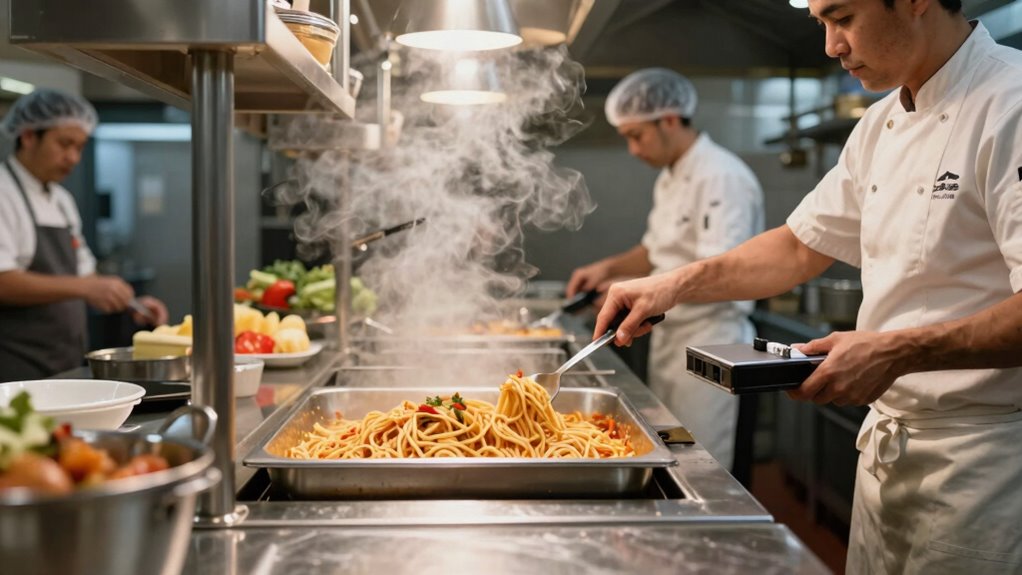
When hot holding equipment fails, quick action is essential to prevent foodborne illnesses. You need to act swiftly to keep food at safe temperatures and avoid potential health risks. The first step is to immediately assess the situation and determine how long the equipment has been malfunctioning. If you notice that food has dropped below the recommended holding temperature, it’s crucial to remove it from the hot holding unit promptly. You must then decide whether to reheat, discard, or serve the food based on its safety status.
Sticking to strict food safety protocols is vital in these moments. You should have a clear plan established for such emergencies, which includes knowing how to reheat food to the proper internal temperature or how to safely discard items that are no longer safe to serve. If reheating, ensure the food reaches the appropriate temperature—usually 165°F or higher—and hold it there until service. If you’re unsure whether the food is still safe, it’s better to discard it to prevent any risk of foodborne illness.
Follow strict protocols: reheat to 165°F and discard uncertain food to ensure safety during equipment failures.
Employee training plays an essential role in managing equipment failures effectively. You must educate your staff regularly on how to recognize signs of equipment malfunction and the proper steps to take during such incidents. Training should include how to monitor food temperatures frequently and how to respond quickly when equipment fails. Well-trained employees can make all the difference in minimizing food safety risks by acting promptly and confidently during these emergencies.
In addition to immediate response, you need to document the incident according to your establishment’s procedures. Record details such as the time of failure, actions taken, and the temperature of the food involved. This documentation helps ensure compliance with health regulations and provides insights for future prevention. Proper documentation is also vital for regulatory compliance and can assist in identifying patterns that may lead to equipment upgrades or maintenance schedules. Conducting regular equipment inspections can help catch potential issues before they lead to failure, reducing downtime and safety risks. Implementing a preventative maintenance program is also a proactive way to minimize unexpected breakdowns. Regularly reviewing equipment maintenance records can help identify recurring problems and improve overall reliability.
After resolving the immediate issue, you should inspect the hot holding equipment to identify the cause of failure and determine if repairs or replacement are necessary before resuming normal operations. Clear communication with staff is essential to ensure everyone understands the situation and the steps needed to address it. Notify management and relevant staff members right away. Clear communication ensures everyone is aware of the situation, allowing for coordinated efforts to handle the affected food items and prevent further issues. If you serve food to customers, inform them if there’s a need to discard items, and document these instances as part of your food safety management.
Proactive measures, such as regular maintenance checks, can significantly reduce the likelihood of equipment failures and help ensure ongoing food safety. Ultimately, your approach should be proactive rather than reactive. Regular maintenance, routine inspections, and ongoing employee training create a culture of safety that minimizes the risk of hot holding failures. When equipment does fail unexpectedly, your preparedness and adherence to food safety protocols will help protect your customers and uphold the reputation of your restaurant.
As an affiliate, we earn on qualifying purchases.
Frequently Asked Questions
How Often Should Hot Holding Equipment Be Inspected for Faults?
You should inspect hot holding equipment regularly, ideally daily, to catch faults early. Conduct maintenance checks to guarantee everything’s functioning correctly and verify equipment calibration to maintain proper temperatures. Regular inspections help prevent failures, ensuring food safety and compliance with health standards. Keep a maintenance log and address any issues promptly, so your hot foods stay at safe temperatures and your equipment remains reliable.
What Are the Legal Consequences of Hot Holding Failures?
Hot holding failures can lead to serious legal liability if food safety standards aren’t met. You could face fines, penalties, or even closure if authorities determine you’ve put customers at risk. Non-compliance with food safety regulations damages your reputation and exposes you to lawsuits. It’s essential to promptly address equipment issues, document inspections, and follow safety protocols to minimize legal consequences and protect your establishment’s integrity.
Can Customers Be Informed About Hot Holding Issues?
Imagine you’re in the 21st century, where transparency is king. You can absolutely inform customers about hot holding issues. Implement clear customer communication and transparency policies to keep diners in the loop about any food safety concerns. Your honesty builds trust, showing you’re committed to their well-being. Be proactive—disclose issues promptly and clearly, so patrons feel valued and confident in your establishment, even during hiccups.
What Training Is Necessary for Staff to Handle Hot Holding Failures?
You should train your staff on proper emergency protocols and effective staff communication to handle hot holding failures. Make certain they understand how to quickly identify issues, notify management, and implement corrective actions. Staff must stay calm and communicate clearly with team members and customers if necessary. Regular training sessions help reinforce these procedures, so everyone knows their role, responds swiftly, and maintains food safety standards during hot holding disruptions.
How Can Restaurants Prevent Hot Holding Equipment Malfunctions?
Did you know that equipment malfunctions cause nearly 30% of food safety violations? To prevent hot holding equipment failures, you should prioritize regular equipment maintenance and inspections. Implement routine checks and keep maintenance logs. Also, establish clear emergency protocols so staff can respond swiftly if issues arise, minimizing food safety risks. Staying proactive with maintenance and training guarantees your hot holding equipment remains reliable and your food stays safe.
Conclusion
When hot holding fails, think of yourself as a captain steering a ship through stormy waters. Stay calm, quickly identify the problem, and take swift action to prevent the storm from damaging your crew’s trust. Just like a seasoned captain navigates rough seas, your quick response and adherence to safety rules will steer your restaurant back on course, ensuring your guests enjoy safe, hot meals once more. Stay vigilant and confident—you’re in control.
Evergreen bestsellers Picks
bestsellers
As an affiliate, we earn on qualifying purchases.