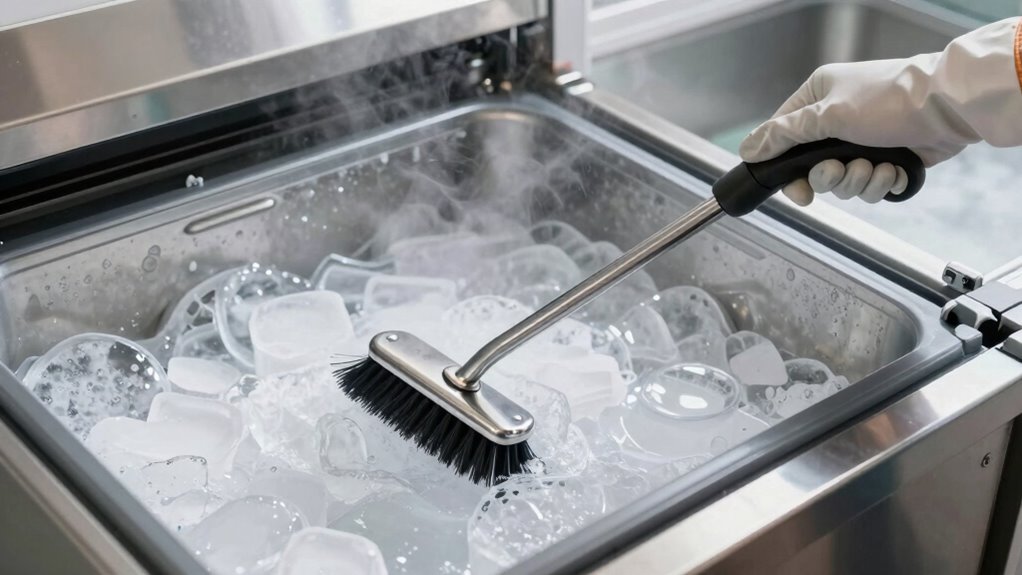
To prevent mystery odors in your ice bin, clean it weekly with warm water and a mild, food-safe cleaner, making sure to rinse thoroughly. Scrub the ice mold, drain and sanitize the water dispenser components, and inspect for cracks or mineral buildup. Wipe down the exterior and ensure good ventilation around the machine. Consistently following these steps keeps your ice fresh and odor-free, and you’ll discover more tips to maintain ideal hygiene.
Key Takeaways
- Clean the ice bin and mold weekly with warm water and a mild, food-safe cleaner to remove residues and prevent odors.
- Use vinegar solution periodically to dissolve mineral buildup and eliminate stubborn smells.
- Regularly sanitize the entire ice bin, focusing on corners and hard-to-reach areas, to prevent bacterial and mold growth.
- Wipe down the exterior and ensure proper ventilation around the ice machine to reduce moisture and mold risk.
- Maintain a consistent cleaning schedule, inspect for damage, and ensure proper drying to keep ice fresh and odor-free.
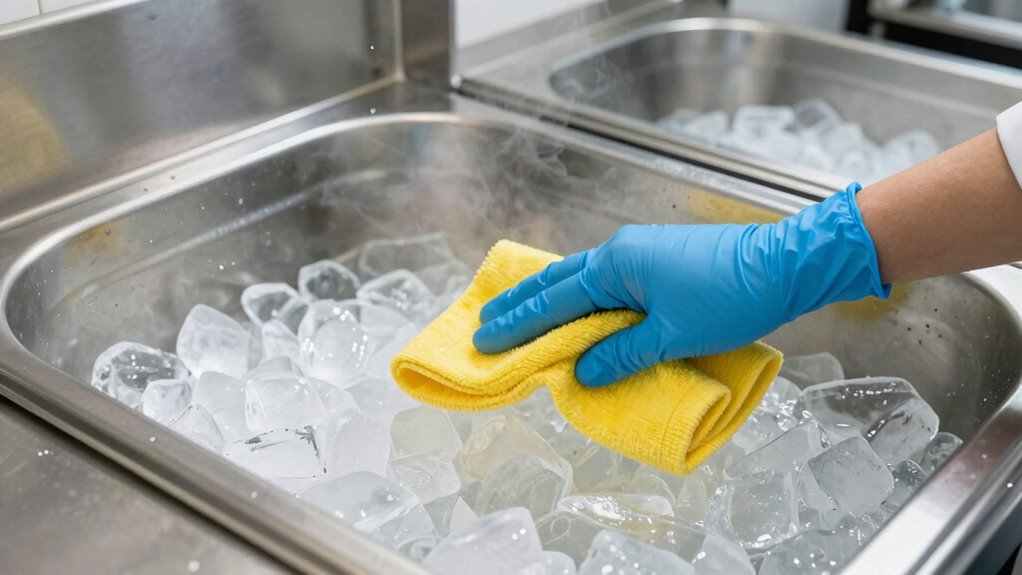
Have you ever considered how often you should clean your ice bin? Regular maintenance is essential not just for keeping your ice fresh but also for preventing mystery odors that can develop over time. One of the most effective ways to ensure your ice stays clean is by establishing a consistent cleaning routine that addresses key areas like ice mold maintenance and water dispenser sanitation. These steps help eliminate bacteria, mold, and mineral buildup that often cause unpleasant smells.
Start by focusing on ice mold maintenance. The ice mold, where your ice forms, is a prime spot for bacteria and mold to grow if not cleaned regularly. You should empty and scrub the mold at least once a week with warm water and a mild, food-safe cleaner. Avoid harsh chemicals that could leave residues or affect the taste of your ice. After cleaning, rinse thoroughly to ensure no soap remains. If your ice mold has stubborn mineral deposits, consider using a vinegar solution to dissolve buildup. Regularly inspecting the mold for cracks or chips is also wise, as damaged areas can harbor bacteria. Proper ice mold maintenance not only prevents odors but also extends the life of your ice machine.
Water dispenser sanitation is equally critical. Since your water source directly contacts the ice, any contamination here can lead to foul smells and health concerns. Every few weeks, drain the water dispenser and clean all accessible parts with warm water and a sanitizer recommended by the manufacturer. Pay particular attention to the water reservoir, spigots, and drip trays—these are common spots where mold and moldy residues can accumulate. Wipe down all surfaces thoroughly and rinse well. It’s also good practice to flush the dispenser with fresh water after cleaning to remove any lingering cleaning agents. Keeping the water dispenser sanitized prevents buildup that could cause a musty or sour odor in your ice.
Aside from cleaning the mold and water dispenser, don’t forget to check the surrounding area. Regularly wiping down the exterior of the ice bin and ensuring proper ventilation helps prevent moisture buildup, which can lead to mold growth and odors. Maintaining a clean environment around your ice machine reduces the risk of contamination and keeps your ice tasting fresh. Developing a routine that includes these steps ensures your ice remains crystal clear, odor-free, and safe for consumption. By staying vigilant with ice mold maintenance and water dispenser sanitation, you can enjoy clean, fresh ice every time without the surprise of mysterious odors. Incorporating proper cleaning techniques into your routine is essential for maintaining a hygienic ice system.
Frequently Asked Questions
How Often Should I Clean My Ice Bin for Optimal Freshness?
You should clean your ice bin weekly to maintain ideal freshness. Establishing a consistent cleaning schedule ensures you prevent mystery odors and bacteria buildup. Regular cleaning not only keeps your ice tasting fresh but also extends the lifespan of your appliance. Make it a routine to empty, scrub, and rinse the bin thoroughly every seven days. This ice bin frequency keeps your ice clean, safe, and ready whenever you need it.
Can Using Vinegar Damage the Ice Bin or Affect Ice Taste?
Using vinegar is like giving your ice bin a gentle spa treatment—it’s safe when diluted properly. Vinegar safety is well-established, and it won’t damage your bin if you follow cleaning instructions. Plus, it won’t affect ice taste if you rinse thoroughly afterward. Just make certain you use a mild vinegar solution, and your ice will stay fresh and odor-free without any lingering vinegar flavor.
Are There Eco-Friendly Cleaning Options for Ice Bin Maintenance?
Yes, you can use eco-friendly cleaning options for your ice bin. Opt for biodegradable cleaners that break down naturally and are safe for your environment. Pair these with reusable cleaning cloths to reduce waste and guarantee thorough cleaning. Regularly using these sustainable products helps maintain a fresh ice bin while minimizing your ecological footprint. Always check the cleaner’s instructions to verify compatibility with your ice bin materials.
What Signs Indicate My Ice Bin Needs Immediate Cleaning?
You should clean your ice bin immediately if you notice ice buildup or unusual noises. Ice buildup can cause blockages or contamination, while strange sounds may indicate mechanical issues or mold growth. These signs suggest your ice bin isn’t functioning properly and needs quick attention. Regular cleaning helps prevent these problems, ensuring your ice stays fresh and your machine runs smoothly. Don’t wait—address these signs promptly to maintain a clean, odor-free ice bin.
How Do I Prevent Mold Growth in My Ice Bin?
To prevent mold growth in your ice bin, make certain proper air circulation and maintain consistent temperature control. Regularly clean and dry the bin to prevent moisture buildup, which mold thrives on. Keep the lid closed when not in use to limit humidity and airflow issues. Check that your freezer’s temperature stays below 0°F to inhibit mold growth. These steps help keep your ice fresh and mold-free.
Conclusion
Keeping your ice bin clean isn’t just about fresh-tasting ice; it can also prevent mystery odors that make you suspicious of every cube. Did you know that a dirty ice bin can harbor bacteria and mold, multiplying quickly? By following this simple cleaning routine, you’re not only safeguarding your health but also ensuring every ice cube remains crystal clear and odor-free. Stay consistent—you might be surprised how much better your drinks taste!