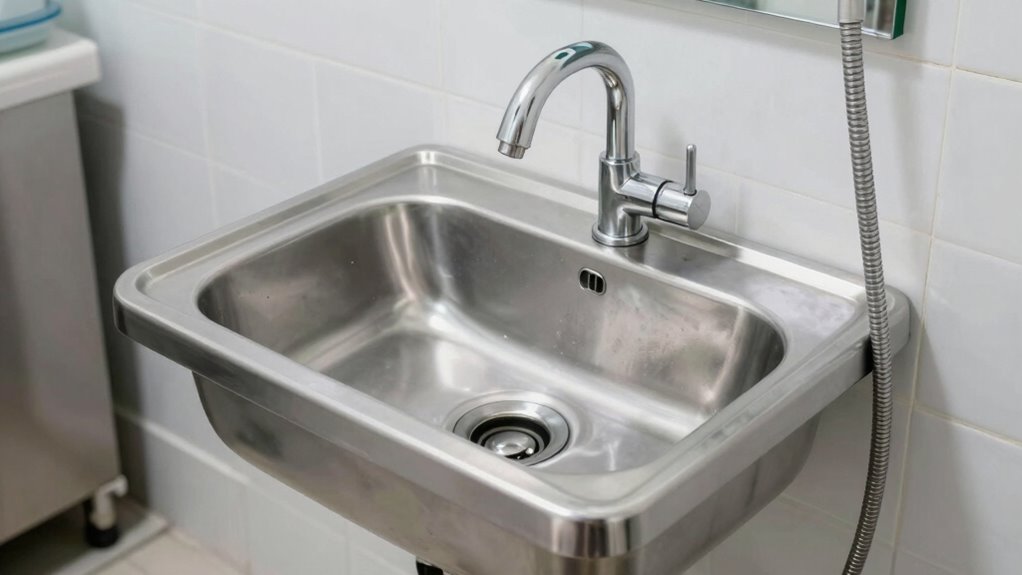

A dedicated mop sink helps prevent your hand sink from turning into a cluttered dumping spot by managing dirty water and cleaning supplies efficiently. It keeps messes contained, reduces odors, and protects your plumbing from damage. Regular cleaning and drain maintenance guarantee it stays sanitary and functions properly. By using a mop sink correctly, you make cleaning safer and more organized—continuing will reveal how to keep it in top shape and avoid common issues.
Key Takeaways
- A dedicated mop sink prevents dirty water from overflowing hand sinks, maintaining hygiene and cleanliness.
- It isolates cleaning wastewater, reducing the risk of contamination in food prep or high-traffic areas.
- Proper drain maintenance in mop sinks ensures effective water disposal and prevents clogs or foul odors.
- Using a mop sink minimizes the chance of chemical spills or debris damaging main plumbing fixtures.
- Routine cleaning and inspection of the mop sink keep it functional, hygienic, and prevent it from becoming a dumping spot.
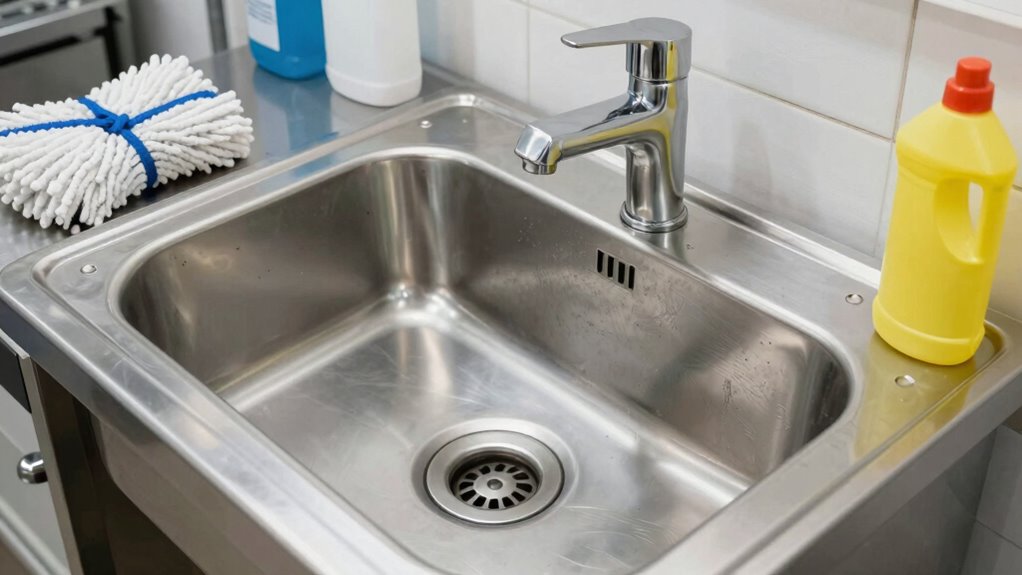
A mop sink is an essential fixture in many commercial and industrial spaces, designed to streamline cleaning and sanitation tasks. It provides a dedicated area for mops, buckets, and cleaning solutions, preventing messes from spilling onto regular sinks or floors. When you incorporate a mop sink into your facility, you’re adopting a more efficient approach to maintaining cleanliness while protecting your main plumbing fixtures. Properly utilizing it means following strict cleaning protocols that help prevent cross-contamination and ensure a hygienic environment. Regularly disinfecting the mop sink and surrounding areas is crucial, especially in high-traffic or food-related settings, where hygiene standards are strict. Establishing a routine cleaning protocol for the mop sink can save you headaches down the line, reducing the risk of bacterial growth and odor buildup.
Drain maintenance is another critical aspect of managing a mop sink effectively. Since this fixture handles dirty water from mopping and sanitation tasks, the drain can quickly become clogged or develop unpleasant odors if neglected. You need to routinely inspect the drain for debris, soap scum, or buildup that could cause blockages. Using strainers or filters can catch larger debris and prevent it from entering the drain, making maintenance easier. Regularly flushing the drain with hot water or a mild cleaning solution helps keep it clear and odor-free. If you notice slow drainage or foul smells, it’s time to take action—whether that means clearing a clog or scheduling professional drain cleaning. Proper drain maintenance not only prolongs the life of your plumbing system but also ensures your mop sink remains fully functional and sanitary.
Incorporating proper drain maintenance into your routine is crucial for long-term performance and hygiene. Integrating a mop sink into your cleaning routine and maintaining it properly allows you to stay ahead of potential issues. It ensures that dirty water is directed away from your main fixtures, reducing the risk of backups or damage. By adhering to effective cleaning protocols, you minimize the chance of bacteria spreading, protecting your staff and clients. Simultaneously, diligent drain maintenance keeps your mop sink operating smoothly, preventing costly plumbing repairs and odors. Think of your mop sink as a vital tool—one that, with proper care and attention, can considerably improve your facility’s sanitation standards. When you treat it as a dedicated, well-maintained fixture, you’re making a smart investment in cleanliness, safety, and efficiency. Ultimately, a well-managed mop sink stops your hand sink from becoming a dumping ground, helping you maintain a safer, cleaner environment with less hassle.
Frequently Asked Questions
What Materials Are Best for Mop Sinks?
You should choose durable materials like stainless steel or heavy-duty polyethylene for your mop sink. These materials offer great mop sink durability and resist corrosion, making them ideal for frequent use. When considering installation, opt for materials that are easy to clean and compatible with your space. Stainless steel is especially beneficial for commercial settings due to its strength and longevity, ensuring your mop sink remains functional and sanitary over time.
How Much Space Do Mop Sinks Typically Require?
Imagine transforming your space with efficiency—mop sink installation doesn’t have to take over. Typically, mop sink dimensions range from 18 to 24 inches wide, 24 to 36 inches deep, and about 12 to 24 inches high. You’ll need to allocate enough room for easy access and maintenance. Consider your available space carefully, ensuring your mop sink fits seamlessly without crowding, so it becomes a functional centerpiece for cleanliness.
Are Mop Sinks Compliant With Health and Safety Regulations?
Yes, mop sinks adhere to health regulations and meet compliance standards when installed correctly. You must guarantee they are properly positioned, maintained, and include appropriate drainage and sanitation features. Regular inspections help you stay compliant, prevent contamination, and promote a safe environment. By following local health codes and manufacturer guidelines, you can confidently use mop sinks as a hygienic, regulation-compliant solution for cleaning and waste management in your facility.
How Do I Maintain and Clean a Mop Sink?
Think of your mop sink as a health and safety superhero in disguise. To keep it effective, follow strict cleaning protocols and stick to regular maintenance schedules. Rinse it thoroughly after each use, disinfect weekly with a hospital-grade cleaner, and check for leaks or blockages. Doing so guarantees your mop sink stays compliant, hygienic, and ready to prevent contamination, just like a vigilant guardian protecting your workspace.
Can Mop Sinks Be Customized for Specific Needs?
Yes, you can customize mop sinks for specific needs. You can choose from various color options to match your facility’s aesthetic, and customization might include adding features like extra drainage or specialized faucets. Keep in mind, customization can increase installation costs, but it guarantees the sink fits your operational requirements perfectly. Reach out to suppliers for options and quotes, so you get a solution that works best for your space and budget.
Conclusion
Think of your hand sink as a delicate garden, easily overwhelmed without a sturdy, dedicated mop sink guarding its peace. Just like a guardian stands watch, a mop sink shields your space from chaos, ensuring cleanliness and order. Without it, your efforts are like watering a garden with a leaky hose—ineffective and frustrating. Invest in a mop sink, and watch your workspace flourish, protected and pristine, as if under the watchful eye of a trusted guardian.