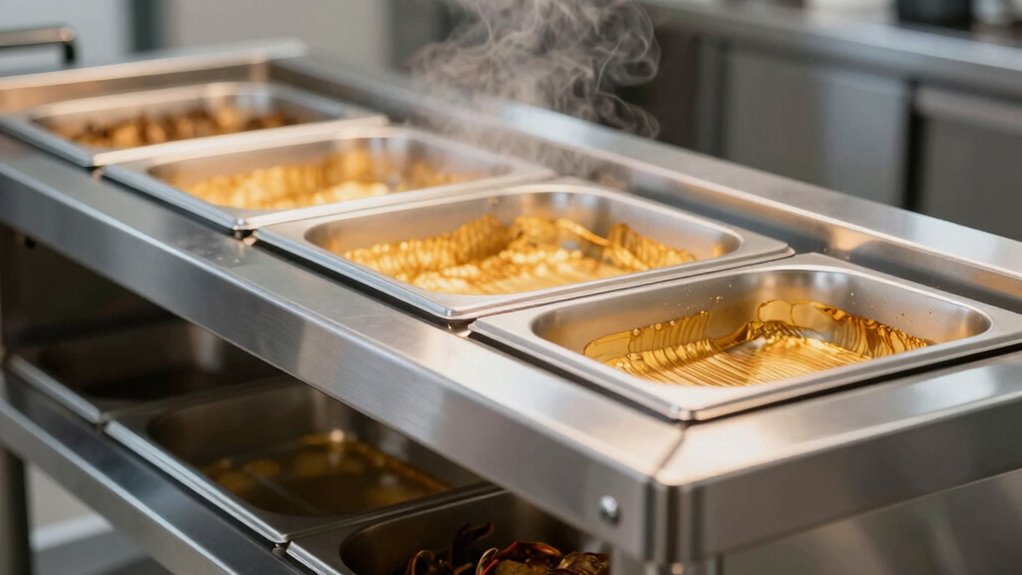
The top row of your prep table warms faster because heat naturally rises and is concentrated near the heat source, causing uneven temperatures across the pans. The placement of heating elements often makes the top row receive more direct heat, and rising heat further intensifies this effect. To improve heat distribution, you can rotate pans or add diffusers. Keep exploring for tips on how to keep your prep surface evenly heated for better food safety and quality.
Key Takeaways
- Heat sources are typically concentrated at the top, causing the upper pans to warm faster.
- Natural heat rise contributes to quicker warming of the top row compared to lower pans.
- Uneven placement of heating elements leads to temperature disparities across the prep table.
- Using heat diffusers or additional insulation can promote more even heat distribution.
- Regularly rotate pans from top to bottom to maintain consistent temperatures and ensure food safety.

Prep table pan rails are essential accessories that keep your pans secure and organized during food preparation. They ensure that ingredients stay in place, streamline your workflow, and help maintain a clean, efficient workspace. However, many people notice that the top row of pans often warms up faster than the lower ones, leading to uneven temperature distribution. Understanding why this happens can help you troubleshoot and optimize your prep table’s performance.
The main reason the top row warms up first is related to heating element placement. In most prep tables, the heating elements are positioned beneath the pans, but their placement isn’t always perfectly uniform. Often, the heating elements are concentrated more towards the center or upper sections of the unit. This design causes the top row, which is closest to the heat source, to receive more direct heat. As a result, it warms up quicker, making it seem like the top row is “hotter” or more active than the lower pans.
Temperature distribution across the prep table can be uneven because of this placement. The heat rises naturally, so the top row tends to get more direct exposure to heat, especially if the heating elements are not evenly spaced or if insulation isn’t sufficient. This uneven heat can cause your ingredients in the top row to warm faster, which might impact food safety, quality, and presentation if not managed properly. Additionally, the use of heat diffusers can help distribute heat more evenly across all pans.
To fix this issue, start by checking the heating element placement. If possible, consider upgrading your prep table or consulting a technician to see if the heating elements can be repositioned for better evenness. Sometimes, adding insulation or using heat diffusers can help distribute heat more evenly across all pans. You might also want to monitor the temperature at different points on your prep table using a thermometer. This will give you a clearer picture of how uneven the heat really is and where adjustments are needed.
Another practical step is to rearrange your pans to minimize the effects of uneven heating. For example, placing more sensitive ingredients or those that require cooler temperatures in the lower rows can prevent spoilage or overcooking. Regularly rotating pans from top to bottom during use can also help ensure that no section consistently overheats.
Ultimately, understanding the relationship between temperature distribution and heating element placement lets you take informed action. You can improve your prep table’s performance, keep your ingredients at safe and consistent temperatures, and ensure your workflow remains smooth and efficient. Recognizing why the top row warms up first is the first step toward optimizing your prep station for better results.
Frequently Asked Questions
How Can I Prevent My Prep Table Pan Rails From Overheating?
To prevent your prep table pan rails from overheating, focus on proper temperature regulation and choose materials with good heat resistance. Guarantee your refrigeration system maintains consistent temperatures, avoiding hot spots that cause overheating. Consider upgrading to high-quality, heat-resistant materials like stainless steel or coated metals, which withstand temperature fluctuations better. Regularly monitor the temperature, and implement airflow or insulation adjustments to keep heat levels stable and prevent overheating.
What Materials Are Best for Durable Prep Table Pan Rails?
Think of your prep table pan rails like armor—durable and tough. You should choose stainless steel for the best material selection, as it offers excellent durability factors, resisting corrosion and high temperatures. Its sturdy construction guarantees longevity even with heavy use. Opting for high-quality stainless steel not only boosts lifespan but also maintains cleanliness and safety, making it the ideal choice for reliable, long-lasting prep table pan rails that stand up to daily kitchen demands.
How Often Should I Clean and Inspect the Pan Rails?
You should clean and inspect your prep table pan rails daily to maintain hygiene and prevent buildup. Follow a regular cleaning schedule, especially after busy shifts, and perform inspections weekly to check for damage or corrosion. This proactive approach guarantees your equipment stays in top condition, reduces contamination risks, and extends the lifespan of your prep table. Consistent cleaning and inspections keep your workspace safe and compliant.
Can Adjusting the Temperature Settings Fix Uneven Warming?
Adjusting the temperature settings can improve uneven warming, but it’s not always enough. Did you know that poor heat distribution accounts for over 60% of temperature inconsistencies? You should tweak your temperature regulation carefully, ensuring the entire surface heats evenly. Sometimes, calibration or maintenance is needed to fix underlying issues. Regular inspections help identify hot spots, preventing food safety risks and ensuring consistent warming across all pan rails.
Are There Safety Concerns With Heated Prep Table Pan Rails?
Yes, there are safety concerns with heated prep table pan rails. You should guarantee proper maintenance to prevent electrical hazards, like exposed wiring or faulty components. Always follow food safety guidelines by keeping the rails clean and at correct temperatures to avoid bacterial growth. Regularly inspect the equipment for damage, and never touch electrical parts with wet hands to reduce risks of electric shocks. Proper use and maintenance keep you safe.
Conclusion
Now that you know why the top row warms up first, you might wonder what’s next. Could there be a simple fix to keep your entire prep table at the perfect temperature? Or is this just a sign of something more serious? Stay tuned, because uncovering the real cause could change how you manage your kitchen. Don’t miss out—your prep table’s performance might depend on what you discover next.