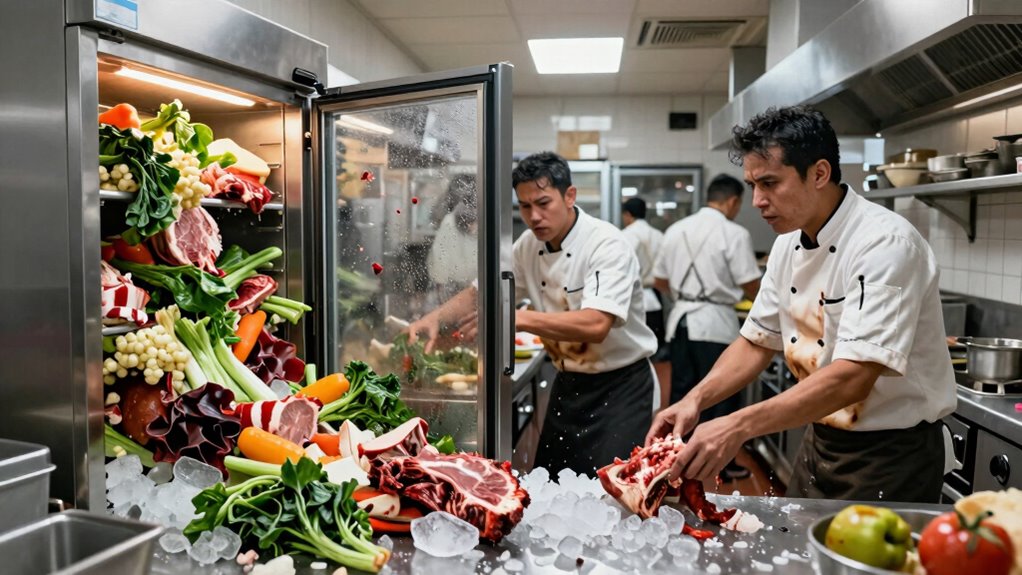

After a refrigeration failure, you should quickly evaluate the cause and move perishable foods to coolers with ice packs, prioritizing high-risk items like dairy and seafood. Use reliable thermometers to monitor temperatures and discard any foods that have been above safe temps for over two hours. Communicate roles clearly to your staff, notify health authorities, document everything, and repair or replace faulty units promptly. Following these steps will help you safeguard food safety and prevent future incidents. More helpful tips await if you keep exploring.

Get kitchen staples and gadgets delivered free with Prime
- Fast, free delivery on millions of items
- Prime Video, Amazon Music and more included
- Member-only deals all year
Key Takeaways
- Immediately assess the cause and relocate perishable foods to safe temperatures using coolers and ice packs.
- Monitor food temperatures regularly and discard any items above safe thresholds or showing spoilage signs.
- Notify health authorities, document the incident, and communicate clearly with staff about emergency procedures.
- Repair or replace faulty refrigeration units promptly, ensuring proper temperatures before resuming normal operations.
- Review and update emergency response plans, and train staff regularly to improve future incident handling.
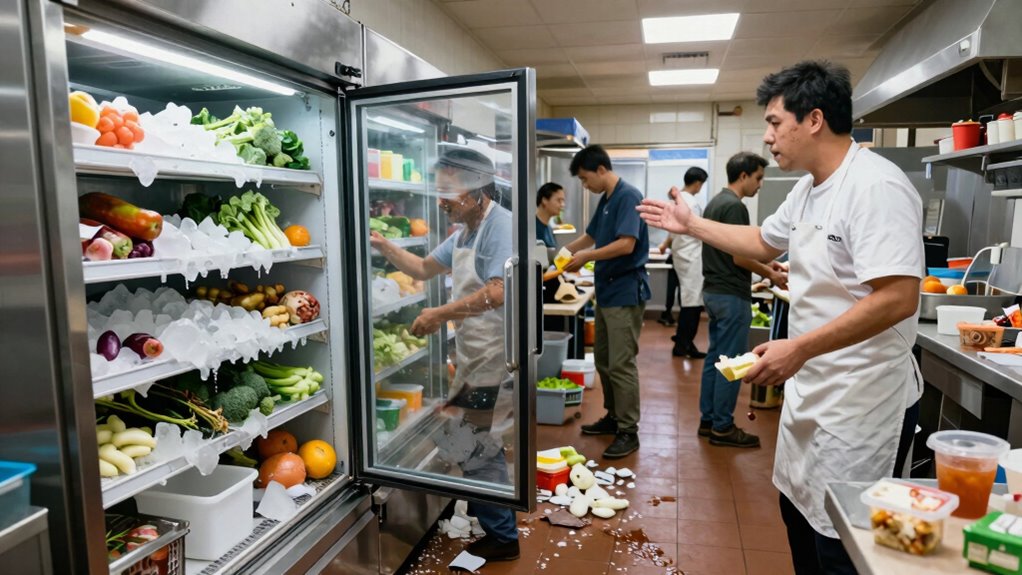
When refrigeration systems fail unexpectedly, restaurants face immediate and serious challenges in preserving their perishable food. The first priority is to ensure food safety by preventing the growth of harmful bacteria. Time is of the essence, so you need to act swiftly and systematically. Quickly assess the situation to determine the cause of the failure, whether it’s a power outage, equipment malfunction, or other issue. Once identified, implement your emergency procedures to minimize damage and protect your customers’ health.
Your emergency procedures should include immediately relocating perishable items that are still within safe temperature ranges. If you have an emergency plan in place, now’s the time to put it into action. Use coolers, ice packs, or alternative refrigeration options to keep food at safe temperatures—generally below 40°F (4°C). If you lack adequate backup supplies, prioritize the most perishable items like dairy, seafood, and fresh produce. Communicate with your staff to ensure everyone knows their roles in handling the situation efficiently. Additionally, having backup refrigeration plans in place can significantly reduce the impact of such failures. Regular maintenance and equipment checks are essential to prevent future failures and ensure continuous food safety.
Relocate perishable foods using coolers and ice packs, prioritizing dairy, seafood, and produce to maintain safety.
Document everything as you go—record times, actions taken, and the food items affected. This documentation can be critical for compliance and insurance claims later on. Keep close tabs on the temperature of stored food with a reliable thermometer, and discard any items that have been above safe temperatures for too long, typically over two hours, or if they exhibit signs of spoilage such as off smells, discoloration, or sliminess. Never compromise food safety for the sake of saving food. Remember, serving spoiled food can lead to serious health issues and legal liabilities. Additionally, consider consulting a food safety expert or food safety guidelines to ensure you’re following best practices during the crisis.
While managing the immediate crisis, notify your local health department and any relevant authorities about the refrigeration failure. This transparency is crucial for compliance and helps ensure you follow proper protocols. Additionally, consider implementing emergency preparedness practices to better handle future incidents. Once the situation is stabilized, thoroughly inspect and repair or replace the faulty refrigeration equipment. Confirm that the new or repaired units are functioning correctly and maintaining proper temperatures before resuming normal operations. Properly trained staff and emergency response training are vital components to handle such situations effectively.
Throughout the process, keep your staff informed and trained on emergency procedures. Regular training ensures everyone knows how to respond swiftly and correctly during refrigeration failures. After the incident, review what happened, identify any gaps in your emergency plan, and update procedures accordingly. This proactive approach helps protect your establishment’s reputation, maintains food safety standards, and minimizes the risk of future failures impacting your business. Ultimately, your quick, organized response can save perishable food and prevent health risks, safeguarding both your customers and your restaurant’s integrity.
As an affiliate, we earn on qualifying purchases.
Frequently Asked Questions
How Can Restaurants Prevent Refrigeration Failures Altogether?
To prevent refrigeration failures, you should implement regular preventive maintenance and guarantee your staff training is thorough. Schedule routine checks on temperature gauges, door seals, and condenser coils to catch issues early. Proper staff training helps your team identify potential problems before they escalate. By maintaining equipment proactively and educating your staff, you reduce the risk of breakdowns, ensuring food safety and minimizing costly disruptions.
What Are the Legal Obligations After a Refrigeration Failure?
Imagine a domino effect—if you ignore legal obligations after a refrigeration failure, liabilities fall like dominoes. You must report the incident to health authorities promptly, document the failure, and notify affected customers if needed. Legal compliance is essential to avoid penalties, and proactive liability management protects your reputation. Failing to act responsibly can lead to lawsuits, so stay informed about local laws and maintain thorough records of all actions taken.
How Should Staff Communicate With Customers During a Failure?
You should communicate openly with customers during a refrigeration failure by providing honest updates and demonstrating staff training in handling such situations. Offer customer reassurance by explaining the issue clearly and emphasizing your commitment to safety and quality. Keep customers informed about steps being taken to resolve the problem, and apologize for any inconvenience. This approach fosters trust and shows you’re proactively managing the situation, ensuring a positive experience despite the inconvenience.
What Insurance Coverage Is Available for Refrigeration Damages?
Imagine your restaurant’s refrigeration as a shield protecting your ingredients. When it fails, you can file insurance claims to recover losses. Your insurer may cover damages from equipment breakdowns, power surges, or other issues. Start with a damage assessment, documenting affected items and costs. Then, submit a claim promptly, providing detailed evidence. This process helps restore your shield quickly, minimizing financial strain and ensuring your kitchen stays protected.
How Long Can Food Be Safely Stored Without Refrigeration?
You can typically store perishable food safely for up to two hours without proper refrigeration, but this depends on the ambient temperature. If it’s above 90°F, limit this to one hour. Maintaining proper temperature control is essential for food safety; bacteria grow rapidly when food is left out. After this period, discard perishable items to prevent foodborne illnesses and guarantee your establishment maintains safety standards.
Conclusion
After a refrigeration failure, you need to act quickly to protect your customers and reputation. For instance, if a fridge breaks down during a busy dinner service, you might transfer perishables to backup coolers and notify health authorities. Implementing a solid emergency plan, regularly maintaining equipment, and training staff can save the day. Remember, swift, organized action keeps your food safe and your restaurant running smoothly, even when setbacks happen.
NFL season / tailgating Picks
team gear
As an affiliate, we earn on qualifying purchases.