

An effective emergency action plan guides you through quick evacuation and assembly procedures during crises. You should familiarize yourself with clear steps, designated exits, and roles to stay organized under stress. Regular drills help build muscle memory, reducing panic and injury. Knowing your assembly point and how to report missing persons ensures everyone’s safety. If you want to learn more about creating and practicing such plans, keep exploring these essential safety strategies.
Key Takeaways
- Develop clear evacuation procedures with designated routes and exits for all occupants.
- Conduct regular fire drills to familiarize personnel with evacuation steps and assembly points.
- Identify accessible, hazard-free assembly locations and establish headcount protocols upon arrival.
- Assign specific roles and communication methods to emergency response team members.
- Continuously review and update the emergency action plan to address evolving safety requirements.
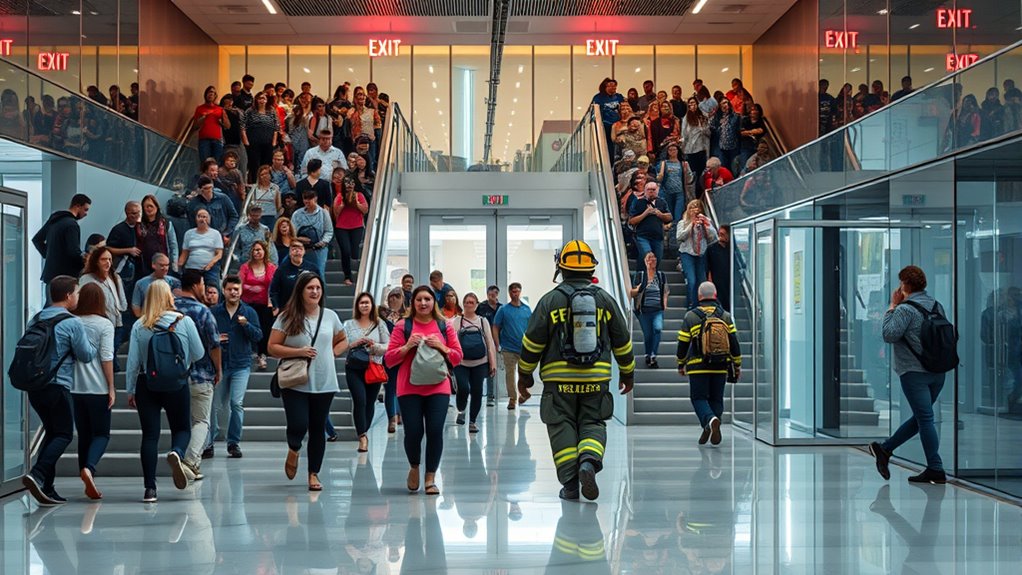
Have you ever wondered what to do in a crisis? It’s a question that often comes to mind when you’re faced with an emergency, and knowing the right steps can make all the difference. That’s where a well-crafted emergency action plan comes into play, especially when it involves evacuation and assembly procedures. One critical aspect of any plan is practicing fire drills regularly. These drills aren’t just routine; they’re essential for ensuring everyone understands how to react swiftly and safely when the unexpected happens. During fire drills, you get to familiarize yourself with the safety protocols in place, such as locating fire exits, using fire extinguishers, and understanding evacuation routes. These rehearsals help build muscle memory, reducing panic and confusion during an actual emergency.
The importance of clear, well-communicated safety protocols cannot be overstated. When an emergency strikes, you need to know exactly what to do without hesitation. Your emergency action plan should detail step-by-step instructions, including who will lead the evacuation, how to alert others, and the safest routes to exit the building. These protocols serve as your guide, ensuring that everyone moves quickly and safely to designated assembly points. It’s essential that these procedures are understood and routinely reviewed by all staff or occupants. Conducting periodic training sessions, including fire drills, reinforces these safety protocols, ensuring they become second nature. Remember, the goal isn’t just to evacuate but to do so efficiently and calmly, minimizing injury and chaos.
Once you’ve evacuated the building, the next critical step is assembling at a predetermined location. This assembly point should be easily accessible, away from potential hazards like fire or falling debris. When you arrive, it’s important to account for everyone, making sure no one is missing or injured. Your emergency action plan should specify how to perform headcounts, report missing persons, and communicate with emergency responders. Clear signage, maps, and regular drills help everyone remember where to go and what to do once they reach the assembly point. Being prepared also means having a plan for different types of emergencies, ensuring you’re not caught off guard. Practicing these steps regularly helps maintain a sense of readiness, so when real danger strikes, your response is swift, organized, and effective.
Frequently Asked Questions
How Often Should Evacuation Drills Be Conducted?
You should conduct evacuation drills at least twice a year to guarantee everyone stays prepared. Regular drill frequency helps you identify any issues with evacuation timing and improve response efficiency. It’s important to schedule these drills consistently, ideally every six months, and vary the times to simulate different scenarios. This way, you can minimize confusion, enhance safety, and ensure all occupants understand their roles during an emergency.
Who Is Responsible for Updating the Emergency Plan?
You need to take the reins when it comes to updating the emergency plan. As the responsible party, you should conduct regular plan reviews, ensuring it stays current. Collaborate with key stakeholders to clarify roles and responsibilities, making sure everyone’s on the same page. Keep in mind, a plan is only as good as its relevance, so don’t let it gather dust—update it regularly to stay prepared.
How Do Plans Adapt for People With Disabilities?
You adapt plans for people with disabilities by incorporating accessible design and assistive technology. This means you guarantee evacuation routes are wheelchair accessible, include visual and auditory alerts, and provide clear, easy-to-understand instructions. Regularly review and update these features based on feedback and evolving technology. By doing so, you create an inclusive plan that effectively guides everyone to safety during emergencies.
What Communication Methods Are Used During an Emergency?
In an emergency, you rely on radio communication and emergency alerts to stay informed and safe. These methods quickly deliver essential information, guiding you through the chaos. As you listen for updates, the tension builds, and your awareness heightens. With every alert, you’re better prepared to act swiftly, knowing that clear, direct communication can mean the difference between safety and danger. Stay alert, stay safe.
How Is Accountability Maintained During an Evacuation?
You maintain accountability during an evacuation by following fire safety and accountability protocols, such as taking attendance at designated assembly points. You should guarantee all personnel are accounted for by using checklists or headcounts, and communicate any missing individuals to emergency responders. Staying organized and adhering to these protocols helps ensure everyone’s safety, prevents confusion, and allows authorities to respond quickly if someone is unaccounted for.
Conclusion
Remember, your emergency action plan is your best defense—like a lifeboat in a storm. Without it, chaos can take over, and safety becomes uncertain. But with clear evacuation and assembly procedures, you gain control and confidence amid the chaos. It’s the difference between panic and preparedness, between confusion and calm. Stay proactive, stay prepared, and make certain everyone knows their role. Because in an emergency, being ready can make all the difference between safety and tragedy.