To improve slip prevention in kitchen walkways, you should use bright, visible wet floor signs and place them near wet spots. Invest in slip-resistant mats in high-risk areas and choose flooring with good traction. Promote quick cleanup of spills and keep cleaning tools handy. Encourage staff to wear slip-resistant shoes and educate them on safety protocols. Building a safety-focused culture helps everyone stay alert. Keep learning more to guarantee your kitchen stays slip-free and safe for everyone.

Get kitchen staples and gadgets delivered free with Prime
- Fast, free delivery on millions of items
- Prime Video, Amazon Music and more included
- Member-only deals all year
Key Takeaways
- Install slip-resistant flooring and mats in high-traffic and wet areas for enhanced traction.
- Use clear, visible signage to alert staff of wet surfaces immediately.
- Promote quick cleanup of spills and ensure cleaning supplies are easily accessible.
- Require staff to wear slip-resistant footwear and maintain proper footwear hygiene.
- Foster a safety-focused culture with ongoing training and regular safety protocol reviews.
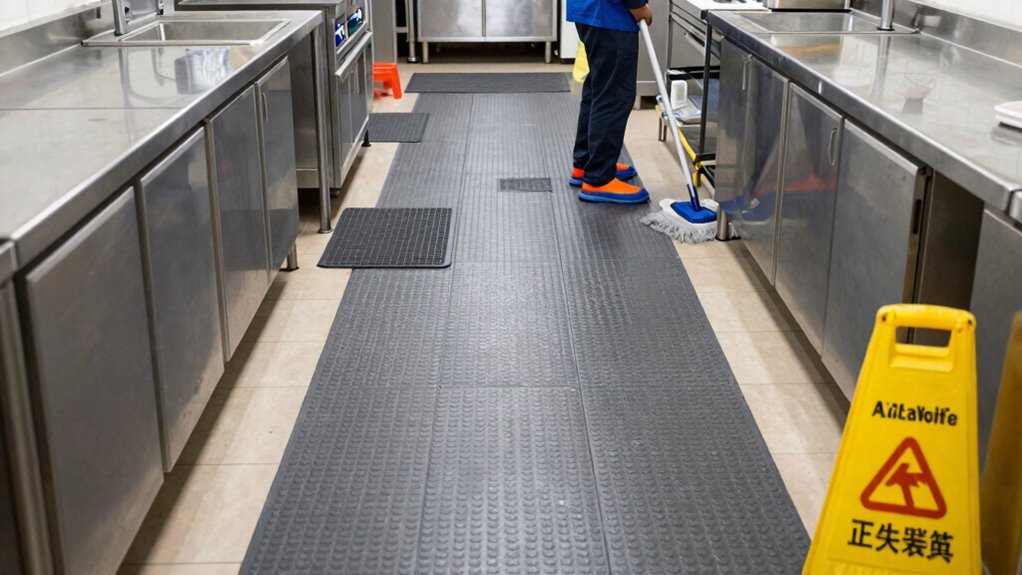
Have you ever slipped in a kitchen walkway and wondered how to prevent it from happening again? It’s a common concern, especially in busy kitchens where spills and wet surfaces are frequent. The first step in slip prevention is to recognize the importance of clear communication and physical barriers. Wet floor signage is your simplest, most immediate solution. When there’s a spill or the floor is wet, placing visible signs alerts everyone to exercise caution. These signs should be bright, easy to see from all angles, and placed at multiple points if necessary. Doing so not only helps prevent accidents but also demonstrates a proactive approach to safety, encouraging others to be mindful of their surroundings.
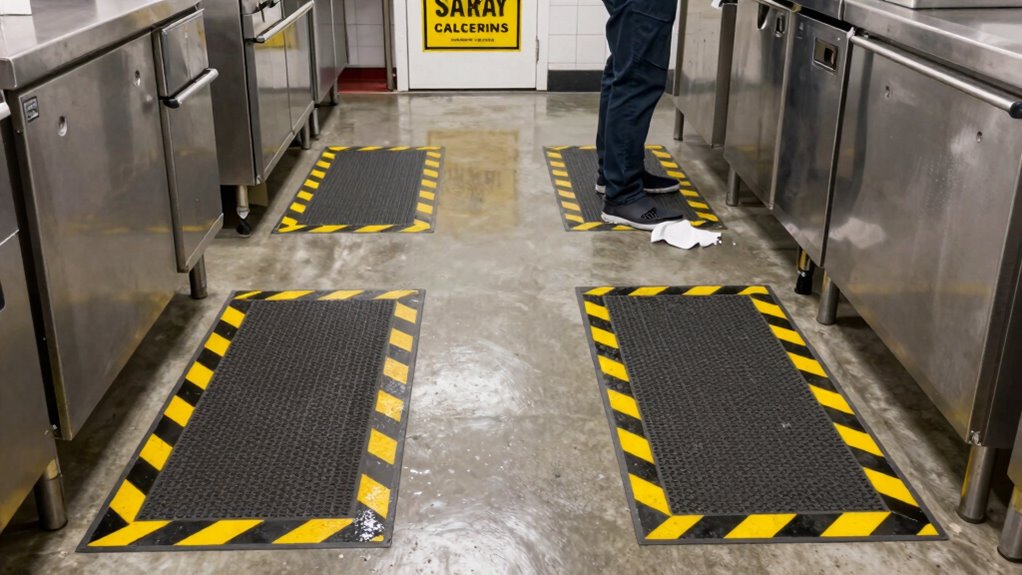
In addition to signage, investing in slip resistant mats can considerably improve safety. These mats are designed to provide better grip compared to standard flooring, especially in high-traffic or highly spill-prone areas. You can place slip resistant mats near sinks, dishwashers, or any area where water tends to accumulate. Regularly inspect these mats for wear and tear, replacing them when they become frayed or lose their grip. Properly maintained mats create a safer walking surface and reduce the risk of slips and falls, which can lead to injuries or worse. Ensuring that the flooring material is suitable for slip prevention can also make a significant difference in overall safety. Additionally, selecting flooring with slip-resistant properties can greatly enhance overall safety and reduce the likelihood of accidents. A proper flooring choice plays a crucial role in creating a slip-resistant environment. Incorporating appropriate flooring materials that meet safety standards can further enhance slip resistance and prevent hazards. Regular maintenance and floor cleaning routines are essential for removing debris and substances that may compromise grip.
Beyond signage and mats, maintaining a clean and dry kitchen floor is essential. Encourage everyone in the kitchen to wipe up spills immediately, and ensure that mops and absorbent materials are readily available. Using absorbent mats or towels in high-risk zones can also help soak up excess water before it becomes a hazard. Training staff to recognize wet spots and to respond swiftly creates a culture of safety. Consistent cleaning routines and immediate response to spills can drastically cut down on accidents. Regularly reviewing and updating safety protocols ensures that slip prevention remains a priority in your kitchen.
Footwear also plays an important role in slip prevention. Recommend or require slip-resistant shoes that provide better traction than regular sneakers or dress shoes. Proper footwear can give you better control and reduce the chances of slipping, especially when walking over wet surfaces or uneven flooring.
Ultimately, slip prevention in kitchen walkways depends on a combination of visible warnings, physical barriers, diligent cleaning, and proper footwear. By implementing these measures, you create a safer environment for everyone. When everyone stays alert and takes proactive steps, slips become less frequent, and your kitchen becomes a safer space for all. Remember, safety isn’t just about avoiding accidents; it’s about creating a culture that prioritizes well-being at every turn.
As an affiliate, we earn on qualifying purchases.
Frequently Asked Questions
What Are the Best Non-Slip Flooring Options for Kitchens?
You should consider flooring materials like rubber, vinyl, or textured tiles, as they provide excellent slip resistance for kitchens. These options help reduce accidents when floors get wet or greasy. Also, pair the flooring with safety footwear that has slip-resistant soles to enhance safety further. Together, durable flooring materials and proper footwear create a safer kitchen environment, minimizing slip risks and keeping you protected during busy cooking hours.
How Often Should Kitchen Walkways Be Inspected for Hazards?
You should inspect your kitchen walkways at least weekly for hazards. Regular floor maintenance helps identify spills, debris, or uneven surfaces that could cause slips. By practicing hazard awareness, you stay proactive in addressing potential risks before accidents happen. Make it a routine to check for signs of wear or damage and clean spills promptly, ensuring a safe environment for everyone working in or visiting your kitchen.
Are There Specific Cleaning Products That Reduce Slipperiness?
Yes, you should use cleaning products that enhance slip resistance. Look for solutions with slip resistant coatings or anti-slip mats for added safety. These coatings create a textured surface that reduces slipperiness, while anti-slip mats provide extra grip, especially in high-traffic areas. Regularly cleaning with these products helps maintain their effectiveness, preventing slips and falls. Always follow manufacturer instructions for maximum safety results.
How Can I Train Staff to Recognize Slip Hazards?
A stitch in time saves nine, so start with thorough staff training on hazard recognition. You can conduct regular safety sessions, emphasizing common slip risks like wet floors or clutter. Use real-life examples and visual aids to sharpen their eyes for hazards. Encourage a safety-first mindset, and remind staff to report hazards immediately. Well-trained employees will naturally become your best line of defense, preventing slips before they happen.
What Are Emergency Procedures for Slip and Fall Incidents?
In case of a slip and fall, you should activate your emergency response plan immediately. Make certain the injured person stays still and call for medical assistance. Administer first aid procedures, such as applying pressure to bleeding wounds or supporting injured limbs. Keep the area clear to prevent further accidents. Promptly document the incident and report it to the appropriate authorities, guaranteeing everyone knows the emergency response steps for quick, effective action.
Conclusion
By keeping your kitchen floors dry and clutter-free, you create a safe path through a bustling space. Imagine walking across a smooth, polished surface that reflects the overhead lights, every step confident and secure. When you prioritize slip prevention, you transform your kitchen into a haven where accidents are minimized, and safety shines as brightly as the gleaming tiles beneath your feet. Stay vigilant, and your kitchen walkway will remain a secure, slip-free zone.
NFL season / tailgating Picks
team gear
As an affiliate, we earn on qualifying purchases.