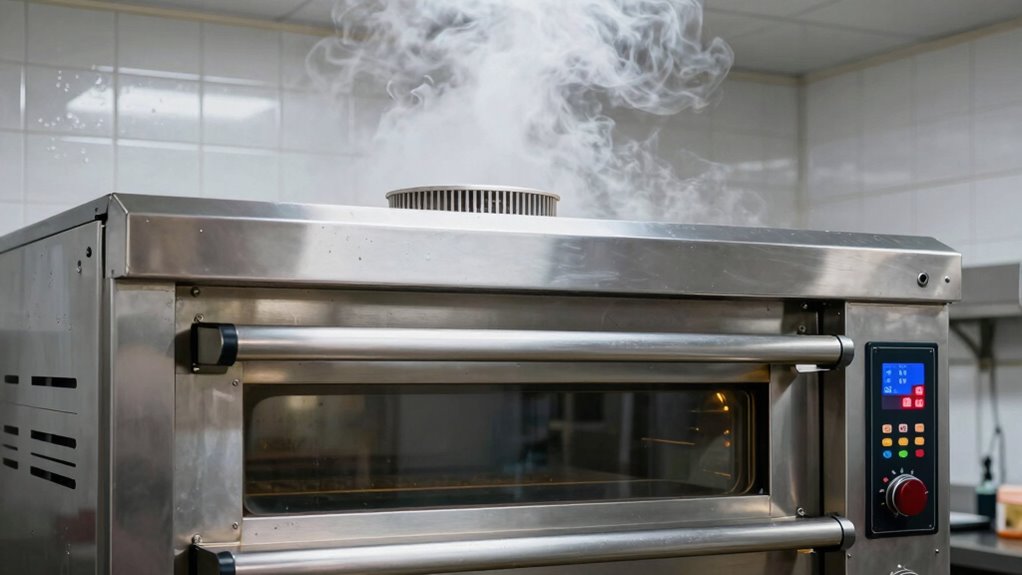

Proper venting for high-speed ovens is vital to guarantee safety, maintain air quality, and keep your operation running smoothly. Many operators are caught off guard by the importance of correct placement of exhaust hoods, duct sizing, and regular maintenance of filters to prevent smoke and fumes. Neglecting these requirements can lead to safety issues and costly downtime. Keep these essentials in mind to avoid common pitfalls and discover ways to optimize your venting system even further.
Key Takeaways
- Proper venting minimizes smoke, fumes, and odors, ensuring safety and compliance during high-speed oven operation.
- Inadequate duct placement or size can cause poor airflow, leading to smoke buildup and safety hazards.
- Regular maintenance of filters and vents is critical to prevent grease buildup and ensure efficient airflow.
- High-demand ovens may require upgraded venting infrastructure to meet airflow and safety standards.
- Proper integration of venting systems during kitchen design prevents costly retrofits and enhances overall safety.
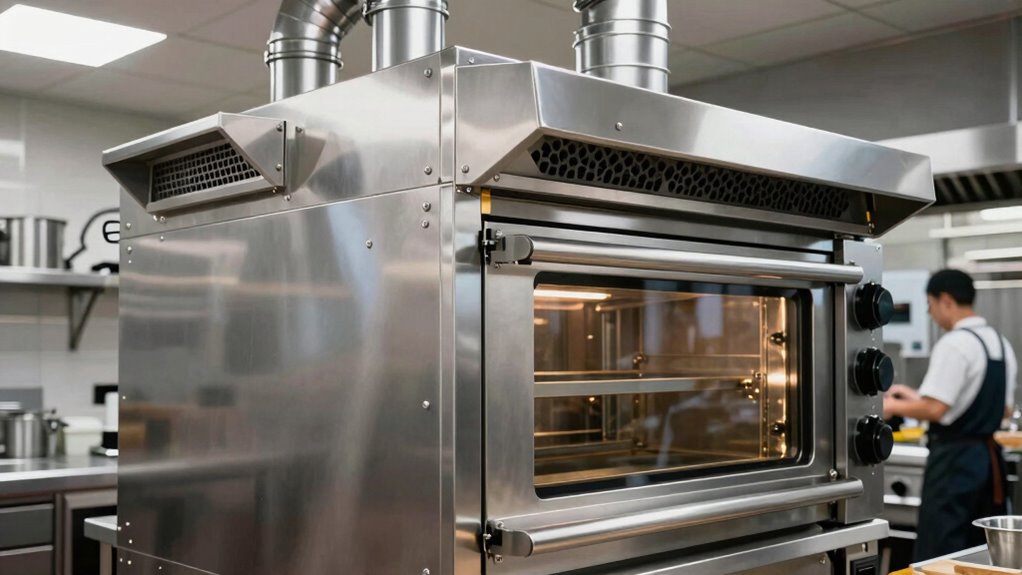
High-speed ovens require proper venting to guarantee safe operation and maintain indoor air quality. If you’re upgrading your kitchen or designing a new space, understanding the venting requirements for these appliances is vital. Proper ventilation isn’t just about compliance; it directly impacts the safety of your staff and the overall efficiency of your kitchen. When integrating high-speed ovens into your kitchen design, you need to consider how the venting system will work seamlessly with other equipment and layout features. Overlooking this aspect can lead to poor air circulation, lingering odors, and even potential health hazards from fumes or smoke. Making sure that your ventilation setup is correctly planned from the start will save you headaches later and keep your kitchen running smoothly.
Proper venting ensures safety, efficiency, and air quality in your high-speed oven setup.
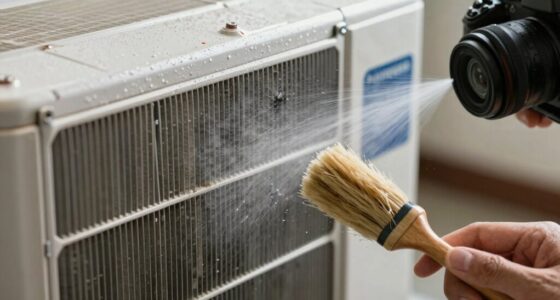
One common mistake operators make is underestimating the importance of equipment maintenance in relation to venting. Regularly inspecting and cleaning your ventilation system is essential to prevent grease buildup, which can clog filters and reduce airflow. Neglecting these maintenance tasks can cause your vent system to become inefficient, leading to overheating or smoke issues during busy hours. It’s worth investing time and resources into routine checks and filter replacements to keep everything functioning at its best. This proactive approach not only prolongs the life of your ventilation equipment but also ensures that the kitchen environment remains safe and comfortable for everyone working there. Additionally, understanding the impact of technology on venting efficiency can help in selecting the most suitable systems for your needs.
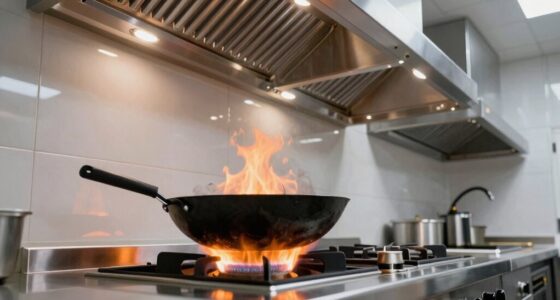
In many cases, the design of your kitchen can influence how effectively you can vent high-speed ovens. Think about the placement of your appliances relative to existing exhaust hoods or ventilation ducts. Proper kitchen design minimizes the distance between the oven’s exhaust point and the venting system, reducing the risk of smoke or fumes escaping into the dining area. When planning your layout, consider the airflow patterns and how to optimize them with appropriate duct sizes and placement. Sometimes, you might need to upgrade your existing ventilation infrastructure or add dedicated exhaust systems to meet the demands of high-speed oven operation. Remember, a well-thought-out kitchen design that emphasizes efficient venting can prevent costly renovations down the line.
Ultimately, integrating high-speed ovens into your kitchen isn’t just about choosing the right model. It involves a thorough understanding of venting requirements and proper equipment maintenance. By paying close attention to how your ventilation system is designed and maintained, you’ll ensure a safer, healthier, and more efficient kitchen environment. Proper venting protects your staff from harmful fumes and keeps indoor air quality high, while good equipment maintenance guarantees that your system continues to operate at peak performance. Don’t overlook this vital aspect—it’s the backbone of a functional, compliant, and safe commercial kitchen.
Frequently Asked Questions
How Often Should Vent Filters Be Replaced in High-Speed Ovens?
You should replace vent filters in high-speed ovens according to the filter maintenance replacement schedule, typically every 3 to 6 months. Regularly inspecting filters helps prevent buildup and guarantees proper venting. Keep an eye on your oven’s performance and follow the manufacturer’s guidelines, as a timely replacement maintains safety and efficiency. Don’t wait for issues to arise—sticking to the replacement schedule keeps your oven running smoothly.
Are There Specific Building Codes for Venting High-Speed Ovens?
Yes, there are specific building codes and ventilation standards you need to follow when venting high-speed ovens. These codes ensure proper airflow, safety, and compliance with local regulations. You should check with your local building authority to determine the exact requirements, as they can vary. Adhering to these standards helps prevent fire hazards, ensures effective odor control, and keeps your facility compliant with safety regulations.
Can Portable Venting Solutions Meet Safety Standards?
You can rely on portable venting solutions to meet safety standards if properly installed and maintained. For example, a restaurant upgraded to portable venting, making certain exhaust airflow and filtration were adequate, keeping staff safe and compliant. These systems can be effective, but you must verify they meet local building codes and safety standards. Regular inspections and proper setup are essential to ensure they function correctly and keep your environment safe.
What Are the Consequences of Improper Venting on Oven Performance?
If you neglect proper venting, your oven’s ventilation efficiency drops, causing heat and smoke buildup. This can lead to fire hazards, risking damage and safety breaches. You might also see reduced oven performance, longer cooking times, and inconsistent results. To keep your oven running smoothly and safely, verify venting systems are correctly installed and maintained, preventing dangerous blockages or leaks that compromise safety and efficiency.
How Do Venting Requirements Vary Between Different High-Speed Oven Models?
Venting regulations and installation differences vary across high-speed oven models, so you need to check each manufacturer’s guidelines carefully. Some ovens require direct venting to the outside, while others might use recirculating systems. To guarantee safety and peak performance, follow the specific venting instructions for your model, and consider how installation differences impact airflow and exhaust. Proper venting prevents buildup and maintains efficient operation.
Conclusion
Remember, understanding venting requirements isn’t just about compliance—it’s about ensuring smooth operations and safety. When you pay close attention now, you’re setting the stage for fewer surprises down the line. Sometimes, the smallest details can make a big difference in keeping your kitchen running seamlessly. Embrace these guidelines with care, and you’ll find that what seems like a minor step can lead to a more comfortable, worry-free environment for everyone involved.