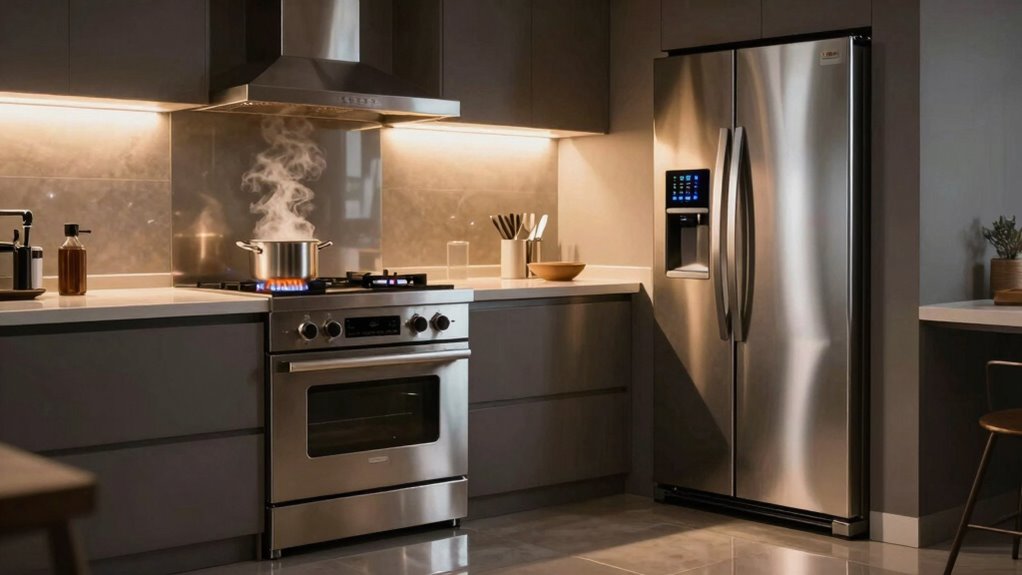

When you upgrade to new kitchen equipment, it’s not just your utility bill that changes—heat output often increases due to faster, more powerful appliances. Modern machines tend to produce more heat even as they become more efficient, which can raise your kitchen’s overall temperature. Proper placement and maintenance are essential to managing this added heat and preventing discomfort. To understand how these changes impact your kitchen environment and what you can do about them, keep exploring the details below.

Get kitchen staples and gadgets delivered free with Prime
- Fast, free delivery on millions of items
- Prime Video, Amazon Music and more included
- Member-only deals all year
Key Takeaways
- New equipment often has higher power output and faster operations, increasing heat generation beyond just utility costs.
- Modern appliances may produce more heat despite energy efficiency improvements, impacting overall heat load.
- Upgrading to newer equipment can alter airflow and ventilation needs, affecting heat removal requirements.
- Increased heat output from new appliances requires adjustments in layout and ventilation to maintain comfort.
- Regular maintenance of new equipment ensures optimal efficiency and prevents excessive heat buildup.

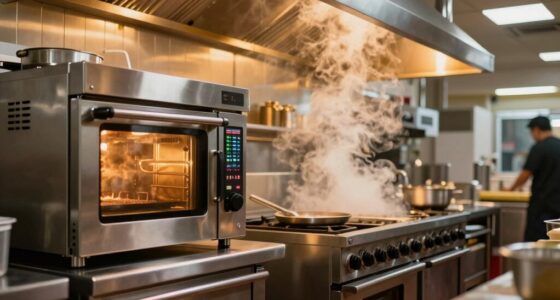
Understanding your kitchen’s heat load is essential for maintaining a comfortable and energy-efficient space. When you evaluate how much heat your kitchen generates, you’re taking the first step toward optimizing both comfort and utility costs. Modern equipment, like high-powered stoves, ovens, and refrigerators, can considerably increase the heat produced in your kitchen. This added heat doesn’t just impact your energy bill; it also influences the overall environment, making it uncomfortable to work or cook during hot days or busy hours. To manage this effectively, you need to contemplate factors such as ventilation efficiency and equipment placement, which play vital roles in controlling heat buildup.
Managing heat load through ventilation and appliance placement enhances kitchen comfort and efficiency.
Good ventilation efficiency is key to removing excess heat, steam, and humidity that come from cooking and appliances. When your ventilation system isn’t functioning well, heat and moisture tend to linger, raising the temperature and creating an uncomfortable space. Upgrading or properly maintaining your range hoods, exhaust fans, and vents can drastically improve airflow and heat removal. Properly vented kitchens allow hot air to escape quickly, reducing the strain on your cooling systems and keeping your kitchen cooler for longer periods. When you prioritize ventilation efficiency, you’ll notice a more balanced environment, which not only keeps you comfortable but also prevents the buildup of indoor humidity that can lead to mold and other issues. Additionally, ventilation efficiency plays a crucial role in maintaining good indoor air quality and preventing the accumulation of pollutants and excess moisture. Recognizing the importance of indoor air quality is essential for creating a healthier kitchen environment. Furthermore, understanding the heat load of your kitchen helps you plan for future equipment upgrades and layout adjustments that can optimize energy use. Proper equipment maintenance also ensures appliances operate efficiently and produce less unnecessary heat. Regularly monitoring and adjusting your ventilation systems can help prevent heat buildup from reaching uncomfortable levels and extend the lifespan of your appliances.
Equipment placement is another critical factor that influences your kitchen’s heat load. Positioning heat-generating appliances strategically can help minimize their impact on the overall space. For example, placing the stove or oven away from air conditioning vents or cooler parts of your kitchen allows the heat they produce to dissipate more effectively. Additionally, arranging appliances to promote better airflow prevents hot spots and ensures that heat doesn’t accumulate in confined areas. When you think about equipment placement, you’re also reducing the burden on your cooling system, which means less energy consumption and lower utility bills.
New equipment often introduces more efficient technology, but it can also produce more heat due to increased power and faster operation. This means that even the most energy-efficient appliances need to be carefully integrated into your kitchen’s layout. By focusing on ventilation efficiency and strategic equipment placement, you prevent these appliances from turning your kitchen into a sauna. Not only will this keep your space more comfortable, but it also contributes to better energy management, possibly reducing your utility bills over time. Ultimately, understanding and managing your kitchen’s heat load involves a combination of thoughtful design and ongoing maintenance to guarantee your kitchen remains a pleasant, efficient space to cook and gather.
As an affiliate, we earn on qualifying purchases.
Frequently Asked Questions
How Does Kitchen Heat Load Affect Indoor Air Quality?
Kitchen heat load impacts your indoor air quality by increasing temperature and humidity, which can promote mold growth and worsen pollutant control. As heat rises, it can cause airborne grease, smoke, and odors to linger, reducing air quality. You might notice a stuffy environment or lingering smells. Proper ventilation helps manage heat load, ensuring pollutants are expelled and air quality remains safe and comfortable for everyone.
What Safety Measures Are Needed With Increased Heat Load?
Hold onto your hat—fire safety is vital as heat load increases. You need to regularly inspect and maintain your equipment to prevent overheating and potential fires. Install proper ventilation and smoke detectors, and guarantee fire extinguishers are accessible and functional. Train staff on safety procedures, emphasizing the importance of equipment maintenance. These steps help protect your team and property, keeping your kitchen safe amid rising heat demands.
How Often Should Kitchen Ventilation Systems Be Inspected?
You should inspect your kitchen ventilation systems at least every six months to guarantee peak performance. During inspections, focus on HVAC calibration and equipment maintenance, checking for grease buildup, loose components, and airflow issues. Regular inspections help maintain proper ventilation, control heat load, and prevent fire hazards. Keeping up with these routines ensures your system runs efficiently, prolongs equipment lifespan, and keeps your kitchen safe and compliant with health standards.
Can New Equipment Reduce Overall Energy Consumption?
Yes, new equipment can substantially reduce your overall energy consumption. Upgrading to energy-efficient appliances improves your kitchen’s performance and cuts utility costs. These equipment upgrades optimize heat load management, ensuring less wasted energy and better cooling. By choosing modern, efficient tools, you enhance your kitchen’s energy efficiency, ultimately lowering your environmental impact and saving you money over time.
What Are the Best Practices for Managing Heat in Small Kitchens?
To manage heat in small kitchens, focus on optimizing cooking zones by organizing appliances to minimize heat buildup. Use heat-resistant materials on walls and surfaces to prevent heat transfer and protect your workspace. Make certain of proper ventilation to exhaust excess heat and humidity efficiently. Regularly maintain equipment to keep it running smoothly, and consider installing partition barriers around hot appliances, which helps contain heat and keeps your kitchen cooler and safer.
Conclusion
As you upgrade your kitchen equipment, remember that every new appliance isn’t just a piece of technology—it’s a blazing star in your culinary galaxy, quietly demanding more from your energy universe. Your utility bill may swell like a rising tide, but the true heat load is the silent symphony of heat and power that transforms your space. Embrace these changes, for they’re the brushstrokes of progress shaping your culinary masterpiece.
Columbus Day / Indigenous Peoples' Day Picks
long weekend sales
As an affiliate, we earn on qualifying purchases.