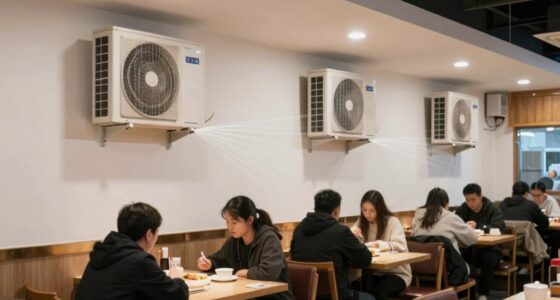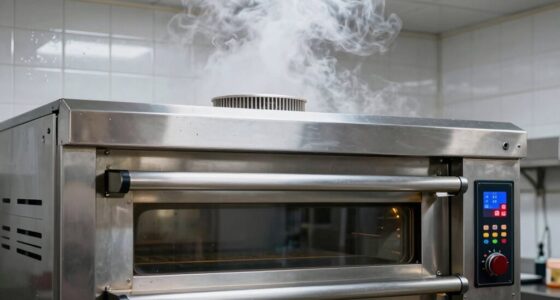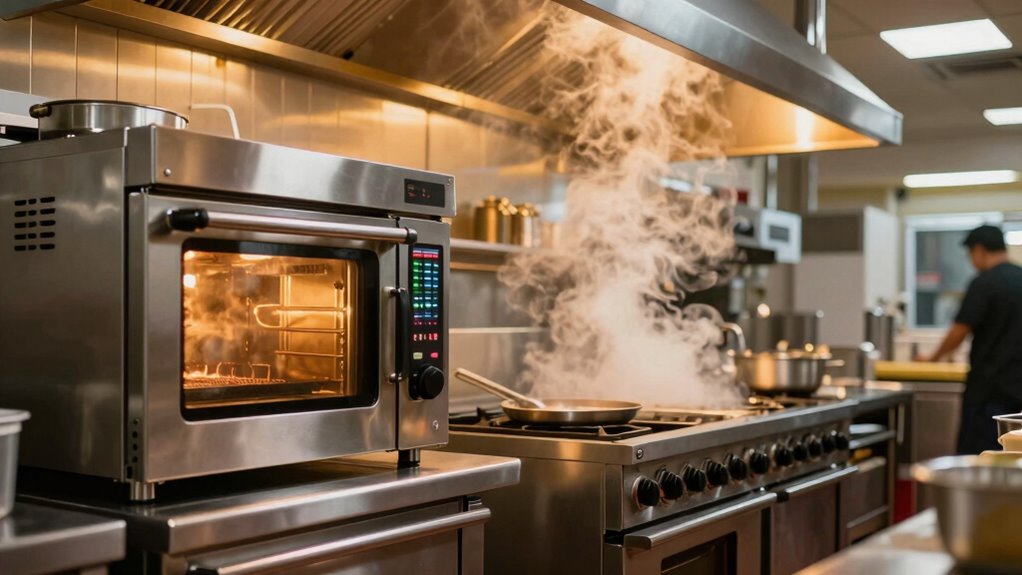
When you add higher-capacity equipment to your kitchen without proper heat load planning, it can make your space hotter overnight. If ventilation isn’t adjusted or balanced, the extra heat from the new units can become trapped, raising indoor temperatures and causing discomfort. Poorly coordinated systems might also increase energy use and reduce efficiency. To keep your kitchen comfortable and efficient, it’s essential to understand how ventilation and equipment interact — learn more about this process below.
Key Takeaways
- New equipment with higher capacity can generate excess heat if ventilation isn’t properly adjusted.
- Inadequate ventilation may trap heat, causing indoor temperatures to rise overnight.
- Poor system balancing prevents effective heat removal, leading to heat buildup from new appliances.
- Upgrading heating units without matching ventilation can increase indoor heat loads unexpectedly.
- Proper planning ensures ventilation and heating systems work together to maintain comfortable, stable indoor temperatures.
Effective heat load planning is essential for ensuring your heating system meets the demands of your space efficiently and reliably. When you’re considering upgrading or installing new equipment, understanding how it impacts your overall thermal environment is crucial. One key aspect often overlooked is how improved ventilation systems and the integration of new heating units influence energy efficiency and indoor comfort. If your ventilation systems aren’t properly designed or balanced, they can inadvertently increase heat loads, making your kitchen hotter overnight without you realizing it. Hence, a comprehensive approach to heat load planning involves evaluating how your ventilation interacts with your heating equipment, ensuring that they work harmoniously to optimize energy use and indoor climate. Additionally, considering system balancing helps prevent unintended heat retention and promotes a more consistent indoor temperature.
When you introduce new equipment into your kitchen, it’s tempting to assume that more modern, higher-capacity units will automatically make your space more comfortable. However, without proper planning, these new systems can create unintended consequences. For example, a more powerful heater might generate more heat than necessary if your ventilation isn’t capable of removing excess moisture and heat effectively. Poorly balanced ventilation systems can trap heat, causing temperature spikes that make the space uncomfortable and increase energy consumption. To prevent this, you need to assess your existing ventilation and determine whether it supports the new equipment’s capacity. Upgrading or adjusting your ventilation systems can help guarantee heat is properly exhausted and fresh air circulates effectively, maintaining a stable and comfortable environment.
Energy efficiency plays a vital role in heat load planning because it directly affects your operating costs and environmental impact. When your heating and ventilation systems are optimized, they consume less energy to produce the same or greater level of comfort. This means that selecting equipment with high energy efficiency ratings and designing your ventilation to minimize heat loss can save you money over time. Additionally, proper insulation, sealing leaks, and using controls like thermostats and timers can further improve efficiency. When your systems work together seamlessly, you reduce unnecessary energy expenditure and avoid the common pitfall of overheating the space due to overpowered equipment or inadequate ventilation.
Frequently Asked Questions
How Can I Reduce Heat Load From New Kitchen Equipment?
To reduce heat load from new kitchen equipment, focus on proper ventilation strategies and appliance placement. Make certain your ventilation system is efficient, with exhaust fans and hoods positioned close to heat sources to quickly remove hot air. Place appliances strategically to minimize heat buildup in busy work areas, and consider installing reflective surfaces or insulation to reduce heat absorption. These steps help keep your kitchen cooler and improve overall comfort.
What Are the Signs of Insufficient Ventilation During Equipment Upgrades?
You’ll notice ventilation issues if your kitchen becomes uncomfortably hot, humid, or experiences lingering odors after equipment upgrades. Poor airflow might cause equipment to overheat or operate inefficiently. Signs include excessive heat buildup, reduced air quality, and equipment noise. To avoid these problems, make certain your new equipment is compatible with your ventilation system and check for proper airflow. Upgrading or adjusting ventilation can prevent these issues and keep your kitchen safe and comfortable.
Are There Specific Appliances That Generate More Heat Than Others?
Some appliances act like hot coals in your kitchen, generating more heat than others. Commercial ovens, fryers, and dishwashers produce significant heat, especially if not well-maintained. To keep your space cooler, focus on regular appliance maintenance and apply proper insulation techniques to reduce heat transfer. By managing these high-heat appliances effectively, you’ll prevent your kitchen from turning into a sauna overnight.
How Often Should Heat Load Assessments Be Updated?
You should update your heat load assessments annually or whenever you add or replace equipment. Regular updates consider your equipment’s lifespan and maintenance schedules, ensuring accurate calculations. As appliances age or undergo maintenance, their heat output can change, impacting your kitchen’s temperature. Staying proactive helps prevent overheating, keeps your environment comfortable, and optimizes energy efficiency. Regular assessments are essential for adapting to equipment changes and maintaining a safe, efficient kitchen.
Can Heat Load Planning Help Lower Energy Costs?
Absolutely, heat load planning can help lower your energy costs. When you optimize your equipment and understand your kitchen’s energy efficiency, you cut down on unnecessary power use. This proactive approach saves money and keeps your environment comfortable. Think of it as hitting two birds with one stone—improving efficiency while reducing expenses. Regular assessments guarantee you’re always on top of your energy game, making your kitchen both smarter and more cost-effective.
Conclusion
Remember, each new piece of equipment is like adding a small fire to your kitchen’s hearth. If you don’t plan carefully, these sparks can quickly turn into an uncontrollable blaze, making your space unmanageable overnight. Think of heat load planning as your shield, guiding you to balance the flames and keep your kitchen cool. With thoughtful foresight, you guarantee your culinary haven remains a sanctuary, not a bonfire. Control the sparks, and your kitchen stays comfortable and safe.