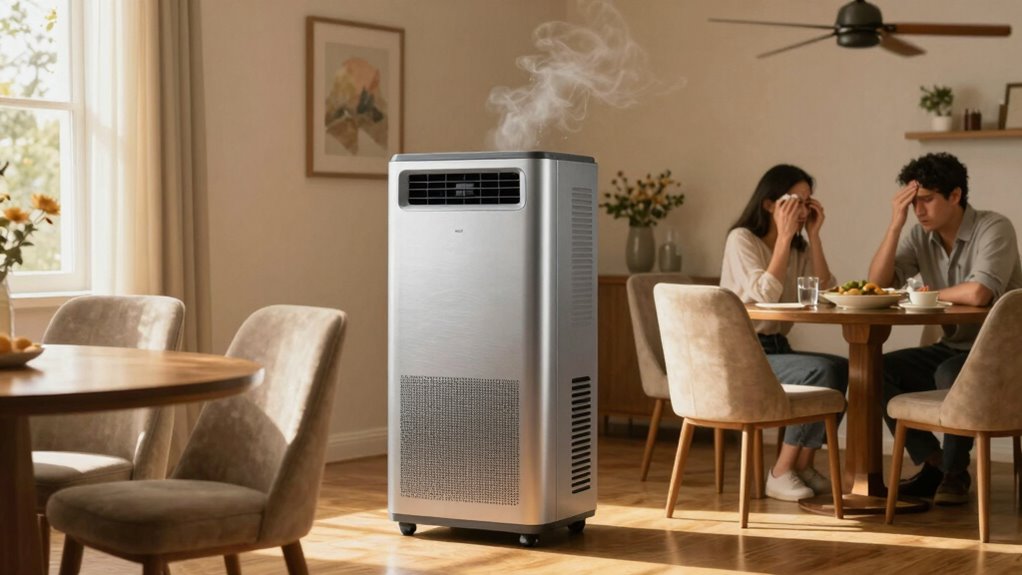

To avoid the BTU trap with portable AC units, you need to pick a model with the right capacity for your dining room, not just the highest BTU rating. Oversized units cycle on and off frequently, wasting energy and leaving the space hot. Focus on energy-efficient options with proper room matching and quiet operation. If you want to prevent discomfort and save on energy, understanding these details can make all the difference. Keep going to discover how you can optimize your cooling system.
Key Takeaways
- Oversized portable AC units cause short cycling, leading to inefficient cooling and uncomfortable hot spots in dining rooms.
- Choosing the right BTU capacity based on room size prevents the BTU trap and ensures effective, even cooling.
- High Energy Efficiency Ratio (EER) units reduce power consumption and help avoid excessive energy costs during dining.
- Properly matched capacity and features like adjustable settings improve comfort and prevent units from leaving rooms hot.
- Avoiding common misuses of BTU ratings ensures the portable AC cools effectively without wasting energy or causing discomfort.

Portable AC units offer a flexible and convenient way to cool specific areas without the need for permanent installation. When you’re trying to keep a dining room comfortable, these units can be a game-changer. However, to get the most out of your portable AC, you need to understand how energy efficiency and noise levels influence their performance. Many models claim to be energy-efficient, but some can still guzzle power if not chosen carefully. Look for units with high Energy Efficiency Ratio (EER) ratings—these units do a better job cooling without wasting electricity, saving you money on your energy bills over time. Although portable ACs are designed to be energy-conscious, it’s easy to fall into the trap of selecting a unit based solely on BTU capacity, which leads to the so-called BTU trap. This happens when a unit with a high BTU rating is purchased in an attempt to cool a large space quickly, but it ends up cycling on and off excessively, wasting energy and causing discomfort.
Choose energy-efficient portable ACs with appropriate BTU ratings to stay cool without wasting power or causing discomfort.
Noise levels are another critical factor that many overlook. When you’re hosting a dinner or enjoying a quiet evening, a noisy portable AC can ruin the ambiance. Some units produce loud, disruptive sounds during operation, making conversations difficult and diminishing the overall comfort of your dining experience. The good news is that many modern portable ACs are designed with noise reduction features, but it’s essential to check decibel ratings before buying. A quieter unit provides consistent cooling without drawing unwanted attention, allowing your guests to relax and enjoy their meals without the hum of an industrial machine.
To avoid the BTU trap, focus on matching your unit’s capacity to the size of your dining room. Oversizing a portable AC might seem like a good idea, but it often causes short cycling, which wastes energy and leads to uneven cooling. Conversely, selecting a unit with too low a capacity means it’ll struggle to maintain a comfortable temperature, forcing it to run constantly and increasing energy consumption. Balance is key. Additionally, consider units with adjustable settings and energy-saving modes, which help optimize performance while minimizing noise and power use. Recognizing how market trends in precious metals influence consumer choices can also help you make more informed decisions about energy-efficient appliances.
In the end, choosing the right portable AC for your dining area involves more than just looking at BTU ratings. Pay attention to energy efficiency and noise levels to ensure you’re getting a unit that cools effectively, runs quietly, and saves you money. When you select wisely, you’ll enjoy a comfortable, inviting space that stays cool without the frustrations of excessive noise or high energy costs.
Frequently Asked Questions
How Often Should I Clean My Portable AC Unit’s Filter?
You should clean your portable AC unit’s filter at least once a month to maintain ideal filter maintenance and guarantee it runs efficiently. If you use your unit more frequently or in a dusty environment, consider cleaning the filter every two weeks. Regular cleaning prevents dust buildup, improves air quality, and prolongs the unit’s lifespan. Follow the manufacturer’s cleaning schedule for best results and keep your space cool and comfortable.
Can Portable AC Units Be Used Outdoors?
Yes, you can use portable AC units outdoors, but proper outdoor cooling requires careful portable AC placement. Make sure you choose a shaded, well-ventilated spot to prevent the unit from overheating and to maximize efficiency. Keep it away from direct rain and moisture, and consider using a cover when not in use. Using a portable AC outdoors works best when you optimize placement and protect the unit from elements.
What’s the Average Lifespan of a Portable AC Unit?
A portable AC unit typically lasts around 5 to 10 years if you keep up with air filter maintenance and monitor refrigerant levels. Like a well-oiled machine, it needs regular care to run smoothly. Dust and debris can shorten its lifespan, so clean filters often and verify refrigerant isn’t low. With proper upkeep, you’ll get the most bang for your buck and enjoy cool comfort longer.
Are Portable AC Units Energy-Efficient for Long-Term Use?
Portable AC units can be energy-efficient if you choose models with good cooling efficiency and energy consumption ratings. While they might use more power than central systems, selecting energy-efficient units helps reduce electricity bills over time. Keep in mind, their effectiveness depends on proper size and usage. To maximize efficiency, maintain filters and venting, and avoid overcooling. This way, you save energy and keep your space comfortably cooled.
How Do I Properly Store My Portable AC During Winter?
To properly store your portable AC during winter, start with winter storage by cleaning the unit thoroughly, removing any debris, and drying it completely. Perform off-season maintenance by inspecting hoses and filters, replacing or repairing parts if needed. Then, store the unit in a cool, dry place, preferably in its original packaging or covered with a breathable cloth. This guarantees it stays in good condition for future use.
Conclusion
Don’t fall into the BTU trap and struggle with stuffy, sweltering spaces. Choosing the right portable AC unit means you’ll stay cool, comfortable, and confident. Focus on function, not just size, to avoid the frustration of fizzling airflow and heating hassles. Properly powered and perfectly planned, your dining room will be a cool, calm, and comfortable haven. Remember, a well-wielded unit keeps the heat out and happiness in!