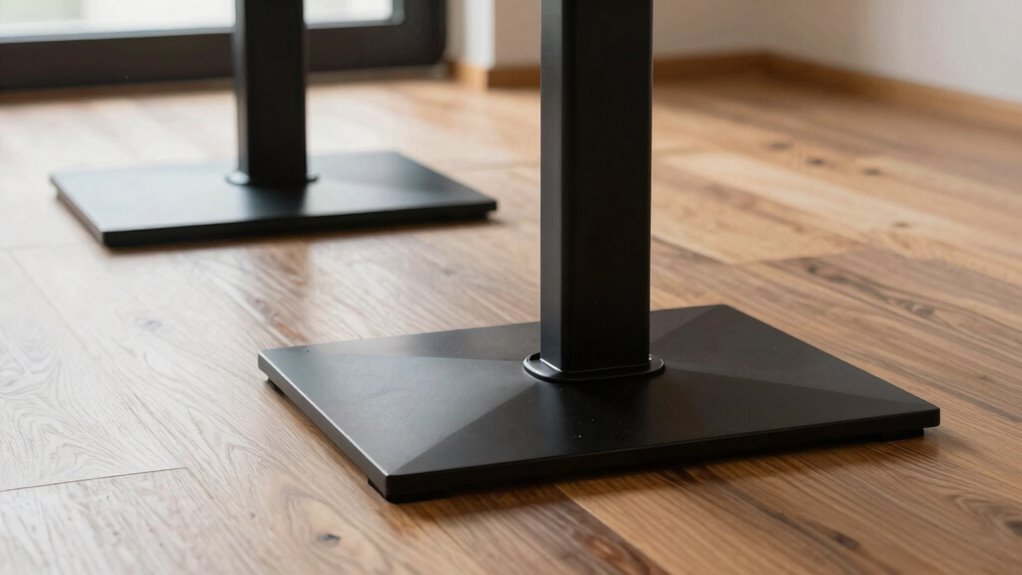

To prevent a shaky two-top table, choose a sturdy, well-designed base that offers proper support and balances the weight evenly. Look for bases with wide feet or broad structures, and consider adjustable supports to handle uneven floors. Heavy materials like steel or cast iron improve stability. Properly sized bases help distribute weight and prevent wobbling. For even more tips on creating a perfectly stable table, keep exploring this guide.
Key Takeaways
- Choose a proportionate, heavy base that supports the tabletop’s size and weight for enhanced stability.
- Use adjustable supports to level uneven floors and prevent wobbling.
- Opt for wide, broad bases or multiple contact points to evenly distribute weight.
- Select durable materials like steel or cast iron to improve weight distribution and stability.
- Incorporate design features that lower the center of gravity and ensure proper weight balance.
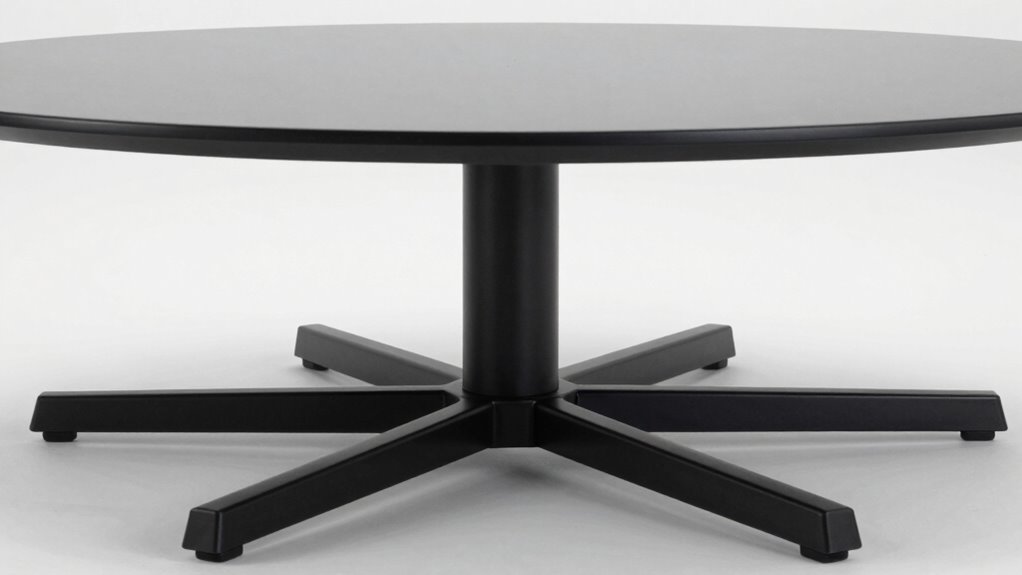
Ever wondered how to guarantee your table stays sturdy and stylish? The secret lies in choosing the right table base and understanding how adjustable supports and weight distribution work together to prevent wobbling or instability. When you’re setting up a table, especially one with a heavy top or unique shape, ensuring it remains balanced is essential for both safety and aesthetics. Adjustable supports are a game-changer, allowing you to fine-tune the height and levelness of your table, regardless of uneven floors or irregularities in the tabletop. By incorporating adjustable supports into your table base, you can make quick adjustments that improve stability without needing to replace the entire base. Proper weight distribution is also critical in maintaining a stable table. When the weight of the tabletop is evenly spread across the base, it reduces stress on any single point, minimizing the risk of tipping or wobbling. This means selecting a base that is proportionate to your tabletop’s size and weight, ensuring the center of gravity stays low and centered. Many sturdy table bases are designed with this principle in mind, featuring wide feet or a broad support structure that helps distribute weight more evenly. You should also consider the material of the base; heavier metals like steel or cast iron often provide better weight distribution and durability compared to lighter materials. Additionally, modern manufacturing techniques enable the creation of more stable and precisely engineered bases that enhance overall stability. Another key point is the design of the base itself. A well-designed base not only looks good but also enhances stability. For example, a pedestal-style base with a broad, flat bottom can support larger, heavier tabletops more reliably than a narrow or slender stand. Likewise, bases with multiple points of contact with the floor help distribute weight across a wider area, further reducing wobble. Combining this with adjustable supports allows you to adapt to any uneven surface, making your table more stable on different flooring types. In essence, achieving a stable, stylish table is about understanding how adjustable supports and weight distribution interact. When you ensure your base is appropriately sized and designed to spread weight evenly, and you optimize it with adjustable supports, you create a setup that’s not only attractive but also resilient. With these elements in play, your table will stand firm through daily use, with minimal fuss over wobbles or instability. It’s a simple investment that pays off in safety, durability, and style, giving you peace of mind whether you’re hosting dinner parties or simply enjoying your favorite book at your dining table.
Frequently Asked Questions
How Do I Choose the Right Table Base for My Space?
You should choose a table base that matches your space by considering its weight capacity and style compatibility. Make sure the base can support the size and weight of your tabletop, preventing wobbling. Pick a style that complements your decor to create a cohesive look. Measure your space carefully, and select a sturdy, well-designed base that fits comfortably without overcrowding. This way, your table stays stable and stylish.
Are There Portable Table Bases Suitable for Outdoor Use?
Yes, there are portable options perfect for outdoor use that won’t wilt under weather conditions. These bases are designed with outdoor durability in mind, resisting rust, moisture, and UV rays, making them sturdy travelers for your outdoor setup. You can easily move them around, just like a trusted companion, to create flexible dining or gathering spaces. These bases give you the freedom to enjoy your outdoor area without sacrificing stability.
What Materials Are Most Durable for Heavy-Use Table Bases?
For heavy-use table bases, you should prioritize material options with high wear resistance. Steel and cast iron are the most durable, offering excellent strength and longevity even under constant use. Aluminum is lighter and resistant to corrosion, making it suitable for outdoor or high-traffic environments. Polymer composites also provide good wear resistance, but they may not be as strong as metals. Choose based on your specific durability needs and usage conditions.
Can I Retrofit an Existing Table With a New Base?
Yes, you can retrofit an existing table with a new base to improve stability. Focus on table base modifications that enhance support and balance. Choose a compatible, sturdy base made from durable materials, and verify it fits securely to prevent wobbling. Properly installing the new base will boost the table’s stability, making it safer and more reliable for heavy use. Just follow manufacturer instructions or consult a professional for best results.
How Do I Maintain and Clean Different Types of Table Bases?
Oh, the glamorous world of table maintenance! To keep your table bases in tip-top shape, regularly dust and wipe with a damp cloth—avoid harsh chemicals that threaten table stability. For metal bases, use a gentle cleaner to prevent corrosion; wooden bases love a bit of furniture polish. Keep them clean, keep them stable, and your tables will stand proud, never shaky, for years to come.
Conclusion
Now that you know how to choose the right table base, isn’t it time you upgraded your space? With the right support, your table will stay steady, no matter what. Don’t let wobbles ruin your dining experience or work sessions. Remember, a stable table isn’t just about looks; it’s about functionality and peace of mind. So, why settle for shaky when you can have rock-solid stability? Make your choice today!