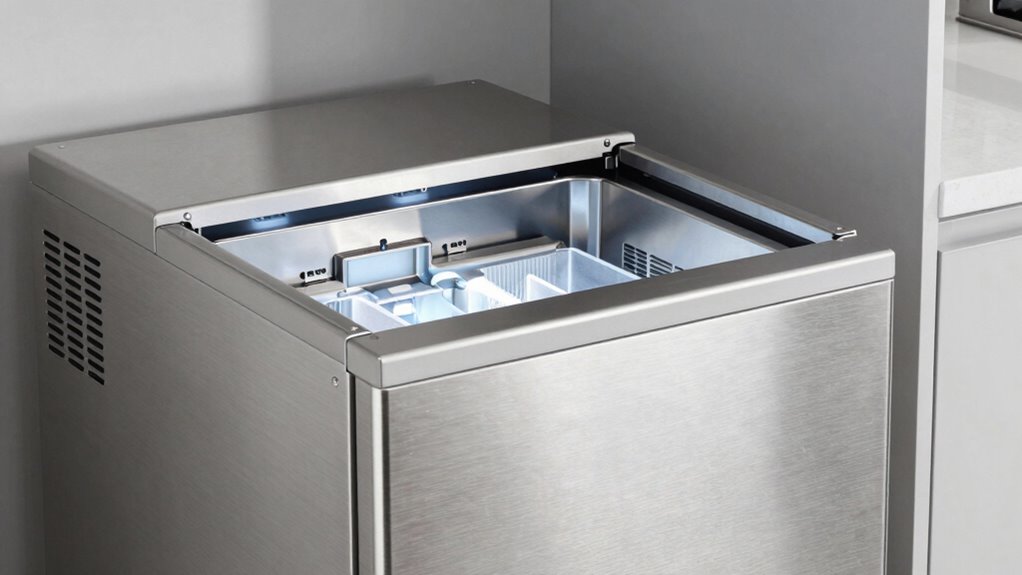

Undercounter ice makers need proper airflow to work efficiently and last longer. Ignoring clearance guidelines—usually at least 2 to 4 inches around the unit—causes heat to build up, which can make the compressor work harder or shut down prematurely. Make sure your ice maker isn’t blocked by cabinetry or walls and that vents stay clean. To know the best tips for ensuring your ice maker’s ventilation stays effective, keep exploring more details.
Key Takeaways
- Proper airflow is essential; inadequate clearance causes overheating and reduces ice production.
- Follow manufacturer guidelines, typically 2-4 inches of clearance around the unit.
- Ensure vents on the back and sides are unobstructed to allow heat dissipation.
- Installing in enclosed spaces without ventilation can lead to equipment failure.
- Regularly clean vents and check clearances to maintain optimal airflow and prolong lifespan.

Have you ever wondered why some undercounter ice makers produce less ice or stop working unexpectedly? The answer often comes down to ventilation requirements. Proper airflow is essential for these machines to function efficiently, yet many people overlook or underestimate how critical clearances are during installation. When setting up your undercounter ice maker, you might be tempted to cram it into tight spaces or push it flush against walls, but this can seriously hinder its performance. Ice makers generate heat as they operate, and without enough ventilation, this heat can’t escape. Over time, this leads to overheating, which causes the compressor to work harder or shut down prematurely, resulting in inconsistent ice production or complete failure.
Understanding installation tips related to ventilation is key to avoiding these issues. First, always check the manufacturer’s specifications for recommended clearance distances. These typically specify a certain amount of space—often at least 2-4 inches—around the unit to allow for adequate airflow. If you ignore these guidelines, you risk trapping heat and restricting airflow, which can damage internal components. Keep in mind that the back and sides of the ice maker are the most critical areas for ventilation. You should also ensure that the surrounding cabinetry or walls don’t block these vents. Creating a gap behind and on the sides of the unit isn’t just a suggestion; it’s a necessity for top-notch performance. Additionally, ensuring proper ventilation design can significantly improve the longevity of your ice maker.
Another essential installation tip is to avoid placing the ice maker in enclosed or poorly ventilated areas, such as inside a cabinet without ventilation or in tight closets. Instead, position it in a well-ventilated space where air can circulate freely. If your setup requires tight spaces, consider adding a small fan or vent to improve airflow. Additionally, regularly cleaning the vents and ensuring dust or debris doesn’t accumulate can help maintain proper ventilation. This proactive approach prevents overheating and ensures your ice maker operates smoothly over the long term.
Frequently Asked Questions
Can I Install My Undercounter Ice Maker Without Any Clearance?
You shouldn’t install your undercounter ice maker without clearance, as it’s essential for proper installation and function. Adequate space guarantees proper airflow, prevents overheating, and extends the appliance’s lifespan. It also affects the aesthetic of your space, making it look neat and professional. Skipping installation requirements like clearance can lead to operational issues and costly repairs. Always follow manufacturer guidelines to keep your ice maker running smoothly and maintain a clean, attractive setup.
How Does Airflow Affect Ice Production Efficiency?
Imagine your ice maker as a busy chef in a kitchen; good ventilation requirements are like open windows that let fresh air in. Proper airflow ensures heat dissipates, keeping the machine cool and efficient. If airflow obstruction occurs, it’s like closing those windows, causing the chef to struggle and slow down. To optimize ice production, give your machine enough clearance for airflow, preventing overheating and making sure smooth operation.
What Are the Signs of Poor Airflow in My Ice Maker?
If you notice your ice maker struggles to produce ice, poor airflow might be the culprit. Look for ventilation troubleshooting signs like excessive frost buildup or warm air around the unit. Airflow indicators include unusual noise, longer ice-making cycles, or inconsistent ice quality. These signs suggest restricted airflow, so make sure vents aren’t blocked and there’s enough clearance around your machine to maintain proper ventilation and ideal performance.
Is External Ventilation Necessary for Built-In Models?
Yes, external ventilation is necessary for built-in ice makers. Proper ventilation requirements guarantee your unit functions efficiently and prevents overheating. You should provide adequate clearance around the appliance for air circulation and consider external exhaust options if recommended by the manufacturer. Ignoring ventilation needs can lead to poor performance and potential damage. Always follow the manufacturer’s guidelines to maintain ideal airflow and ensure your ice maker operates smoothly.
How Often Should I Clean the Vents to Maintain Airflow?
You should clean the vents at least once every three to six months to maintain proper airflow and prevent ventilation issues. Regular ventilation maintenance ensures your ice maker operates efficiently and reduces the risk of overheating. During airflow troubleshooting, check for dust, debris, or obstructions in the vents. Keeping vents clear helps your unit function at its best, prolongs its lifespan, and maintains consistent ice production.
Conclusion
Remember, a wise man once said, “Good things come to those who wait.” By ensuring your undercounter ice maker gets proper airflow, you’re giving it the space to work efficiently and last longer. Don’t ignore the clearance rules—neglecting them can lead to costly repairs or poor performance. Take the time to keep it ventilated, and you’ll enjoy crisp, reliable ice whenever you need it. Proper airflow isn’t just a rule; it’s your ice maker’s best friend.