
Before purchasing a walk-in cooler kit, you need to measure the space carefully. Measure the length, width, and height of the area where you plan to install it. Don’t forget to include clearance space for maintenance, doors, and ventilation. Accurate measurements guarantee the cooler fits properly and functions efficiently. Paying attention to door placement and airflow needs makes installation smoother. Keep these measurements in mind, and you’ll be on track for a seamless setup. More details are ahead.
Key Takeaways
- Measure the length, width, and height of the installation space accurately, including clearance for maintenance and door operation.
- Determine the placement and size of doors, choosing between hinged, sliding, or bifold options based on available space.
- Account for insulation thickness and type to ensure proper fit and energy efficiency within the cooler dimensions.
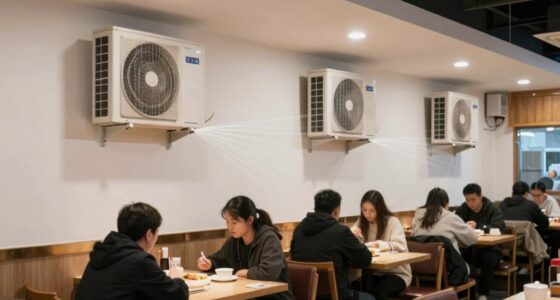
- Ensure sufficient space for airflow, ventilation, and interior layout to optimize temperature regulation and accessibility.
- Verify door clearance and operational space to prevent interference with workspace, ensuring smooth installation and function.
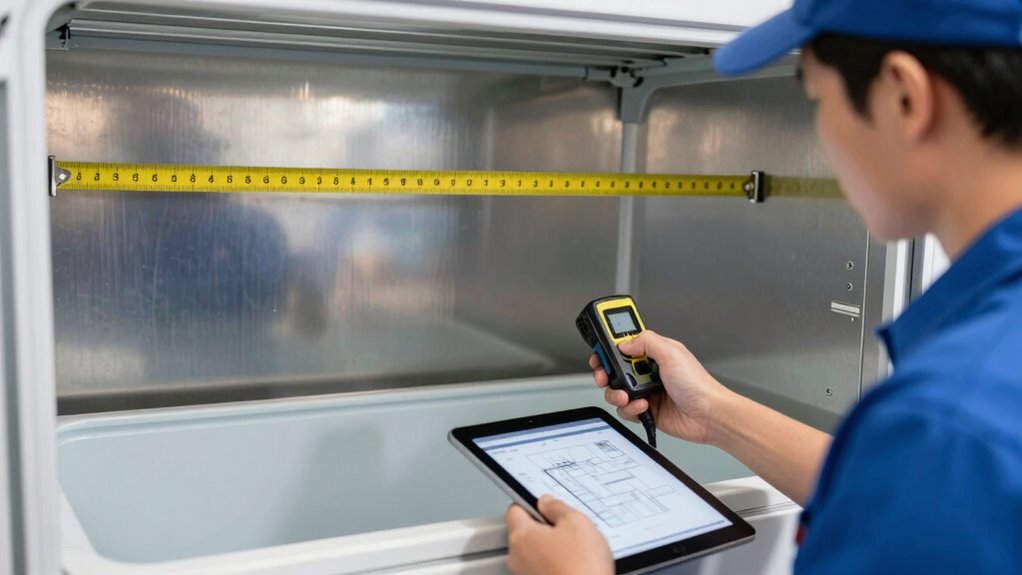
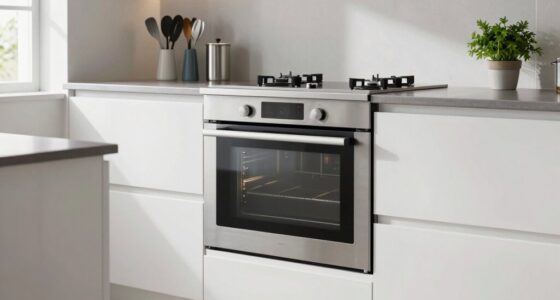
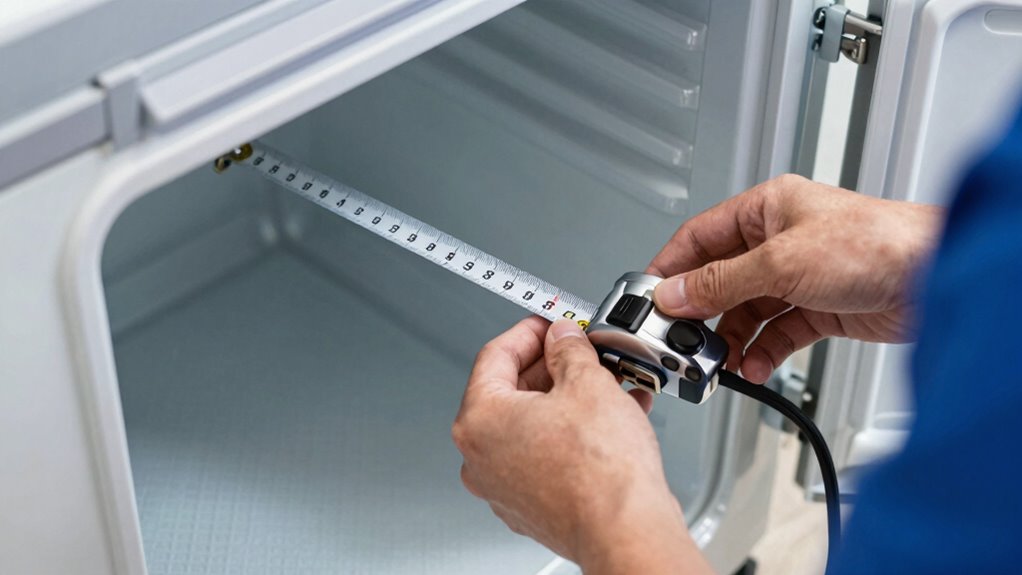
Planning a walk-in cooler kit carefully is essential to guarantee it meets your storage needs and fits your space. Before making any purchases, you need to take precise measurements of your designated area. This ensures you select a unit that fits comfortably without crowding your workspace or impeding access. Start by measuring the length, width, and height of the space where you plan to install the cooler. Don’t forget to account for clearance space around the unit for maintenance, door opening, and ventilation. Recording these dimensions accurately prevents costly mistakes later and helps you choose a cooler with the right size.
Next, consider the insulation options available for your walk-in cooler. Insulation plays a key role in energy efficiency and maintaining consistent temperatures. You’ll want to evaluate different insulation types—such as polyurethane, polystyrene, or spray foam—based on R-value, moisture resistance, and ease of installation. Proper insulation can reduce energy costs and improve the durability of your cooler. Think about your climate and how often the cooler will be accessed; higher R-value insulation might be necessary for colder environments or high-traffic areas. When planning, include the thickness of insulation in your measurements to ensure the overall dimensions of the cooler are accurate. Additionally, understanding the field‑of‑view and imaging‑scale of your setup can serve as a helpful analogy for visualizing the space and dimensions needed for optimal airflow and accessibility within your cooler.
Door configurations are another important factor. The type and placement of doors greatly affect accessibility, security, and insulation efficiency. Decide whether a hinged, sliding, or bifold door best suits your space and workflow. For tight spaces, sliding doors save room and provide easier access. Hinged doors are simpler to install and often more airtight, improving insulation. Bifold doors are ideal if you need a wide opening but limited space for door swing. When measuring, consider the door’s width, height, and the clearance needed for opening fully. Also, note the location of the door—whether it’s on a side wall or at the end of the unit—as this impacts how you plan your interior storage layout.
Frequently Asked Questions
How Do I Determine the Optimal Temperature for My Cooler?
You should set your cooler’s temperature around 35°F to 38°F, ideal for most perishable items. Consider humidity control, as lower humidity helps prevent moisture buildup and spoilage. Also, choose a compressor that matches your cooler’s size and cooling needs to guarantee efficient temperature regulation. Regularly monitor and adjust the temperature to maintain ideal storage conditions, keeping your products fresh and safe.
What Safety Standards Should My Walk-In Cooler Meet?
You should guarantee your walk-in cooler meets safety standards like OSHA and FDA regulations, focusing on proper refrigeration sizing and ventilation requirements. Adequate ventilation prevents buildup of humidity and heat, maintaining safe temperatures and air quality. Proper refrigeration sizing helps keep your products at the right temperature, avoiding spoilage or safety hazards. Regularly check that your cooler complies with local codes and standards to protect staff and ensure food safety.
How Can I Ensure Proper Insulation for Energy Efficiency?
Think of your cooler as a fortress; proper insulation keeps your energy bills from turning into a dragon’s roar. To guarantee this, choose high-quality insulation materials that create a tight seal, preventing cold air from escaping. Conduct energy audits regularly to spot weak spots and optimize efficiency. By doing so, you’ll keep your cooler running smoothly, saving money and protecting your perishable goods from the heat’s relentless assault.
What Maintenance Schedules Are Recommended for Longevity?
You should schedule regular maintenance to guarantee longevity. Change refrigeration filters every 3 to 6 months to keep the cooling system efficient. Check door gaskets monthly for tears or gaps and clean them to maintain a proper seal. Also, inspect and tighten door hinges as needed. Regularly cleaning and maintaining these components helps prevent energy waste, reduces breakdowns, and extends your walk-in cooler’s lifespan.
How Do I Choose the Right Door Type for My Needs?
When choosing the right door type, consider door material and hinge design. If you need durability and insulation, opt for steel or aluminum doors. For easy access, choose doors with a swing hinge design that suits your space. If frequent traffic is expected, consider sliding doors to save space. Matching the door material and hinge style to your needs guarantees longevity, efficiency, and smooth operation for your walk-in cooler.
Conclusion
Now that you know all the essential measurements, you’ll be able to plan your walk-in cooler like a pro—no more guessing games or costly mistakes! Imagine fitting your entire inventory perfectly, like a Tetris master, with room to spare for future needs. Skipping these steps could turn your cooler into a tiny, unbearable closet. So measure twice, buy once, and turn your cooler into the most organized, efficient space you’ve ever seen—your future self will thank you!