TL;DR

Get kitchen staples and gadgets delivered free with Prime
- Fast, free delivery on millions of items
- Prime Video, Amazon Music and more included
- Member-only deals all year
An air fryer is a compact convection oven: a fan circulates hot air to brown food with little or no added oil. That can reduce added fat compared with deep-frying, but it does not turn packaged snacks into nutritious meals or guarantee fewer calories. Choose whole ingredients, leave room for airflow, cook foods safely, and aim for golden rather than very dark results.
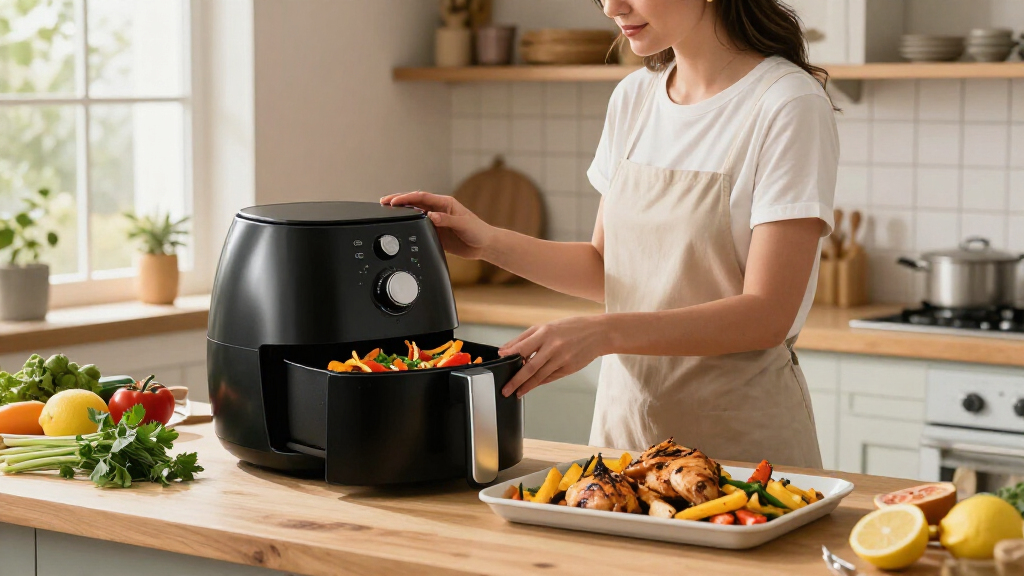
A crisp dinner does not have to arrive in a pool of oil. Air fryers for healthy cooking can brown potatoes, vegetables, tofu, and small portions of fish with much less added oil than deep-frying, thanks to a fan that pushes hot air around the food. The result can be crunchy and satisfying, though it won’t taste exactly like food from a deep fryer.
This guide explains what an air fryer changes, what it leaves up to you, and how to get reliable results without drying out dinner. You’ll also learn when browning becomes too dark, how to handle food safely, and what to check before buying another countertop appliance.
Think of an air fryer as a small, fast-moving oven—not a health filter. A homemade batch of potato wedges with a light coating of oil is a different meal from heavily salted frozen fries, even if both come out of the same basket.
Air frying can reduce added oil when it replaces deep-frying, but it does not remove calories in the ingredients.
Use vegetables, fish, tofu, or homemade wedges to make the appliance part of a balanced meal; packaged snacks keep their usual nutritional profile.
Leave space around food, cut pieces to similar sizes, and check doneness early to reduce uneven cooking and drying.
Use a thermometer for meat and poultry where appropriate, and follow safe temperature guidance instead of trusting color alone.
Cook starchy foods to a golden finish, clean grease and crumbs regularly, and choose accessories approved for your model.
What an air fryer changes when you cook
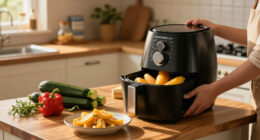
An air fryer is a compact convection oven: its heating element warms the cooking chamber while a fan circulates hot air around the food. Moving air carries heat to the food’s surface and helps moisture escape. As that surface dries, it can brown and turn crisp with a thin coating of oil, or sometimes without oil. The basket’s openings support airflow around the pieces, but only when food is not packed tightly together.
This is why the cooking method is useful, and why it has limits. Deep-frying surrounds food with hot oil, heating it quickly and creating the familiar rich, crisp coating. An air fryer uses circulating air instead, so the surface can be drier and less evenly crisp, especially on wet batters that lack a coating designed to cling. A light layer of oil can help browning, but it cannot make the two methods identical.
Consider two medium potatoes cut into wedges and tossed with a teaspoon of oil and seasoning. Spreading them in a single layer gives hot air room to reach each piece, so their surfaces can brown without soaking up frying oil. If you pile the basket high, pieces shield one another: the crowded areas may steam and stay soft while exposed edges darken. Cooking in batches takes longer, but can produce a more even result.
The small chamber often heats faster than a full-size oven for modest portions, which can make it convenient for a quick side or meal for one or two. That convenience has a capacity tradeoff: a family-sized batch may need several rounds, extending the total cooking time. Timing also varies by model, food size, and how full the basket is, so check early until you know how your appliance performs. Presets are useful starting points, not guarantees.
Products Worth Considering

Cuisinart TOA-112 15-in-1 Extra-Large Digital Toaster Oven Air Fryer

Instant Pot Rio 6-Quart 7-in-1 Electric Pressure Cooker, Black

Instant Pot Pro 8-Quart 10-in-1 Electric Pressure Cooker, Black
As an affiliate, we earn on qualifying purchases.
When less oil can make a meal lighter
Air fryers for healthy cooking can help lower the added oil in a meal when they replace deep-frying. Deep-fried food absorbs some cooking oil; air-fried food can often brown with a light coating or none at all. The exact difference depends on the food, recipe, portion, and what method you compare it with, so there is no single calorie figure that applies to every meal.
The appliance does not erase what is already in the ingredients. A packaged breaded snack can still be high in salt and calories after air frying, while broccoli, salmon, tofu, or homemade wedges bring different nutritional qualities to the plate. The basket is a cooking tool, not a diet plan.
Picture a weeknight when you would normally pan-fry breaded chicken in several tablespoons of oil. An air fryer may let you use a light spray instead, then serve the chicken with roasted green beans and rice. That swap changes how much added fat the cooking method contributes, while the sides and portion still matter.
Vegetables can be a convenient fit, but don’t assume air frying always preserves more nutrients than every other method. Effects vary with the vegetable, temperature, cooking time, and technique. Cook vegetables until tender and appetizing, and vary how you prepare them across the week.
Build a balanced plate, not just a crisp snack
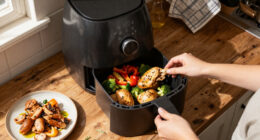
A healthy air-fryer meal starts with ingredients and portions, not a preset button. Use the appliance to prepare vegetables, fish, tofu, potatoes, or small portions of meat, then build a plate with a mix of foods that suits your needs. Crispness can make a simple meal appealing, but it does not tell you how nourishing that meal is.
For instance, on a busy evening you might cook cubed tofu and sliced peppers in batches, then serve them over brown rice with a yogurt-based sauce. The vegetables add color and texture; the tofu gives the meal substance. If you instead fill the basket with a full bag of salty frozen bites, the quick cooking method will not change their ingredients.
Try this simple sequence when planning dinner:
- Pick a main ingredient: choose fish, tofu, beans prepared for crisping, or a modest portion of meat.
- Add a vegetable: cut it into similar-sized pieces so it cooks more evenly.
- Season with intention: use herbs, spices, citrus, or a measured amount of oil, and check packaged seasoning for salt.
- Make room in the basket: cook in batches if needed so hot air can reach the surfaces.
- Pair it with a side: add grains, salad, or another food that rounds out the meal.
This routine works for a solo lunch as well as a family dinner; the portions and sides simply change. If you have food allergies, check every packaged coating, seasoning, and sauce for allergens such as wheat, milk, soy, eggs, or sesame. The appliance doesn’t make an ingredient allergy-safe.
Get crisp results without drying dinner out
Even, crisp results depend on airflow and timing. Cut food into similar-sized pieces, avoid crowding the basket, and shake or turn food when the recipe or appliance calls for it. These small steps give the moving heat a fair chance to reach each surface and help prevent one piece from drying out while another stays undercooked.
Imagine a basket of thick carrot coins mixed with tiny diced potatoes. The potatoes may darken before the carrots soften. If you cut the vegetables to a similar size—or cook them separately—you can check each batch at the right moment instead of leaving everything in until the slowest piece is ready.
For juicy fish or chicken, check doneness early rather than relying on a dark crust. Use a food thermometer for meat and poultry where appropriate, and follow trusted safe internal-temperature guidance for the food you’re cooking. Color alone cannot confirm that poultry or meat has reached a safe temperature.
Frozen foods often go straight into the basket, but package and appliance directions still matter. Spread them out, use the recommended cooking guidance, and check that the center is fully cooked. If your first batch comes out dry, shorten the time or use slightly larger pieces next time; if it cooks unevenly, reduce the batch size.
Keep starchy foods golden and the appliance clean
Aim for golden, not very dark, potatoes and other starchy foods. Acrylamide can form in starchy foods such as potatoes when high heat browns them deeply, and air frying can produce it just as other high-temperature cooking methods can. Avoiding overcooking and very dark browning is a sensible way to limit formation; it does not mean ordinary use of an air fryer alone causes cancer.
If you make homemade wedges, soaking the cut potatoes before cooking and drying them thoroughly may help you get a crisp surface with less browning. Keep an eye on the last few minutes: the shift from golden to dark brown can happen quickly in a small, hot chamber. For a real-world batch, pull a few wedges when the edges look crisp and the centers feel tender, rather than waiting for every surface to turn deep brown.
Smoke usually points to a practical issue, such as excess oil, leftover grease or crumbs, or an accessory that isn’t suitable for the model. Use an oil suited to the cooking temperature, avoid pouring excess grease into the basket, and check that liners or cookware are approved and don’t block airflow.
Once the unit has cooled, remove crumbs and grease and clean the basket and tray as the manufacturer directs. Regular cleaning helps prevent old residue from smoking the next time you cook. Don’t immerse electrical parts, and avoid tools or cleaners that could damage the surface.
Choose the size and features your kitchen will use
The right air fryer fits your portions, counter, and cleaning routine. A larger basket may suit a household that cooks several servings at once, while a smaller model may make more sense for one or two people with limited counter space. Capacity labels and actual usable basket space can feel different, so check dimensions and think about the foods you cook most often.
Product designs now include basic baskets, dual-zone models, and larger oven-style appliances with an air-fry setting. More presets or app controls can add convenience, but they do not improve a meal’s nutritional quality by themselves. If you mainly reheat a portion of vegetables and crisp tofu, a simple model with easy-to-clean parts may be more useful than an oversized appliance with features you rarely touch.
Compare the details that affect everyday use:
| What to check | Why it matters at home |
|---|---|
| Capacity and footprint | Match batch size to servings and available counter space. |
| Basket shape and airflow | Food needs room; usable space matters more than a preset list. |
| Cleaning and replacement parts | Simple cleanup and available accessories make regular use easier. |
| Controls, noise, and warranty | These affect convenience, kitchen comfort, and ownership cost. |
| Energy use for your task | Small batches may suit a smaller chamber, but savings depend on the model and alternative appliance. |
For example, if you already have a convection oven and usually cook for six, an air fryer may save time for a quick snack but add little value for a full meal. Compare the job you need done, not just the feature list.
Frequently Asked Questions
Are air fryers healthier than deep fryers?
They can reduce added oil and calories when they replace deep-frying, but the difference depends on the food and recipe. An air-fried homemade potato wedge and an air-fried packaged snack still have different ingredients and nutrition.
Do you need oil in an air fryer?
Often you can use little or no oil, though a small amount can help some foods brown and crisp. Follow your recipe and avoid excess oil, which can collect, smoke, or make cleanup harder.
Can you cook frozen food in an air fryer?
Many frozen foods can go straight into the basket, but cooking times vary by product and appliance. Follow package and manufacturer guidance, leave room for airflow, and check that the food is fully cooked.
Does air frying produce acrylamide?
It can form in browned starchy foods such as potatoes, as can other high-temperature cooking methods. Aim for golden results and avoid routinely cooking potatoes until very dark; that advice does not mean normal air-fryer use alone causes cancer.
How do you stop air-fried food from drying out?
Avoid overcrowding, cook similarly sized pieces together, and check food earlier until you know your appliance. For meat and poultry, use a thermometer and follow safe internal-temperature guidance rather than extending cooking just to darken the outside.
Do air fryers always save electricity compared with an oven?
No single answer applies to every kitchen. A smaller chamber may use less energy for a small portion than heating a full-size oven, but the result depends on cooking time, model, portion size, and the appliance you would otherwise use.
Conclusion
Use an air fryer to make good ingredients crisp with less added oil, then let the rest of the meal do its share. Leave space for airflow, check food for doneness, and pull potatoes when they’re golden rather than very dark.
The best air fryer is the one that helps you cook a meal you actually want to eat on an ordinary Tuesday. Let the fan do its work, and let your ingredients lead.