Difficulty: Beginner | Time: 30-45 minutes
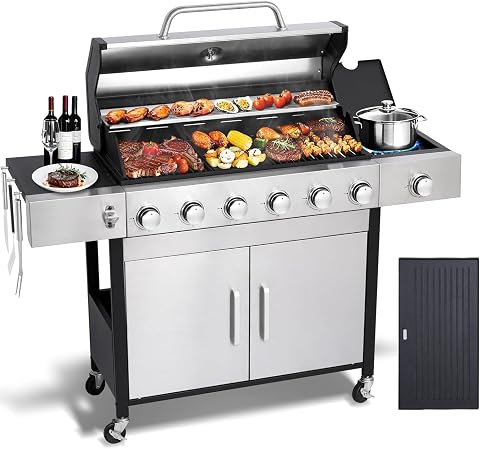
6 Burner Propane Gas Grill with Side Burner, Cast Iron Grates & Reversible Griddle, Large Cabinet, 620 sq. in. Cooking Area
- ✔ Number of Burners: 6
- ✔ Main BTU per Burner: 10,000
- ✔ Side Burner BTU: 9,000

Griddle Grill Combo, 4 Burner Propane Gas and Charcoal Grill with Side Burner
- ✔ Cooking Area: 447 sq. in.
- ✔ Main Burners: 4 x 10,000 BTU
- ✔ Side Burner: 9,000 BTU
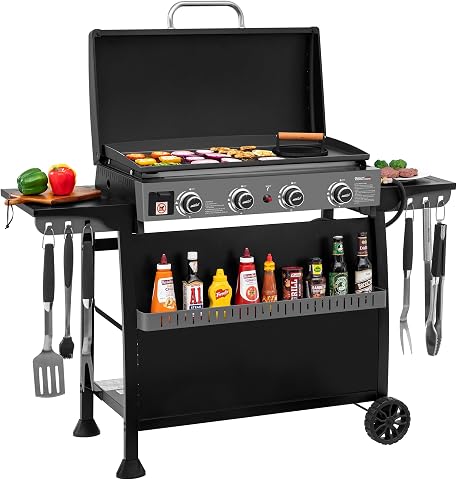
Royal Gourmet PD4001 4 Burner Propane Gas Griddle with Removable Standing Cart
- ✔ Cooking Surface: 389 sq. in.
- ✔ Burners: 4 stainless steel
- ✔ BTU: 34,000
What You’ll Need
Tools & Materials:
- Gas grill
- Long-handled tongs
- Grill brush
- Fire extinguisher (optional but recommended)
- Heat-resistant gloves (optional)
Knowledge:
- Basic understanding of safety procedures when handling gas and fire
- Ability to follow safety warnings and instructions
Ensure your grill is placed on a flat, stable surface away from structures, overhanging branches, or flammable materials. Check local regulations regarding outdoor gas grill use.
6 Burner Propane Gas Grill with Side Burner, Cast Iron Grates & Reversible Griddle, Large Cabinet, 620 sq. in. Cooking Area
<p>This grill stands out for its impressive <strong>620 sq. in. cooking area</strong> and six burners, making it ideal for hosting big outdoor parties. The porcelain-enamel cast iron grates and reversible cast iron griddle offer <strong>flexible cooking options</strong>, from grilling steaks to griddling breakfast. Compared with the other options, this model’s <strong>large capacity</strong> and durable stainless steel construction make it a reliable workhorse, though its weight and high fuel consumption might limit mobility. It’s best suited for those who prioritize capacity and versatility over ease of transport.</p>
Pros:
- Massive 620 sq. in. cooking area for big groups
- Versatile with both grill and griddle options
- Durable stainless steel construction resistant to rust
- Includes cabinet for storage and wheels for mobility
Cons:
- Heavy and potentially difficult to move
- Requires a propane tank and consumes significant fuel
- Complex cleanup with multiple cooking surfaces
Best for: Large outdoor gatherings, family cookouts, and versatile outdoor cooking
Not ideal for: Casual or small-scale grilling, users seeking lightweight or portable grills
Bottom line: A powerful, versatile choice for serious outdoor cooks hosting large groups, though less suited for portability.
“A powerful, versatile choice for serious outdoor cooks hosting large groups, though less suited for portability.”
Griddle Grill Combo, 4 Burner Propane Gas and Charcoal Grill with Side Burner
<p>This combo grill offers a <strong>4-burner propane setup</strong> combined with dual charcoal pans, giving users <strong>multiple cooking methods in one unit</strong>. Its 447 sq. in. cooking area suits medium to large groups, and the inclusion of a stainless steel lid and removable grates enhances cleaning and maintenance. Compared to the other picks, this model’s <strong>multi-faceted design</strong> makes it suitable for a variety of dishes, from grilled steaks to smoky barbecue. However, its setup complexity and weight can hinder quick mobility, and the higher price point may deter casual users. It’s perfect for those who want culinary flexibility and are ready for a more involved outdoor cooking experience.</p>
Pros:
- Multiple cooking options including gas and charcoal
- Large capacity with 447 sq. in. surface
- Durable, professional-grade construction
- Features like slide-out grease tray and tool hooks
Cons:
- Heavy and less portable
- Complex setup with multiple components
- Higher cost for casual or infrequent use
Best for: Culinary versatility, large outdoor cookouts, and family dinners
Not ideal for: Users seeking lightweight, easy-to-move grills or quick setup
Bottom line: Ideal for serious outdoor chefs who want multi-method flexibility, despite its weight and complexity.
“Ideal for serious outdoor chefs who want multi-method flexibility, despite its weight and complexity.”
Royal Gourmet PD4001 4 Burner Propane Gas Griddle with Removable Standing Cart
<p>The <strong>Royal Gourmet PD4001</strong> offers a <strong>large 389 sq. in. cooking surface</strong> with even heat distribution across four stainless steel burners, making it suitable for a variety of outdoor setups. Its <strong>removable stand and wheels</strong> provide excellent portability, perfect for camping, tailgating, or casual backyard cooking. Compared with larger, more stationary grills, this model’s <strong>flexibility</strong> in use and setup makes it a practical choice for those who value mobility and simple operation. Its main drawback is the lack of extra storage or prep features, and its hood design requires keeping it open during cooking, which can be inconvenient.</p>
Pros:
- Flexible stand and tabletop use
- Large, evenly heated cooking surface
- Includes side shelves with hooks for prep
- Mobile with wheels and stable legs
Cons:
- Hood must remain open during cooking, limiting convenience
- No extra storage compartments
- Cleaning large surface can be challenging
Best for: Casual outdoor cooking, camping, and portable setups
Not ideal for: Large gatherings or users seeking extensive storage and prep space
Bottom line: A versatile, portable griddle perfect for outdoor enthusiasts who need mobility without sacrificing cooking size.
“A versatile, portable griddle perfect for outdoor enthusiasts who need mobility without sacrificing cooking size.”
As an Amazon Associate we earn from qualifying purchases.
Before You Start
Ensure the grill is in good condition, with no gas leaks or damage. Read the manufacturer’s instructions specific to your grill model. Have all tools and ingredients ready before beginning. Verify that the area around the grill is clear of debris and flammable objects. If using a propane tank, inspect the connections for leaks by applying a soap solution and watching for bubbles when opening the gas valve—do this before igniting the grill.Step-by-Step Instructions
Step 1: Inspect and prepare the grill
Check the grill for any damage, especially around gas connections and burners. Clear any debris or cobwebs from the cooking surface and vents. Connect the propane tank securely to the grill, ensuring the connection is tight and free of leaks. Open the propane valve slightly to verify no leaks are present by applying a soap and water solution around the connection; bubbles indicate leaks that must be fixed before proceeding.
Tip: Always perform a leak test before each use to prevent gas leaks and potential fires.
Check: No bubbles form around the connection during the leak test, indicating a secure connection.
Step 2: Preheat the grill
Open the lid of the grill. Turn on the gas burners to the high setting. Ignite the burners using the igniter button or a long match/lighter if the igniter is unavailable. Allow the grill to preheat with the lid closed for 10-15 minutes, until the internal temperature reaches the desired level for cooking.
Tip: Use the built-in igniter if available; if not, light the burners carefully with a long match or lighter, keeping your hand away from the gas outlet.
Check: The burners ignite immediately with a steady flame, and the internal temperature reaches at least 400°F after 10-15 minutes.
Step 3: Adjust the heat and clean the grates
Use the control knobs to set the heat to your desired cooking level. For initial cooking, high heat is suitable for searing; for slower cooking, reduce to medium or low. Use a grill brush to clean the cooking grates thoroughly while hot, removing any residual debris. This ensures a clean surface for your food and prevents sticking or off-flavors.
Tip: Keep a spray bottle of water nearby to control flare-ups caused by dripping fat or grease.
Check: The grates are visibly clean, and the grill temperature stabilizes at your target heat level.
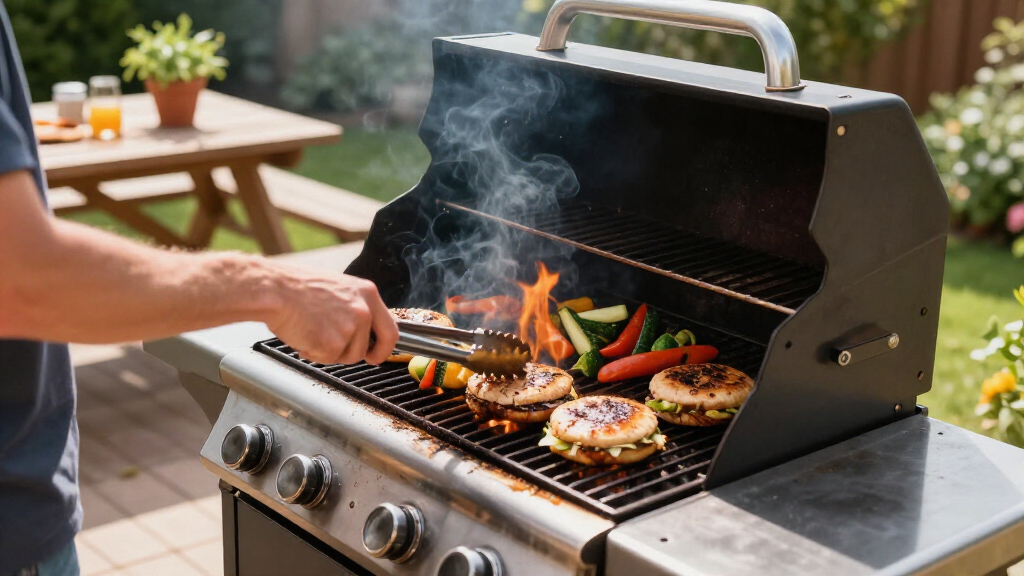
Step 4: Cook your food
Place your food on the hot grates, arranging it evenly to prevent overcrowding. Close the lid if you’re cooking items that benefit from indirect heat or to maintain consistent temperature. Use tongs to turn the food frequently, ensuring even cooking and grill marks. Use a thermometer to check internal temperatures for meats, ensuring safety and desired doneness.
Tip: Avoid pressing down on meat with tongs or spatulas, which can squeeze out juices and cause flare-ups.
Check: Food develops grill marks, and internal temperatures reach safe levels (e.g., 165°F for chicken).
Step 5: Turn off and shut down the grill
When cooking is complete, turn the control knobs to the off position. Close the propane tank valve securely. Allow the grill to cool with the lid closed to help burn off residual grease and prevent rust. Once cooled, clean the grates again with a grill brush and inspect for any damage or leaks that need repairs before next use.
Tip: Store the propane tank upright in a well-ventilated outdoor area away from direct sunlight and heat sources.
Check: The grill is cool, clean, and nothing leaks when you open the gas connection.
Common Mistakes to Avoid
- Leaving the gas on without igniting, causing potential leaks or explosions — Always turn on the gas after confirming the connection is secure and perform a leak test before igniting.
- Overcrowding the grill, leading to uneven cooking or flare-ups — Arrange food with space between pieces and cook in batches if necessary.
- Not cleaning the grates after use, which causes buildup and sticking — Clean the grates immediately after cooking while hot for best results.
Troubleshooting
Problem: The grill won’t light or the flame goes out quickly
Solution: Check the gas supply and connection. Ensure the igniter is working properly. If using matches, light carefully and maintain a steady flame until burners stay lit.
Problem: Uneven cooking or hot spots
Solution: Adjust the burners to distribute heat evenly. Rotate food frequently and move items from hot spots to cooler areas.
Problem: Flare-ups burning food or causing smoke
Solution: Reduce heat, move food away from direct flames, and control flare-ups with a spray bottle of water. Remove excess grease from the surface.
What Success Looks Like
The grill heats evenly with a steady flame, food develops grill marks without sticking, internal temperatures reach safety levels, and the grill is clean and free of leaks after use.
Next Steps
After cooking, turn off the gas supply, clean the grill thoroughly, and store the propane tank in a safe, ventilated location. Schedule regular maintenance checks for your grill, including inspecting hoses and connections. When not in use, cover the grill to protect it from the elements and prolong its lifespan. Repeat the cleaning and inspection process before each use to maintain safety and performance.
Frequently Asked Questions
How often should I clean my gas grill?
Clean the grates and remove grease buildup after every use. Perform a thorough cleaning and inspection at least once a month if used frequently, and before storing for the season.
Can I use a gas grill in cold or windy weather?
Yes, but cold weather can affect heat retention. Protect the grill from wind with a windbreak or cover, and allow extra preheating time to reach desired temperatures.
What safety precautions should I follow when using a gas grill?
Always operate the grill in a well-ventilated outdoor area, perform leak tests before igniting, keep a fire extinguisher nearby, and never leave the grill unattended while in use.