TL;DR

Get kitchen staples and gadgets delivered free with Prime
- Fast, free delivery on millions of items
- Prime Video, Amazon Music and more included
- Member-only deals all year
The best lunch box food containers keep food fresh, prevent leaks, and are made from safe, eco-friendly materials. Modern designs offer insulation, compartments, and durability—making your meal prep easier and greener.
Ever opened your lunch box to a soggy sandwich or spilled yogurt? If so, you’re not alone. The right food container isn’t just about holding your meal — it’s about keeping it safe, fresh, and mess-free. Today’s containers do more than just store food; they protect your health and the environment.
In this article, you’ll learn how to pick the perfect lunch box container, explore recent innovations, and get practical tips to keep your meals delicious and safe. Whether you’re packing for school, work, or an outdoor adventure, your choice of container makes all the difference.
Prioritize BPA-free, non-toxic materials like stainless steel or glass for safety.
Leak-proof lids and compartments prevent messes and keep foods separate.
Insulation adds a layer of convenience by maintaining food temperature longer.
Modern containers combine sustainability with smart features like temperature indicators.
Regular cleaning extends your container’s lifespan and keeps food safe.
What Material Keeps Food Safe and Tasty?
Choosing the right material is key to keeping your food fresh and safe. Plastic containers are lightweight, affordable, and come in vibrant colors. Look for those labeled BPA-free — these are safer for your health. However, it’s important to consider that plastics can sometimes stain or retain odors, which might affect the taste of future meals.
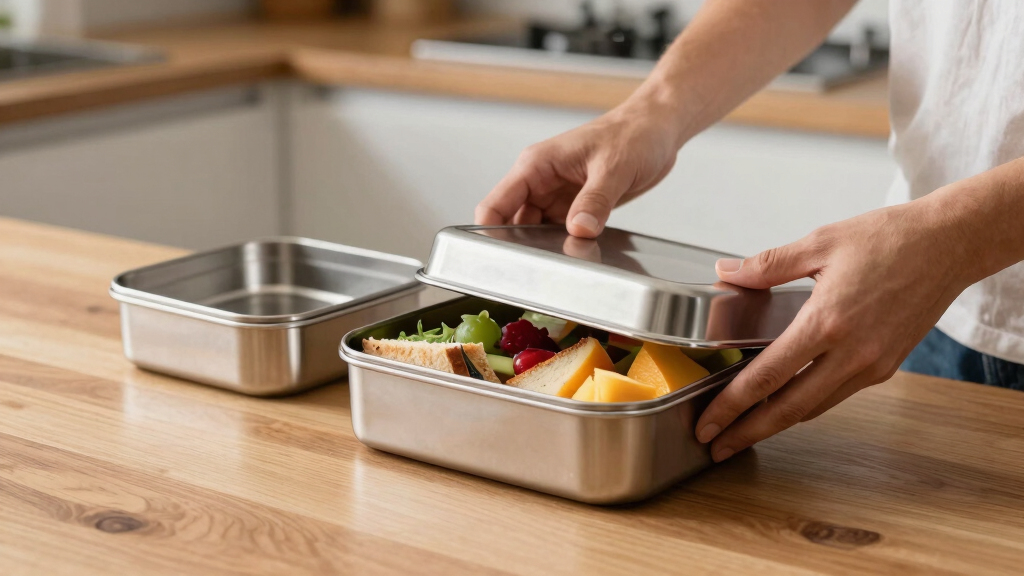
Stainless steel is highly durable, eco-friendly, and excellent at maintaining temperature, especially if you like hot soup or cold salads. Its non-porous surface resists bacteria, making it a safer choice for long-term use. But, because it’s not microwave-safe, you need alternative containers if reheating is necessary.
Glass is non-toxic, microwave-safe, and easy to clean. Its transparency allows you to see contents at a glance, reducing the chance of forgotten leftovers. The downside is weight and fragility—so it’s best for at-home or car trips rather than rugged outdoor adventures.
Silicone collapsible containers save space and are flexible, making them ideal for travelers or those with limited storage. They’re also generally heat-resistant. However, some may question their long-term durability or potential for staining over time, so choosing high-quality silicone is advisable.
Understanding these nuances helps you select a material that balances safety, convenience, and durability based on your lifestyle and needs. For example, if you prioritize microwave use, glass or BPA-free plastic might be best. If durability and temperature retention are paramount, stainless steel could be the ideal choice.
BPA-free stainless steel lunch box containers
As an affiliate, we earn on qualifying purchases.
As an affiliate, we earn on qualifying purchases.
How to Pick the Best Design Features for Your Needs
- Look for leak-proof lids. This feature is crucial if you’re packing liquids like soups or dressings, as it prevents messes and spoilage. The design of the lid’s seal impacts how well it contains liquids under pressure or movement, which can vary between brands. A reliable leak-proof lid reduces the risk of spills in bags or backpacks, saving you time and frustration.
- Choose containers with compartments. Separate sections help keep different foods from mixing, preserving flavors and textures. This is especially important for maintaining the freshness of delicate items like salads or cut fruit, which can become soggy if combined with wetter foods. Compartments also encourage balanced meals by making portion control easier, supporting healthier eating habits.
- Check if the container is microwave-safe. Reheating leftovers is a major convenience, especially for busy schedules. However, not all containers are suitable, and some can warp or release chemicals when heated. Always verify the manufacturer’s instructions. Using microwave-safe containers prevents accidents and preserves the integrity of the container, ensuring your meals stay safe and tasty.
- Prioritize ease of cleaning. Containers that are dishwasher-safe save considerable time and reduce bacteria buildup, which is vital for food safety. Smooth surfaces and simple designs help prevent food residue from sticking, making cleaning more effective. This not only extends the lifespan of your container but also minimizes health risks associated with improper cleaning.
- Pick a size that matches your appetite and routine. Small containers (around 300ml) are perfect for snacks or children’s lunches, while larger ones (up to 1000ml) accommodate hearty meals. Choosing the right size prevents waste and makes storage more efficient. Additionally, consider stacking or nesting features if you need multiple containers for different days or meals, enhancing portability and organization.
Imagine packing a lunch where everything stays put, hot or cold, until mealtime. That’s the magic of a well-designed container—one that not only meets your needs but also enhances your overall eating experience by maintaining food quality and reducing hassle.
Compare Popular Materials Side-by-Side
| Feature | Plastic | Stainless Steel | Glass | Silicone |
|---|---|---|---|---|
| Durability | Moderate, prone to cracks or warping over time, especially with rough handling | High, very sturdy and resistant to impact | High, but susceptible to shattering if dropped | Very flexible and durable, resistant to cracking and warping |
| Weight | Light, easy to carry | Moderate, heavier than plastic but manageable | Heavy, can add bulk to your pack | Light and collapsible, saving space when not in use |
| Safety | BPA-free options available; check for certifications | Non-toxic, free from chemicals like BPA | Non-toxic, microwave-safe, and free from harmful chemicals | Food-grade silicone, generally safe for repeated use |
| Insulation | Usually not insulated, but some have double-wall designs | Often insulated, retains temperature longer | Not insulated, but some are double-walled | Not insulated, but some models offer thermal features |
| Environmental Impact | Recyclable, widely recycled, eco-friendly option | Reusable, long-lasting, sustainable choice | Reusable and recyclable, eco-conscious | Reusable, flexible, eco-friendly, but manufacturing impact varies |
What’s New in Lunch Box Containers? The Latest Trends
Innovation is reshaping lunch containers faster than ever. Eco-friendly materials like biodegradable plastics and bamboo are gaining ground. They help reduce plastic waste and appeal to environmentally conscious consumers, but tradeoffs include potential durability issues or higher costs.
Smart containers with built-in temperature indicators or vacuum insulation are changing the game by providing real-time feedback on food temperature, reducing waste and guesswork. Imagine a container that visually shows if your soup is still hot or your salad is still crisp—this technology enhances food safety and quality assurance.
Modular designs with removable compartments or stackable layers allow for customization, making it easier to pack varied meals while saving space. These features support a more organized and versatile lunch experience. Additionally, leak-proof seals and colorful, personalized options make packing fun and stress-free, encouraging healthier eating habits and reducing single-use packaging.
Key Facts That Will Change How You Choose Your Container
- The global reusable food container market is projected to grow by 5.7% annually until 2028, reflecting increasing demand for sustainable and safe food storage solutions. This growth indicates that consumers are becoming more aware of environmental impacts and health safety, influencing manufacturers to innovate and improve their products.
- BPA, once common in plastics, has been largely phased out due to health concerns. Always look for BPA-free labels to ensure your containers do not leach harmful chemicals, especially when heating or storing acidic foods. This shift demonstrates a broader industry move toward safer, more responsible manufacturing practices.
- Stainless steel containers are favored by parents and outdoor enthusiasts because they withstand drops and rough handling better than plastic or glass. Their chemical-free nature means fewer health risks, making them a long-term, safe investment for families and active individuals.
- Proper cleaning—whether dishwasher or hand washing—extends your container’s lifespan and prevents bacteria buildup that could cause foodborne illnesses. Regular maintenance is essential to ensure safety and hygiene, especially with containers used daily for perishable foods.
- Choosing the right size and features depends on your lifestyle. For example, busy parents may prefer larger, compartmentalized containers; outdoor adventurers might prioritize durability and insulation; office workers may favor lightweight, microwave-safe options. Understanding your specific needs helps you select the most effective and satisfying solution.
Your Top Questions About Lunch Box Food Containers Answered
Q: Are all plastic containers safe for food? Most are safe if labeled BPA-free and certified food-safe. However, plastics vary in chemical composition, and some may degrade over time or with heat, potentially releasing harmful substances. It’s important to choose high-quality, certified options and replace containers showing signs of wear.
Q: Can I microwave plastic containers? Only if explicitly marked as microwave-safe by the manufacturer. Heating certain plastics can cause warping or chemical leaching, which poses health risks. Using microwave-safe containers ensures safety and maintains container integrity.
Q: How do I keep my containers clean? Dishwasher-safe containers are convenient, but hand washing with warm, soapy water is effective too. Regular cleaning prevents bacteria buildup, which is critical for food safety. Avoid abrasive scrubbers that can scratch surfaces, creating niches for bacteria and odors.
Q: Which containers last the longest? Stainless steel and high-quality glass typically withstand years of daily use, resisting cracking, staining, and odors. Investing in durable materials can save money over time and reduce waste, aligning with sustainability goals.
Q: Are insulated containers worth it? Absolutely. They maintain food temperature for hours, which is especially useful for long days out or when packing perishable items. The added convenience can reduce the need for reheating or refrigeration, making your meals safer and more enjoyable.
Conclusion
Picking the right lunch box food container isn’t just about style — it’s about safety, sustainability, and making your day easier. Today’s options blend innovation with eco-consciousness, helping you stay healthy and kind to the planet.
Next time you pack your lunch, choose a container that works with your lifestyle — because good food deserves good storage.
NFL season / tailgating Picks
team gear
As an affiliate, we earn on qualifying purchases.