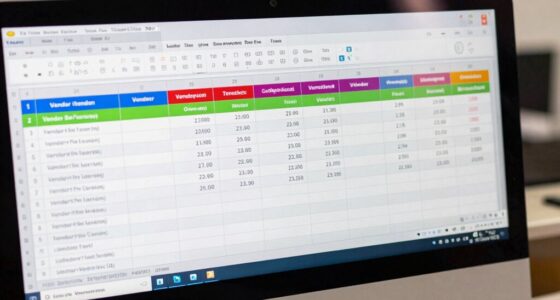
📊 Full opportunity report: A Closer Look At Supplier Invoice Auditing For Restaurants on IdeaNavigator AI — validation score, market gap, and execution plan.

Get kitchen staples and gadgets delivered free with Prime
- Fast, free delivery on millions of items
- Prime Video, Amazon Music and more included
- Member-only deals all year
TL;DR

A proposal for restaurant groups would use software to compare supplier invoices with agreed prices, purchase orders and delivery records, then track credit requests. The proposed first step is a 90-day review of paid invoices at three restaurant groups; no test results or product launch are reported.
IdeaNavigator AI has outlined a proposed invoice-auditing tool for independent, multi-unit restaurant groups, designed to flag supplier bills that do not match contracts, orders or deliveries. The proposal recommends a 90-day review of paid invoices at three groups to determine whether documented credits would exceed the cost of a subscription; it does not report that the test has taken place or that a product is available.
According to IdeaNavigator AI’s proposal, the target customer is a restaurant group’s purchasing director or controller, overseeing invoices from broadline and specialty food and beverage suppliers. The proposal lists possible mismatches to check: a contracted price not appearing on a bill, a full case charge when fewer cases arrived, a substitution billed at a higher price, or a line price that rises between orders. These are risks identified in the proposal, not findings from a completed audit.
The proposal’s suggested minimum product would accept invoices through electronic data interchange (EDI), PDF files or photo-based optical character recognition. It would compare invoice lines with supplier contract or quote sheets and the restaurant group’s order guide, while matching ordered, received and billed quantities and prices. When it finds a discrepancy, the proposed system would flag the line, draft a supplier credit request and track whether the credit later appears on an invoice.
IdeaNavigator AI proposes a monthly subscription per location, with an optional fee tied to recovered credits. For validation, it recommends reviewing 90 days of paid invoices and relevant contracts or quote sheets for three restaurant groups. The review would total billed amounts above agreed prices, short-shipped cases billed in full and price increases. The proposal recommends proceeding only if documented credits per location clearly exceed the planned subscription fee.
A Closer Look at Supplier Invoice Auditing for Restaurants
A proposal outlines software to compare supplier bills with agreed prices, orders and deliveries. It recommends a review to test whether documented credits could outweigh subscription costs.
What the proposed tool would check
The listed examples are possible mismatches, not findings from a completed audit.
Charges above agreed rates
Compare invoice prices with supplier contracts or quote sheets.
Short shipments billed in full
Match ordered, received and billed quantities.
Substitutions and price increases
Flag higher-priced substitutions or line prices that rise between orders.
How the workflow is meant to work
The proposed minimum product would take invoices in different formats and help track discrepancies through credit requests.
Accept EDI, PDF or photo-based OCR invoices.
Check invoice lines against agreed terms, order guides and delivery records.
Flag mismatches, draft supplier requests and note whether credits appear later.
The proposed validation test
Review paid invoices and relevant contracts or quote sheets across three groups.
Market context and open questions
The proposal cites USDA forecasts as cost context; they do not show that invoice discrepancies are increasing or establish savings for any restaurant group.
- 2026 retail beef and veal prices are forecast to rise 9.4%.
- Wholesale beef prices are forecast to rise 8.5%.
- Food-away-from-home prices are forecast to rise 3.5%.
- No completed pilot, test results or recovered-credit totals are reported.
- No product launch, subscription price or supplier partners are identified.
- Receiving records, supplier formats and dispute verification remain open questions.
Testing Savings Against Food Costs
IdeaNavigator AI’s proposal describes checking whether invoice comparisons could identify charges for which restaurant operators might seek supplier credits. It proposes comparing billed prices and quantities with agreed terms and delivery records, but reports no measured recovery totals, customer results or evidence of savings.
The proposal recommends comparing documented credits per location with the planned subscription price and distinguishing those credits from discrepancies merely flagged by the system. The outcome of such a review would depend on the quality of contracts, order and receiving data, suppliers’ responses, and the time needed to resolve disputes.
Products Worth Considering

KitchenAid 8-Cup Grain and Rice Cooker with Integrated Scale, Porcelain White

KitchenAid 5.5-Qt Bowl-Lift Stand Mixer, Porcelain White (KSM55SXXX)

KitchenAid Compact 8-Cup Grain and Rice Cooker with Integrated Scale
As an affiliate, we earn on qualifying purchases.
Food Inflation Behind the Proposal
IdeaNavigator AI cites a USDA Economic Research Service forecast dated September 25, 2026 as context for its proposal. The cited forecast projects 2026 retail beef and veal prices will rise 9.4% and wholesale beef prices 8.5%, while food-away-from-home prices are forecast to rise 3.5%. These are forecasts, not confirmed price changes or figures specific to any restaurant group.
IdeaNavigator AI’s proposal says that if ingredient costs rise faster than menu prices, an uncorrected supplier charge could add pressure to a restaurant’s margins. The proposed auditing approach would not change market prices; it would aim to identify differences between agreed, ordered, received and billed amounts. The cited figures provide context for the proposal and do not establish that invoice discrepancies are increasing.
No Audit Results Yet
IdeaNavigator AI’s proposal reports no completed pilot, participating restaurant groups or recovered-credit figures. It does not identify a product launch, developer, supplier partners, subscription price or technology performance. It also does not quantify how often the listed discrepancies occur or how much money restaurant groups might recover.
Operational questions remain open, including how receiving records would be captured, how the system would handle inconsistent supplier formats and substitutions, and how disputed charges would be verified. A discrepancy identified by software would still need supporting documentation and supplier acceptance before it could be counted as a recovered credit. The cited USDA figures are forecasts and do not establish the scale of potential savings for individual operators.
A Three-Group Invoice Review
IdeaNavigator AI recommends a 90-day lookback across three restaurant groups, matching paid invoices to contracts or quote sheets and reviewing short-shipped quantities and price changes. The proposed exercise would record discrepancies and any credits documented, then compare the per-location total with a planned subscription fee.
The proposal recommends proceeding only if documented credits clearly exceed the fee. It provides no test timetable, participating groups or decision date, so whether the review will take place remains unknown.
Source: IdeaNavigator AI
Key Questions
What is the proposed restaurant invoice auditor?
It is a proposed tool that would compare supplier invoice lines with contracts or quote sheets, order guides and delivery quantities, then flag discrepancies and track credit requests.
Has the tool been launched or tested?
The available proposal does not report a launch, completed pilot or test results. It recommends a 90-day invoice review at three restaurant groups as a validation step.
Which invoice problems would it look for?
The proposed checks include prices above agreed rates, short-shipped cases billed in full, substitutions billed at higher prices and line prices that increase between orders.
How would the proposal judge whether the tool is worthwhile?
It recommends comparing documented credits per location with the planned subscription fee. The proposal does not give a subscription price or report any recovered-credit total.
Source: IdeaNavigator AI