To avoid overbuying or underbuying tilt skillets, carefully assess your kitchen’s daily volume needs and menu requirements. Calculate the number of servings or dishes you prepare regularly and choose a size that matches those demands without excess capacity. Consider future growth and peak periods to ensure flexibility. Proper capacity planning saves costs and boosts efficiency, and if you keep exploring, you’ll discover more tips to optimize your setup effectively.
Key Takeaways
- Assess your kitchen’s daily volume to determine the necessary tilt skillet capacity for efficient workflow.
- Consider menu diversity to ensure the skillet size accommodates various cooking techniques and batch sizes.
- Plan for future growth by selecting slightly larger capacity equipment, preventing frequent upgrades.
- Match skillet capacity with available kitchen space and storage to optimize workflow and safety.
- Balance initial investment with long-term operational needs to avoid overbuying or underbuying equipment.
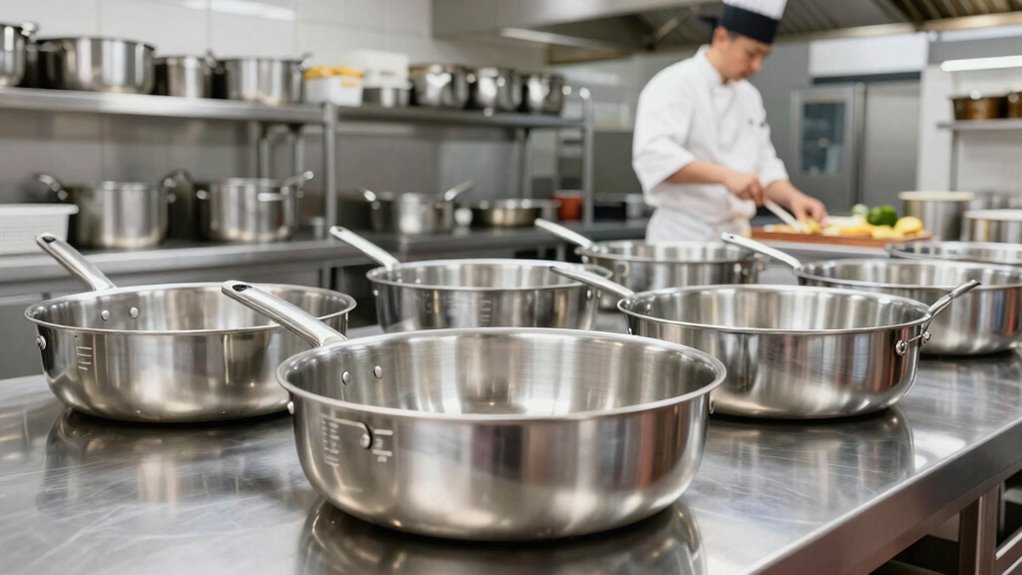
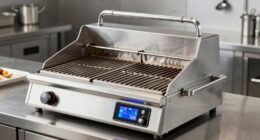
A tilt skillet, also known as a tilting fry pan or braising pan, is a versatile piece of commercial kitchen equipment designed to handle large quantities of food with ease. You’ll find it indispensable for a wide range of cooking techniques, from sautéing and braising to simmering and frying. Its large, flat surface allows you to prepare extensive batches of food efficiently, making it ideal for high-volume settings. To get the most out of your tilt skillet, understanding proper maintenance tips is essential. Regular cleaning and inspection prevent corrosion, guarantee safety, and prolong the lifespan of your equipment.
A versatile commercial kitchen essential for high-volume cooking and easy maintenance.
When using your tilt skillet, mastering different cooking techniques is pivotal. Because it offers excellent heat distribution, you can sear meats, cook stews, or prepare sauces uniformly. The ability to tilt the pan simplifies pouring out liquids and transferring cooked food, saving time and reducing spills. This feature is especially helpful when you need to quickly switch from cooking to serving or transferring ingredients. Adjusting the heat and managing cooking times are fundamental; a well-calibrated thermostat ensures even cooking without scorching or boiling over.
Maintenance is equally important to keep your tilt skillet performing at its best. After each use, you should clean the interior thoroughly with warm, soapy water to remove food residue and prevent buildup. Avoid abrasive cleaners that can scratch the surface, leading to potential corrosion over time. Regularly inspect the tilt mechanism, hinges, and seals for wear or damage. Lubricate moving parts as recommended by the manufacturer to maintain smooth operation. Always dry the skillet completely to prevent rust, especially if it’s made of cast iron or contains metal components prone to corrosion. Additionally, choosing the right cleaning agents and proper storage techniques can further extend the lifespan of your equipment.
Another maintenance tip involves checking the heating elements and thermostats periodically. If you notice uneven heating or temperature fluctuations, it might be time for professional servicing. Properly maintaining your tilt skillet not only extends its lifespan but also guarantees consistent cooking results, which is essential in a busy kitchen environment. Additionally, always follow the manufacturer’s guidelines for cleaning agents and maintenance routines to avoid voiding warranties or damaging sensitive parts.
Frequently Asked Questions
How Do I Determine the Right Tilt Skillet Size for My Kitchen?
To determine the right tilt skillet size, start with your capacity estimation based on your expected volume of dishes. Consider your space considerations—ensure there’s enough room for safe operation and easy movement. Think about your menu needs and whether you handle large batches or smaller portions. By balancing capacity estimation with available space, you’ll select a tilt skillet that meets your kitchen’s demands without overbuying or underbuying.
What Are the Maintenance Requirements for Different Tilt Skillet Capacities?
Maintenance matters for tilt skillets, ensuring safety and longevity. Follow cleaning protocols diligently, wiping down surfaces after each use to prevent buildup. Inspection schedules are vital—check for wear, corrosion, or damage regularly to catch issues early. Larger skillets may need more frequent maintenance, while smaller ones might require less. Consistent care keeps your equipment efficient, reliable, and ready to handle your kitchen’s demands without downtime or disaster.
Can Tilt Skillets Be Used for Both Commercial and Residential Purposes?
Yes, tilt skillets can be used for both commercial and home use, especially if you’re into recipe adaptation. For home use, choose a smaller capacity skillet that fits your kitchen space and cooking needs. They’re versatile, allowing you to prepare larger meals or multiple dishes efficiently. Just make certain you follow safety guidelines and maintenance routines, so your tilt skillet stays in good condition and helps you cook like a pro at home or commercially.
How Does Capacity Affect the Energy Efficiency of Tilt Skillets?
Ironically, bigger tilt skillets aren’t always better for energy efficiency. When capacity increases, you might think heating efficiency improves, but it often leads to higher energy consumption due to the need to heat a larger surface. Overloading the skillet wastes energy, while underloading means you’re heating more space than necessary. To save energy, match capacity to your actual needs, ensuring peak heating efficiency without unnecessary energy use.
Are There Safety Features Specific to Larger Capacity Tilt Skillets?
Larger capacity tilt skillets come with safety features like a safety lock to prevent accidental tilting and an emergency shutoff in case of malfunction. These safety mechanisms protect you during operation, ensuring the skillet doesn’t move unexpectedly and you can quickly stop the unit if needed. Always check that your tilt skillet includes these features and follow manufacturer instructions for safe use, especially with bigger models.
Conclusion
Now that you understand tilt skillet capacity planning, you’re prepared to avoid costly overbuying and underbuying. Think of it like balancing on a tightrope—too much weight, and you fall; too little, and you stumble. With the right insights, you’ll keep your kitchen running smoothly, much like a skilled acrobat maintaining perfect poise. Mastering this balance guarantees efficiency and saves money, so you can focus on what truly matters: delivering great food without the stress of miscalculations.