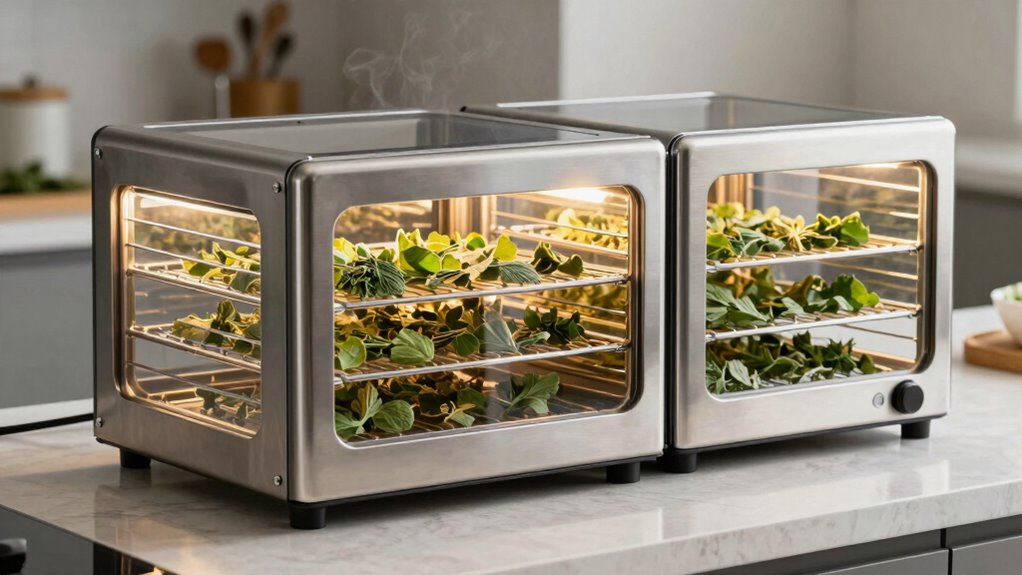

To prevent chewy herbs in your kitchen dehydrator, focus on precise temperature and timing. Keep your dehydrator set between 95°F and 115°F for gentle, even drying. Check herbs regularly to avoid overdrying, which can make them tough. Spread herbs evenly in a single layer to promote airflow. Managing these factors guarantees your herbs preserve their flavor, aroma, and texture. Stay tuned for more tips on mastering the ideal dehydration process.
Key Takeaways
- Use dehydrators with precise temperature controls within the 95°F to 115°F range for gentle, even drying.
- Set a consistent, low temperature and monitor herbs regularly to prevent overdrying and chewy textures.
- Spread herbs evenly on dehydrator trays to ensure uniform airflow and drying.
- Start drying at lower temperatures for slow, thorough moisture removal, avoiding higher heat that causes toughness.
- Remove herbs promptly when crisp to prevent over-drying and preserve flavor, aroma, and color.
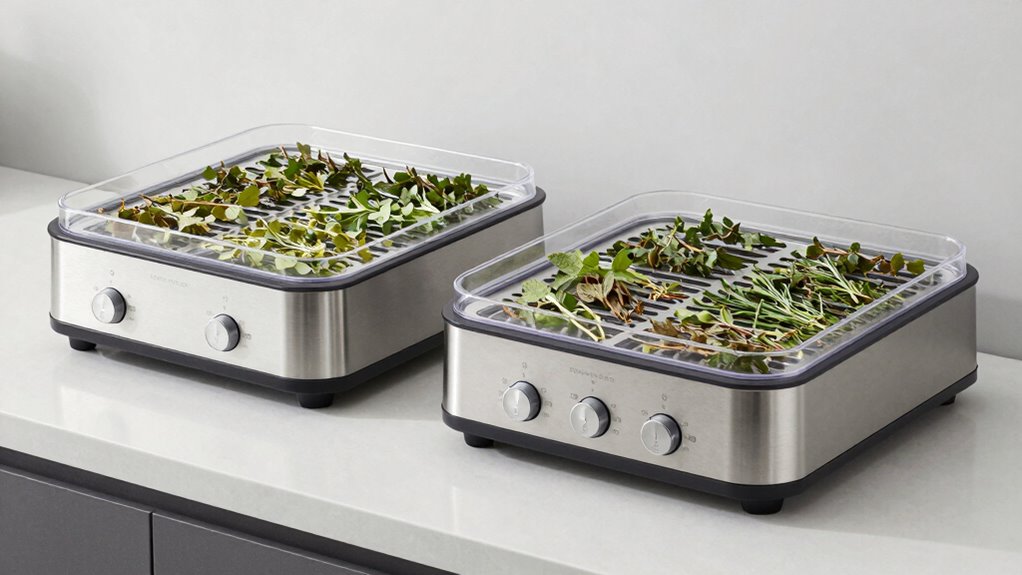
Dehydrators have become essential tools in modern kitchens, offering a simple way to preserve fruits, vegetables, herbs, and even meats. If you’re interested in herb preservation, understanding dehydration techniques can markedly improve your results. Properly drying herbs ensures they retain their flavor, aroma, and nutritional value without becoming chewy or brittle. The key is mastering the right time and temperature, which allows you to produce high-quality dried herbs consistently.
Dehydrators preserve herbs’ flavor, aroma, and nutrients when dried at proper times and temperatures.
When you’re dehydrating herbs, the goal is to remove moisture gently while preserving their essential oils. To prevent chewy herbs, you need to pay close attention to dehydration techniques that focus on low and steady heat. Most herbs dry well at temperatures between 95°F and 115°F. Starting at a lower temperature allows the herbs to dry slowly and evenly, maintaining their vibrant color and aroma. Rushing the process with higher heat can cause the herbs to become tough and chewy, reducing their flavor and making them less enjoyable to use in cooking or teas.
Timing is just as important as temperature. Depending on the herb’s thickness and moisture content, dehydration can take anywhere from 1 to 4 hours. Thin, leafy herbs like basil or mint may dry quicker, while thicker stems or woody herbs like rosemary might need more time. As you dehydrate, it’s best to check the herbs regularly, ensuring they’re drying evenly. When they feel crisp and break easily, it’s a good sign they’re ready. Overdrying can also lead to a chewy texture, so keeping a close eye prevents that.
Another useful tip is to prepare herbs properly before dehydration. Rinse them gently to remove dirt or pests, then pat them dry thoroughly. If you’re drying herbs with stems, consider removing the leaves from woody stems to speed up the process and improve herb preservation. Spreading herbs in a single, even layer on the dehydrator trays helps air circulate better and ensures uniform drying. You don’t need to pack the trays tightly; space allows the warm air to reach all parts equally.
Frequently Asked Questions
How Long Do Herbs Typically Take to Dehydrate?
Herb drying typically takes 1 to 4 hours, depending on the herb and dehydration duration. You should check herbs regularly to prevent over-drying or becoming chewy. Use a dehydrator set to the right temperature, usually around 95°F to 115°F, to guarantee even dehydration. Adjust the time based on herb thickness and moisture content. Proper herb drying preserves flavor and prevents mold, making your herbs perfect for storage.
Can Dehydrators Preserve Herbs’ Flavor and Potency?
Sure, dehydrators can preserve your herbs’ flavor retention and potency—if you don’t turn them into flavorless, chewy messes first. With the right temp and time, you effectively lock in those essential oils and vibrant tastes, making your herbs taste just-picked. Skip the guesswork, and you’ll enjoy herb potency and flavor retention, ensuring your culinary magic stays intact without sacrificing aroma or freshness.
Are There Safety Concerns When Drying Herbs at Home?
Yes, there are safety concerns when drying herbs at home. You need to prioritize food safety by ensuring proper dehydration to prevent mold growth. Use a reliable dehydrator and monitor temperature and time closely to avoid under-drying, which can lead to mold, or over-drying, which reduces potency. Keep herbs in a dry, airtight container once fully dried, and check regularly for signs of spoilage to maintain safe, flavorful herbs.
What’s the Best Way to Store Dehydrated Herbs?
Did you know that properly stored herbs can retain their flavor for up to a year? To keep your dehydrated herbs fresh, store them in airtight storage containers away from direct sunlight, heat, and moisture. Using glass jars or vacuum-sealed bags helps preserve herb freshness. Label each container with the date, and store them in a cool, dark place to maintain flavor and potency longer.
Can Dehydrators Be Used for Other Kitchen Preservation Methods?
Yes, dehydrators can be used for other kitchen preservation methods, offering excellent equipment versatility. You can use them to make fruit leathers, dry nuts, or even ferment foods at controlled temperatures, ensuring food safety. This flexibility helps you preserve your bounty efficiently while maintaining quality. Just remember to follow proper procedures for each method, and your dehydrator will serve as a valuable tool for various preservation tasks.
Conclusion
Using a dehydrator with the right time and temperature settings guarantees your herbs stay fresh and flavorful, avoiding that chewy, unappealing texture. Remember, “Haste makes waste,” so take your time to perfect your drying process. With patience and attention, you’ll preserve herbs at their peak, making every dish shine. Trust in this method, and you’ll enjoy vibrant, fragrant herbs whenever you need them—saving time and money in the long run.