
To keep portions consistent on your dough sheeter, use the easy-to-operate dials or digital controls to adjust thickness settings carefully. Make small adjustments and run test sheets to verify uniformity. Regularly calibrate the machine to maintain accuracy and guarantee your dough sheets are consistent in size and thickness. Proper settings not only improve portion control but also lead to better baking results and less waste. Keep these tips in mind for peak performance, and you’ll discover even more ways to enhance your process.
Key Takeaways
- Use precise digital controls or dials to set consistent thickness levels for uniform dough portions.
- Make small, incremental adjustments and run test sheets to verify uniformity.
- Regularly calibrate the machine to ensure thickness settings remain accurate over time.
- Maintain a clean, debris-free environment to prevent interference with precise adjustments.
- Follow safety protocols and proper operation procedures to avoid damaging the settings and ensure consistency.
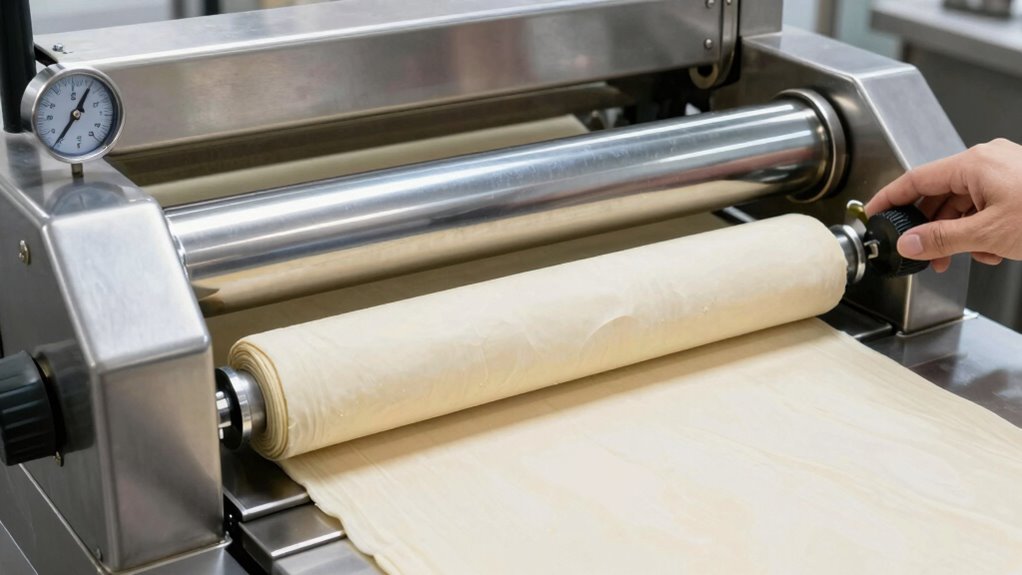
Have you ever wondered how bakeries produce perfectly even dough sheets quickly and efficiently? The secret lies in the precise use of dough sheeters, which can be adjusted to achieve consistent thickness across every sheet. Maintaining these machines properly is essential to keep them running smoothly and to guarantee safety during operation. Regular dough sheeters maintenance prevents breakdowns, prolongs the lifespan of the equipment, and keeps the production process seamless. By routinely checking and lubricating moving parts, cleaning the rollers, and inspecting electrical components, you reduce the risk of unexpected failures that could disrupt your workflow. Proper maintenance also helps avoid uneven dough thickness, which can lead to waste or inconsistent product quality.
But just as important as maintenance is prioritizing dough sheeters safety. These machines operate at high speeds and involve moving parts that can pose hazards if not handled correctly. Always guarantee safety guards are in place before starting the machine, and never bypass safety features. Educate yourself and your team on proper operation procedures to prevent accidents. Handling dough sheeters with care reduces the risk of injuries like pinched fingers or cuts, especially when adjusting thickness settings or cleaning the rollers. Wearing appropriate protective gear and following manufacturer guidelines contribute profoundly to a safe working environment.
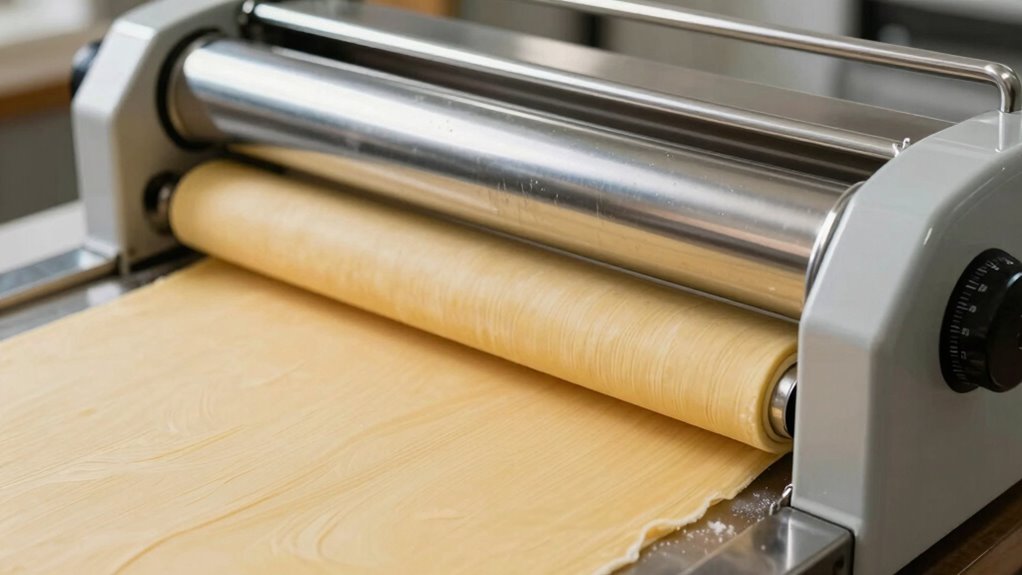
Adjusting the thickness settings on your dough sheeter is straightforward, but it requires attentiveness to guarantee consistent results. Most machines feature easy-to-use dials or digital controls that allow you to set the desired thickness precisely. When you change the settings, make small adjustments and run a test sheet to verify uniformity. Consistent thickness is vital for portion control, baking times, and product quality. If your dough is too thick or too thin, it can affect how it bakes, looks, and tastes. Regularly calibrating your dough sheeter ensures that your portion sizes stay consistent, reducing waste and maintaining customer satisfaction.
Additionally, pay close attention to the environment where you operate your dough sheeter. Keep the area clean and free of debris that could interfere with the machine’s operation. Proper dough sheeters safety protocols also include disconnecting power before cleaning or performing maintenance to avoid accidental startup. Ensuring proper machine calibration and environmental conditions helps maintain optimal performance. When you combine diligent maintenance with strict safety practices, you maximize your equipment’s performance and guarantee a safe workspace for everyone involved. Ultimately, mastering the use of thickness settings and prioritizing safety helps you produce high-quality dough sheets efficiently, saving time, reducing waste, and enhancing your bakery’s reputation.
Frequently Asked Questions
How Do Thickness Settings Impact Dough Texture?
Adjusting thickness settings directly impacts dough texture by influencing dough elasticity and texture uniformity. When you set the sheeter to a thinner setting, you create a more delicate, elastic dough that’s easier to work with. Conversely, thicker settings produce a firmer dough with less elasticity. Properly calibrated settings make certain of consistent dough texture, helping you achieve even portions and high-quality baked goods every time.
Can Settings Be Adjusted for Different Dough Types?
Think of your dough as a chameleon—adjusting settings is key to its true colors. Yes, you can tweak thickness settings for different dough types, considering dough elasticity and temperature effects. Softer doughs with high elasticity need gentler settings, while stiffer ones require more pressure. By fine-tuning, you make certain each batch rolls out perfectly, maintaining consistency and quality across your baked creations.
What Maintenance Is Needed for Consistent Thickness?
To keep the thickness consistent, you should regularly perform calibration procedures on your dough sheeter to guarantee accurate settings. Additionally, follow proper cleaning routines to prevent dough buildup and maintain smooth operation. Check and tighten any worn or loose parts, and lubricate moving components as needed. Doing these maintenance steps consistently helps your sheeter produce uniform dough thickness, reducing waste and improving product quality.
Are Digital Controls More Precise Than Manual Ones?
Think of digital controls as a laser pointer, offering sharp digital precision that manual controls can’t match. You’ll find that digital settings reduce manual variability, ensuring each dough sheet is exactly the same thickness. I once watched a baker switch from manual to digital, and the consistency improved remarkably. So, yes, digital controls are generally more precise, giving you consistent results every time, unlike manual ones that depend on human accuracy.
How Often Should Settings Be Recalibrated for Accuracy?
You should recalibrate your dough sheeter every 3 to 6 months, depending on usage frequency, to guarantee accuracy. Regular calibration frequency helps maintain consistent thickness settings and portion sizes. Conduct an accuracy check monthly if you use the machine daily, and immediately recalibrate if you notice inconsistencies. This routine ensures your dough sheets stay uniform, reducing waste and improving product quality.
Conclusion
Mastering thickness settings on your dough sheeter guarantees every portion stays consistent, saving you time and reducing waste. Did you know that using the right settings can cut dough preparation time by up to 30%? By fine-tuning your machine, you not only improve quality but also boost efficiency. Keep experimenting with your thickness levels, and you’ll consistently produce perfect, uniform dough—making your baking process smoother and more professional every time.