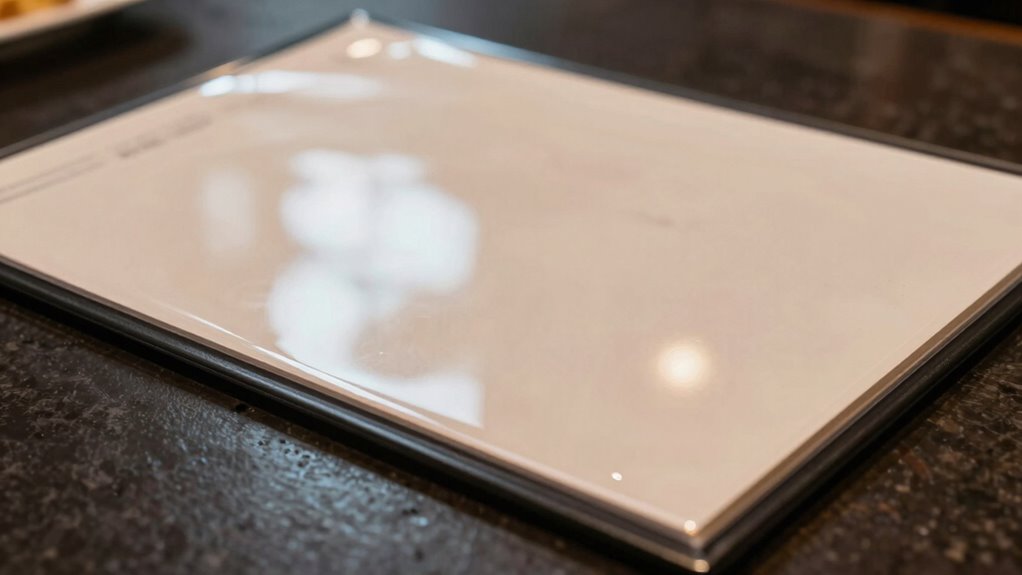

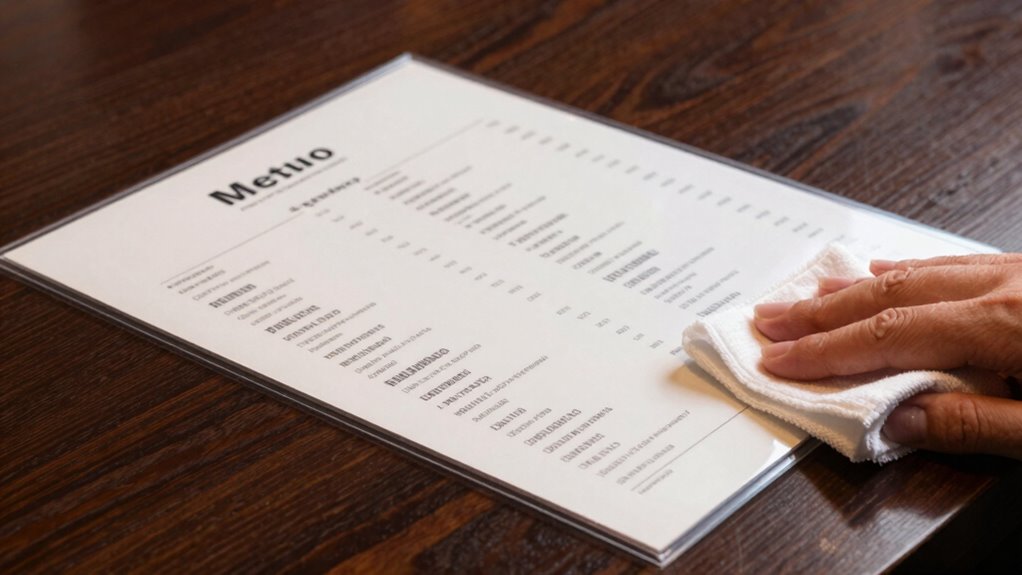
To keep your laminated menus looking new without smears, handle them with clean hands and avoid excessive touching. Use a soft cloth or microfiber towel dampened with a mild soap solution or vinegar to gently wipe away fingerprints and smudges. Avoid harsh chemicals or abrasive tools that can scratch or discolor the lamination. Regularly inspect your menus and follow proper cleaning techniques; if you continue, you’ll discover more tips to maximize their durability and appearance.

Get kitchen staples and gadgets delivered free with Prime
- Fast, free delivery on millions of items
- Prime Video, Amazon Music and more included
- Member-only deals all year
Key Takeaways
- Use soft, damp microfiber cloths with mild soap or glass cleaner to gently wipe laminated menus.
- Avoid harsh chemicals and abrasive tools that can scratch or damage the lamination.
- Regularly inspect menus for smudges or fingerprints and clean promptly to maintain a pristine appearance.
- Test cleaning solutions on a small, hidden area first to prevent discoloration or damage.
- Handle menus with clean hands, store flat or in protective sleeves, and avoid folding to prevent wear and smears.
Have you ever wondered why your restaurant menu looks worn or dirty so quickly? It’s frustrating to invest in menus that lose their professional appearance after just a few weeks. The key to maintaining a fresh look lies in understanding menu durability and the right cleaning techniques. When your menus are exposed to frequent handling, spills, and grease, they become prone to tearing, staining, and smudging. To combat this, lamination proves to be a smart solution. Proper lamination creates a protective barrier that shields the menu from moisture, dirt, and fingerprints, considerably extending its lifespan. But simply laminating isn’t enough—you need to use the correct cleaning techniques to keep the laminated surface pristine.
When it comes to cleaning laminated menus, gentle methods are best. Avoid harsh chemicals or abrasive scrubbers that can scratch or peel the lamination film. Instead, use a soft cloth or microfiber towel dampened with a mild soap solution or a gentle glass cleaner. Wipe the surface carefully, paying attention to smudges and fingerprints, but refrain from applying excessive pressure. This prevents any damage to the lamination and preserves the clarity of your menu’s design. For stubborn stains or grease, a solution of water and a small amount of vinegar can be effective, as vinegar is a natural degreaser and disinfectant. Always test a small, inconspicuous area first to ensure it doesn’t cause any discoloration or damage. Understanding menu durability is essential for prolonging the lifespan of your menus and maintaining their professional appearance.
In addition to cleaning, paying attention to how you handle and store your menus can boost their durability. Encourage staff to handle menus with clean hands and to avoid unnecessary folding or bending. When menus are not in use, store them flat or in protective sleeves to prevent creases and tears. Regularly inspecting your menus allows you to spot any damage early, so you can replace or re-laminate them before they become too worn. Remember, the goal is to keep your menus looking as new as the day you first printed them, which not only enhances your restaurant’s professional image but also improves customer experience.
As an affiliate, we earn on qualifying purchases.
Frequently Asked Questions
How Often Should Menus Be Laminated for Optimal Durability?
You should laminate menus every 6 to 12 months to guarantee ideal durability and prevent the need for frequent menu replacement. Regular lamination extends the lamination lifespan, keeping your menus looking new and protected from smears and spills. If your menus see heavy use, consider laminating more often. This proactive approach maintains a professional appearance and reduces the risk of damage, saving you money and time on replacements.
What Are Non-Toxic Cleaning Solutions Safe for Laminated Menus?
You should use eco-friendly wipes or non-toxic solvents to clean laminated menus safely. These options effectively remove smudges and dirt without damaging the lamination or exposing your staff and customers to harmful chemicals. Simply dampen a soft cloth with eco-friendly wipes or a gentle non-toxic solvent, then wipe the menus gently. Regular cleaning with these safe solutions keeps your menus looking new, smudge-free, and environmentally responsible.
Can Laminated Menus Be Recycled After Extensive Use?
Laminated menus are typically not recyclable due to the plastic coating that complicates recycling procedures. After extensive use, you might consider repurposing or reusing them to reduce environmental impact. If recycling is essential, check local facilities for specific guidelines, but generally, their composite material makes recycling difficult. To minimize environmental impact, opt for durable materials and explore options like biodegradable alternatives for future menus.
How to Prevent Peeling or Bubbling of Laminate Over Time?
Did you know that choosing the right laminate thickness can extend your menu’s lifespan considerably? To prevent peeling or bubbling, make sure you use high-quality adhesive and a suitable laminate thickness for your needs. Applying even pressure during lamination helps avoid air bubbles. Regularly inspect your menus and re-laminate when needed. This proactive approach keeps your menus looking fresh, professional, and durable over time.
Are There Eco-Friendly Alternatives to Traditional Lamination?
Yes, eco-friendly alternatives like biodegradable lamination and plant-based adhesives are available. You can opt for biodegradable lamination sheets made from natural materials that break down faster in the environment. Additionally, using plant-based adhesives reduces reliance on synthetic chemicals, making your menu more sustainable. These options help keep your menus durable and eco-conscious, ensuring they look fresh without harming the planet.
Conclusion
Keeping your menus pristine with proper lamination and cleaning isn’t just about appearance—it reflects your restaurant’s professionalism. For example, a café owner noticed that regular wipe-downs with a gentle cleaner kept menus looking fresh and smudge-free, even during busy hours. By investing in quality lamination and consistent cleaning, you guarantee customers always see your best. Stick to these tips, and your menus will stay vibrant and inviting, making a great impression every time.
NFL season / tailgating Picks
team gear
As an affiliate, we earn on qualifying purchases.