To make dough rise predictably in proofing cabinets, maintaining the right humidity level is key. Generally, setting humidity around 75-85% helps keep the dough moist and elastic, preventing it from drying out or becoming too sticky. Consistent humidity ensures reliable proofing results and supports even fermentation. If you want to learn more about how to optimize humidity settings for perfect dough every time, keep exploring what options your proofing cabinet offers.
Key Takeaways
- Proper humidity levels prevent dough from drying out or becoming too moist, ensuring consistent proofing results.
- Maintaining optimal humidity supports yeast activity, leading to predictable dough rise and texture.
- Controlled humidity prevents surface cracking or overly sticky dough, improving overall proofing reliability.
- Modern proofing cabinets adjust humidity automatically to sustain stable proofing conditions.
- Consistent humidity, combined with temperature control, ensures uniform proofing and high-quality baked goods.
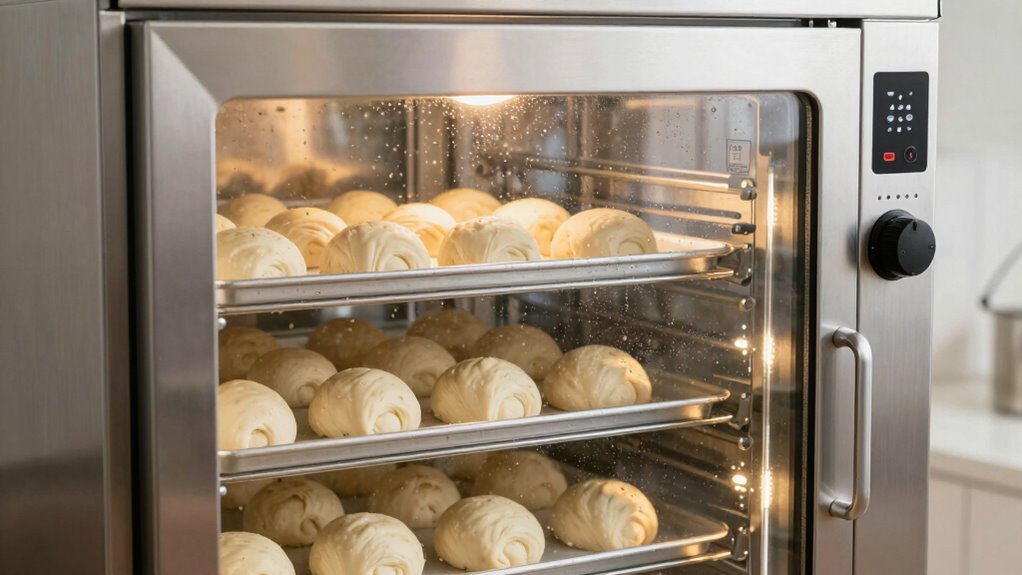
Have you ever wondered how professional bakers achieve perfectly risen dough every time? The secret often lies in precise proofing, and a key tool that makes this possible is the proofing cabinet. These specialized units create the ideal environment for dough to ferment, and temperature regulation plays a crucial role in this process. Maintaining the right temperature ensures yeast activity stays consistent, preventing under-proofing or over-proofing. When dough is proofed at a stable, perfect temperature, it develops the right texture and volume, leading to consistent results batch after batch.
Professional bakers rely on precise proofing cabinets to ensure perfectly risen dough every time.
A well-designed proofing cabinet doesn’t just control temperature; it also manages humidity levels, which is equally important for predictable dough rising. But what many bakers might overlook is how modern proofing cabinets are engineered for energy efficiency. These units use advanced insulation and smart controls to minimize energy consumption, which saves money and reduces environmental impact. With energy-efficient models, you don’t have to worry about skyrocketing utility bills while still achieving precise proofing conditions. Instead, you get a balance of performance and sustainability, making them a worthwhile investment for any bakery or serious home baker.
Temperature regulation within proofing cabinets is often achieved through adjustable thermostats and heating elements that respond quickly to changes. This means you can set the exact temperature needed for different types of dough, whether it’s a slow fermentation for sourdough or a quick proof for softer bread. Consistent temperature control prevents fluctuations that can disrupt yeast activity, ensuring each batch rises predictably. Some advanced units even feature sensors that continuously monitor internal conditions and automatically adjust to maintain a stable environment, freeing you from constant monitoring. Additionally, temperature stability is vital for maintaining the quality of proofed dough over time.
Energy efficiency in proofing cabinets doesn’t just save money—it also enhances overall baking quality. When the environment is stable and predictable, you reduce the risk of uneven proofing caused by temperature swings or humidity fluctuations. This consistency means your dough will always rise to the perfect size and texture, giving you reliable results every time. Plus, by investing in an energy-efficient proofing cabinet with precise temperature regulation, you’re also doing your part to reduce your carbon footprint, making your baking practice more sustainable.
Frequently Asked Questions
How Does Humidity Affect Different Types of Dough?
Humidity directly impacts dough fermentation by controlling moisture levels, which affects how your dough rises and develops. High humidity prevents the dough from drying out, ensuring consistent fermentation, while low humidity can cause surface dryness and inhibit proper rise. By maintaining ideal humidity control in proofing cabinets, you can make dough more predictable, resulting in better texture and flavor. Adjust humidity settings based on dough type for perfect proofing every time.
What Is the Optimal Humidity Level for Proofing?
You might think perfect proofing is effortless, but it’s all about humidity control. The ideal humidity level for your proofing environment is around 75%. Keep it consistent, and your dough won’t be a stubborn mess. Too dry, and it’ll dry out; too moist, and it’ll overproof. Monitoring and regulating humidity ensures predictable results, making baking feel a little less like guesswork and more like science.
Can Proofing Cabinets Be Used for Other Culinary Tasks?
Yes, proofing cabinets can be used for other culinary tasks beyond dough fermentation. You can utilize bakery equipment for fermenting vegetables, yogurt, or even cheesemaking, thanks to their precise fermentation control. The consistent humidity and temperature settings make these cabinets versatile tools for various fermentation processes, ensuring the right environment for your recipes. Just adjust the settings accordingly, and you’ll optimize your culinary creations with this adaptable equipment.
How Do I Maintain Consistent Humidity in a Cabinet?
Did you know that maintaining consistent humidity levels can improve dough rise by up to 20%? To keep humidity control steady, regularly check your cabinet’s humidity gauge and adjust the settings as needed. Keep the cabinet clean and well-sealed to prevent fluctuations. Routine cabinet maintenance, like checking seals and vents, ensures your proofing environment stays ideal, making your dough predictable and perfect every time.
Are There Energy-Efficient Proofing Cabinet Options?
Yes, there are energy-efficient proofing cabinet options available. Look for models featuring energy-saving appliances and eco-friendly design to reduce your energy footprint. These cabinets often incorporate better insulation, programmable timers, and low-energy heating elements, helping you save on electricity while maintaining ideal humidity and temperature for dough proofing. Investing in these eco-conscious options not only benefits the environment but also lowers your operational costs over time.
Conclusion
By mastering the right humidity setting, you guarantee your dough rises perfectly every time. You control the environment, control the outcome, and create bakery-quality results. You choose consistency, you achieve predictability, and you elevate your baking game. With the right proofing cabinet, you’re not just baking—you’re crafting perfection. So, set the humidity wisely, trust your process, and enjoy the delicious rewards of your well-proofed dough every single time.