
To prevent overstuffing your reach-in fridge, assess your storage needs by considering the size and type of items you plan to store. Use adjustable shelves to optimize space and guarantee proper airflow for consistent temperatures. Avoid overcrowding by planning layout and grouping items efficiently. Maintaining airflow and regularly checking vents help keep food safe and appliances running well. Keep your fridge organized, and you’ll discover even more tips to maximize capacity and prevent spoilage.
Key Takeaways
- Accurately assess storage needs to determine optimal shelf quantity and configuration, preventing overcrowding.
- Use adjustable, sturdy shelves to maximize space while maintaining proper airflow and ease of access.
- Organize items by size and type to optimize vertical and horizontal space utilization.
- Ensure sufficient airflow by avoiding overstuffing and blocking vents, maintaining even cooling.
- Regularly evaluate and adjust storage layout to prevent overloading, reduce energy use, and extend fridge lifespan.

When choosing a reach-in fridge, understanding its capacity is essential to meeting your storage needs. A well-sized unit ensures you keep everything properly chilled without wasting space or risking spoilage. To do this effectively, you need to consider not just how much you can fit inside but also how to optimize that space through smart storage organization. Proper organization helps maintain consistent temperature management, which is crucial for food safety and quality. Overstuffing your fridge can lead to uneven cooling, making it harder to keep everything at the right temperature. Conversely, underutilizing space can be inefficient and costly.
Understanding fridge capacity and smart organization ensures proper chilling, food safety, and efficient storage management.
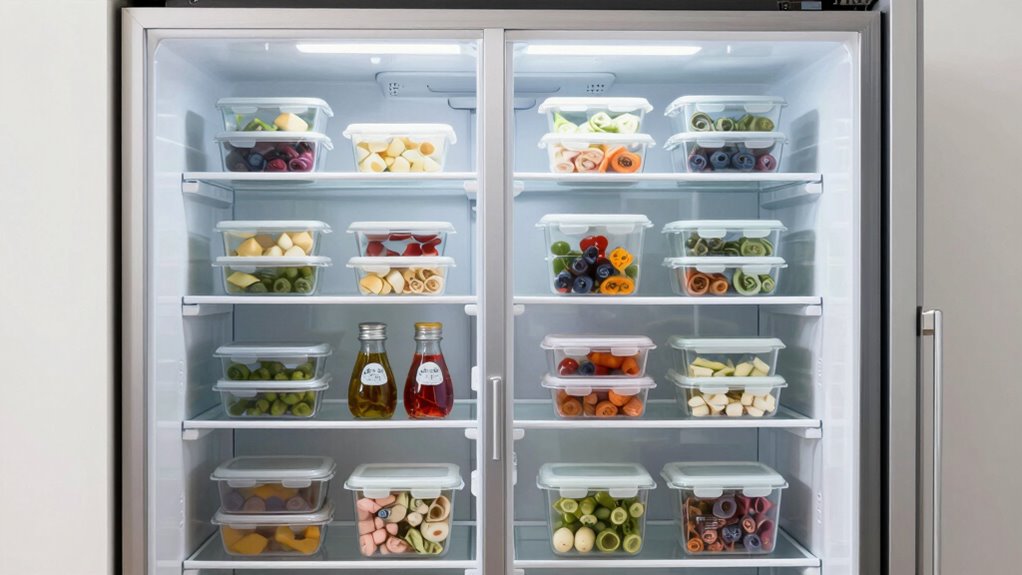
Start by evaluating the types of items you’ll store most frequently. Are you dealing with large containers, multiple small items, or a mix of both? Knowing this helps you determine the right shelf configuration and overall capacity needed. Shelves should be sturdy and adjustable, allowing you to customize storage based on size and shape. Proper storage organization isn’t just about maximizing space; it also enhances airflow within the unit. When air circulates freely, temperature management becomes easier and more reliable, reducing the risk of hot spots that can compromise food safety.
Next, consider how the fridge’s internal layout influences capacity. Shelves placed too close together can limit what you can store vertically, while too much open space can lead to inefficient use of capacity. Aim for a balance where you can stack items securely without overcrowding. Group similar items together, labeling shelves if needed, to streamline access and reduce clutter. When you organize your fridge intelligently, you facilitate better temperature management by preventing blocked vents and ensuring cold air reaches all areas evenly. Additionally, understanding fridge capacity helps prevent overstuffing and extends the lifespan of your appliance by reducing strain on the compressor.
It’s also vital to keep the interior clean and regularly check for expired or spoiled items. Cluttered, disorganized fridges hinder airflow and make it more difficult to regulate temperature. By maintaining a tidy environment and knowing how much space you have at any given moment, you can avoid overstuffing. Overstuffing not only hampers temperature management but also makes it challenging to find what you need quickly, increasing the risk of food waste.
Frequently Asked Questions
How Do I Measure My Fridge’s Internal Dimensions Accurately?
To measure your fridge’s internal dimensions accurately, first remove all shelves and drawers. Use a tape measure to record the width, height, and depth from wall to wall, including inside corners. Pay attention to fridge insulation and temperature zones, as these affect storage capacity. Take multiple measurements to make certain of precision, especially around irregular areas. This helps you optimize shelf placement and avoid overstuffing, keeping your fridge organized and efficient.
What Are the Best Ways to Organize Items for Maximum Space?
Think of your fridge as a puzzle waiting to be solved. To maximize space, use vertical stacking for taller items and designate specific zones for different food groups. Container labeling helps you find what you need instantly and keeps things organized. Always place frequently used items at the front. This approach not only saves space but also reduces waste, making your fridge both efficient and easy to navigate.
How Often Should I Reassess My Fridge Capacity Needs?
You should reassess your fridge capacity needs monthly by reviewing your fridge inventory and adjusting storage frequency accordingly. Regularly checking how much space you’re using helps prevent overstuffing and keeps things organized. As your shopping habits change or seasons shift, so should your storage plan. This way, you maximize fridge efficiency, reduce waste, and ensure your items stay fresh without cluttering space or causing spoilage.
Are There Specific Storage Containers That Save More Space?
Yes, using stackable bins and collapsible containers can save you space in your fridge. Stackable bins maximize vertical storage, allowing you to organize different items efficiently without wasting shelf space. Collapsible containers are perfect for reducing bulk when not in use, freeing up room for other essentials. Combining both options helps you optimize your fridge capacity, making it easier to keep everything accessible and well-organized.
How Does Door Storage Affect Overall Fridge Capacity?
Did you know door storage accounts for about 20% of your fridge’s total capacity? Door storage limitations mean you can’t overstuff it without sacrificing space elsewhere. To optimize, keep frequently used items in the door but avoid overloading it, ensuring better organization. Effective door space optimization helps maximize overall fridge capacity, making it easier to store everything you need without sacrificing fresh food shelf space.
Conclusion
So, next time you cram that fridge to the brim, remember the shelf math that keeps your food from turning into a cold chaos. Ironically, the secret to avoiding overstuffing isn’t about stuffing more in, but knowing when enough is enough. Because nothing says “organized” like a fridge that’s perfectly balanced—until someone opens it and chaos spills out, proving that sometimes, less really is more. Keep the math in mind, and enjoy the peace of a well-stocked, stress-free fridge.