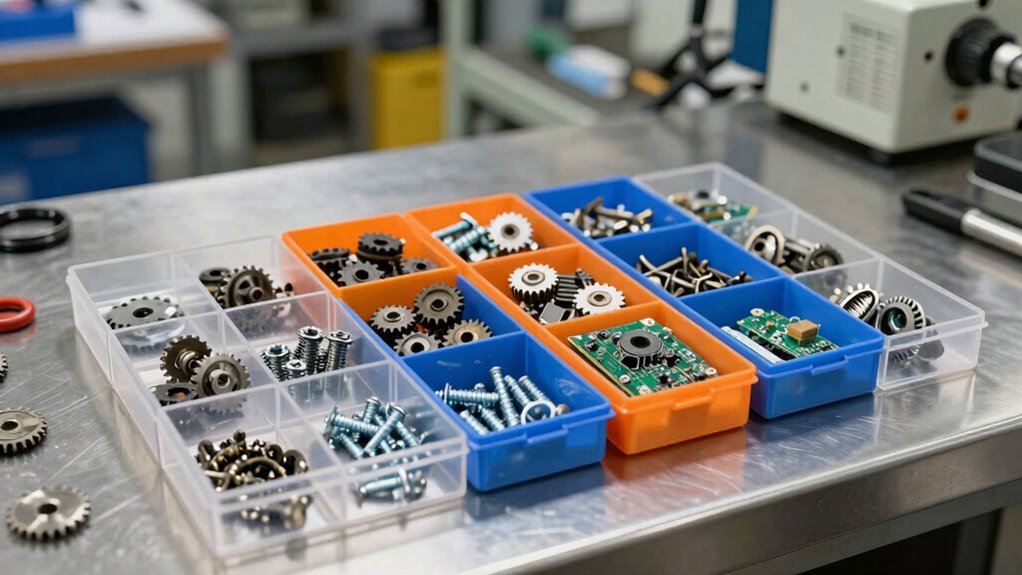
Having a small, well-stocked spare parts kit is vital to prevent multi-day equipment downtime. By carefully selecting critical, high-usage components and maintaining ideal inventory levels through strong supplier relationships, you guarantee quick repairs and minimal disruptions. Using inventory management tools and just-in-time principles, you can respond swiftly to failures. Keep your focus on reliable supply chains and technology so you’re prepared for any urgent needs—discover more strategies to stay operational efficiently.
Key Takeaways
- Maintain a curated inventory of critical spare parts tailored to equipment failure patterns.
- Develop strong supplier relationships for quick access and prioritized delivery of essential components.
- Implement just-in-time inventory practices with precise reorder points to prevent shortages.
- Use inventory management technology for real-time tracking and rapid reordering of vital parts.
- Conduct regular audits of the spare parts kit to ensure readiness and resolve potential obsolescence.
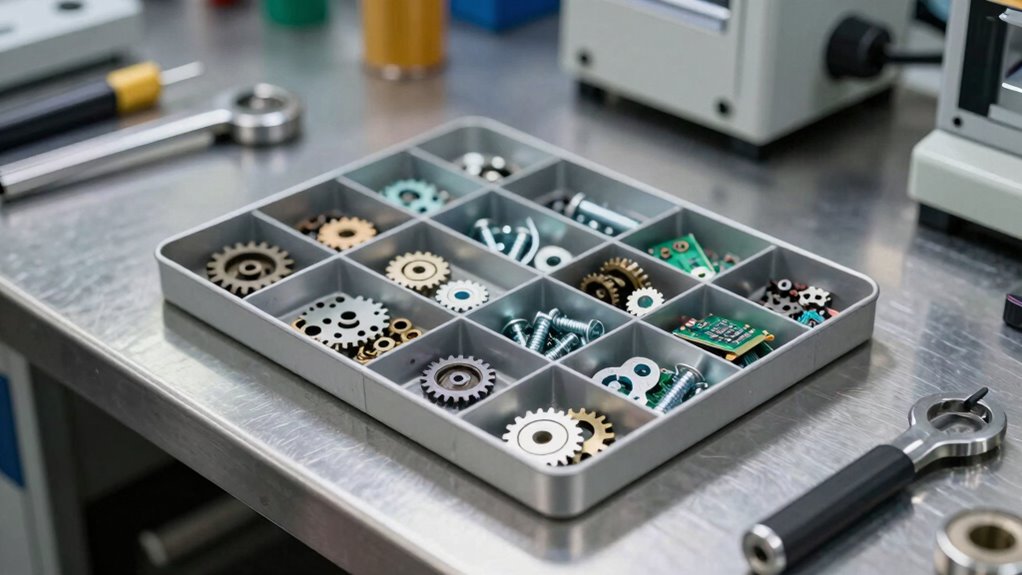
Have you ever wondered how companies keep their operations running smoothly without costly delays? It often comes down to a well-crafted spare parts strategy. At the core of this strategy lies effective inventory management, which guarantees you always have the right parts on hand without overstocking. Managing inventory efficiently involves tracking usage patterns, lead times, and criticality of components. This way, you avoid the pitfalls of excess inventory that ties up capital and the risks of stockouts that halt production. By maintaining a balanced inventory, you can respond quickly to equipment failures, minimizing downtime and maintaining productivity.
Effective inventory management ensures quick response to equipment failures, minimizing downtime and boosting productivity.
Equally important is cultivating strong supplier relationships. When you develop reliable partnerships, you gain access to faster deliveries, better pricing, and priority treatment during shortages. Good relationships mean you can communicate your needs clearly, negotiate favorable terms, and even get advance notice of potential delays. This proactive approach helps you forecast demand more accurately, ensuring your inventory levels are aligned with real operational needs. Supplier collaboration also facilitates joint problem-solving, allowing you to address issues before they escalate into costly downtime.
Incorporating just-in-time (JIT) principles can further streamline your spare parts management. JIT aims to reduce inventory holding costs by receiving parts only as needed, but it requires a dependable supply chain. Strong supplier relationships are crucial here, as they enable you to trust that critical components will arrive promptly, even with minimal stock on hand. This reduces storage space and frees up capital, but it also places a premium on precise inventory management. You must monitor usage meticulously and adjust reorder points accordingly to prevent shortages that could halt operations.
Technology plays a significant role in enhancing your spare parts strategy. Inventory management software provides real-time data, helping you identify trends and plan replenishments accurately. Barcoding and RFID systems can speed up stock counts and reduce errors, ensuring your inventory data remains reliable. When integrated with your supplier systems, these tools allow for automated reordering, further reducing delays caused by manual processes. This digital integration enhances your ability to respond swiftly to equipment needs, keeping your operations smooth and efficient.
Ultimately, your success depends on how well you coordinate inventory management with supplier relationships. By maintaining ideal stock levels, fostering dependable partnerships, and leveraging technology, you create a resilient supply chain that prevents multi-day downtimes. A crucial factor in achieving this resilience is understanding the importance of projector technology and how it can impact operational continuity. Your proactive approach ensures that when equipment falters, you’re ready with the right parts at the right time—keeping your business moving forward without interruption.
Frequently Asked Questions
How Do I Determine the Right Spare Parts Inventory Size?
You determine the right spare parts inventory size by analyzing your equipment’s failure patterns and usage data through inventory optimization. Build strong supplier relationships to guarantee quick access to critical parts and flexibility in replenishment. Regularly review and adjust your inventory levels based on maintenance needs and lead times. This proactive approach helps you balance stock costs with the risk of downtime, keeping operations running smoothly without excess inventory.
What’s the Cost-Benefit Analysis of Maintaining a Spare Parts Kit?
Think of your spare parts kit as a safety net—cost analysis shows it’s a smart investment, preventing costly downtime. By optimizing inventory, you save money on excess parts while ensuring quick repairs. The benefits outweigh the costs when you minimize multi-day shutdowns, boosting productivity and revenue. This proactive approach streamlines operations, making your maintenance more efficient, and keeps your business agile in facing unexpected equipment failures.
How Often Should Spare Parts Inventory Be Reviewed or Updated?
You should review your spare parts inventory at least quarterly to maintain ideal inventory turnover. Regular reviews help identify slow-moving items and ensure critical parts are available when needed. Strengthening supplier relationships allows you to adjust your inventory proactively, avoiding stockouts or overstocking. Keep an eye on usage patterns and supplier lead times, so your inventory stays aligned with operational demands and minimizes downtime risks effectively.
What Are Best Practices for Storing and Organizing Spare Parts?
Imagine your spare parts storage turning into a chaos-filled maze! To prevent this, you should implement clear inventory categorization, grouping parts by usage and criticality. Keep your storage environment clean, dry, and well-organized, with labels on every bin or shelf. Regularly review and update your system to make certain of quick, accurate access, reducing downtime and boosting efficiency. Proper organization is your best defense against costly, multi-day machine failures.
How Can Technology Improve Spare Parts Management Efficiency?
Technology boosts your spare parts management by enabling predictive maintenance, so you can anticipate failures and order parts proactively. Using real-time data, you reduce downtime and inventory costs. Additionally, supplier collaboration through integrated systems ensures quick access to parts and transparent communication. This combination streamlines your processes, improves accuracy, and keeps your operations running smoothly without unexpected disruptions.
Conclusion
By adopting a solid spare parts strategy, you’re fundamentally building a safety net that catches you before a fall. Think of that small kit as your trusty toolbox—ready to turn potential chaos into a minor hiccup. With the right parts on hand, you keep your operations humming smoothly, avoiding costly multi-day shutdowns. It’s like having a secret weapon in your back pocket, ensuring you stay ahead of surprises and keep your wheels turning seamlessly.