
Placing kitchen display monitors in the right spots is key to smooth communication. When you position screens near workstations and at eye level, staff can see orders immediately and quickly prioritize tasks. It also reduces the need for verbal updates, minimizing errors and confusion during busy times. Good placement boosts team coordination, speeds up service, and keeps everyone on the same page. Keep going, and you’ll discover how to optimize your kitchen’s layout for even better results.

Get kitchen staples and gadgets delivered free with Prime
- Fast, free delivery on millions of items
- Prime Video, Amazon Music and more included
- Member-only deals all year
Key Takeaways
- Proper placement ensures monitors are easily visible, promoting quick order updates and reducing communication delays.
- Strategic positioning minimizes the need for verbal communication, streamlining team coordination.
- Well-placed screens enhance accessibility, allowing staff to prioritize tasks efficiently during busy periods.
- Correct monitor placement prevents overlooked updates, improving overall kitchen accuracy and response time.
- Optimal placement fosters seamless communication flow, boosting operational efficiency and customer satisfaction.
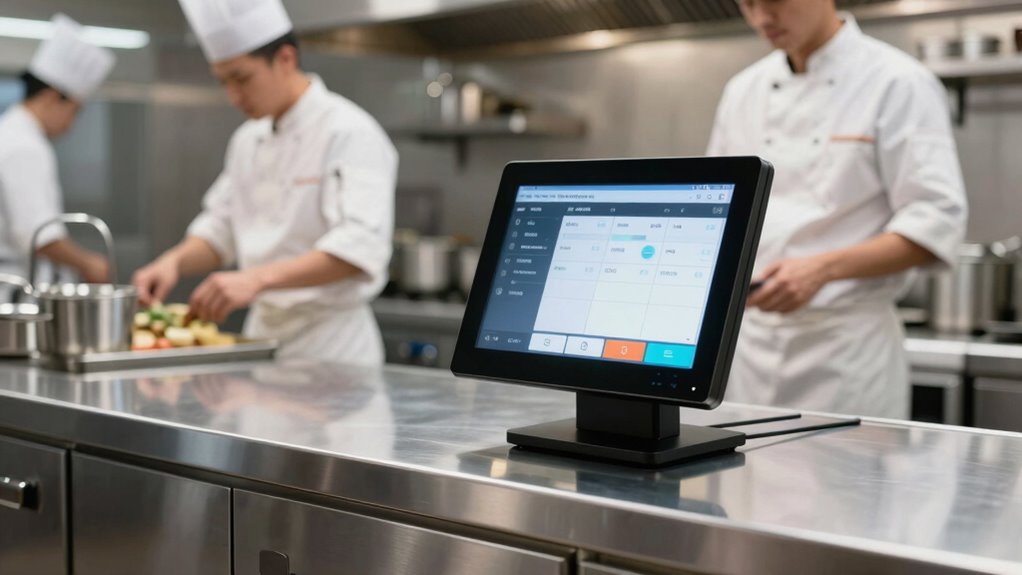
In busy kitchens, where timing and accuracy are vital, kitchen display monitors have become essential tools for streamlining operations. Their strategic placement directly impacts how well your team manages order tracking and staff coordination. When the monitors are positioned correctly, they serve as a central communication hub, reducing confusion and ensuring everyone stays on the same page.
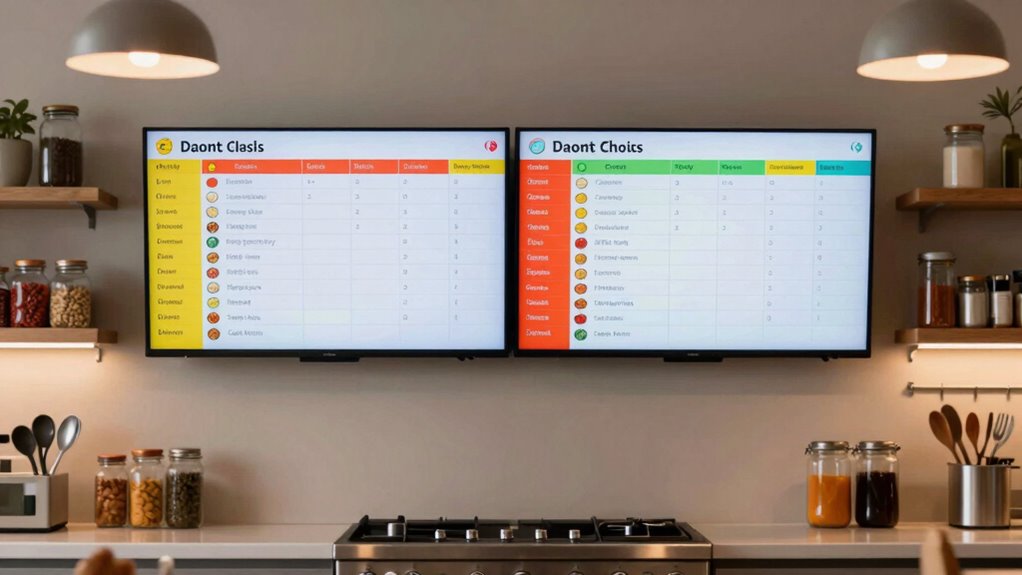
Imagine placing a monitor directly where your kitchen staff works most often. This proximity means orders are instantly visible without the need for constant verbal updates or physical handoffs. As soon as a ticket is sent from the POS system, it pops up on the screen, allowing cooks to start preparing immediately. This real-time visibility enhances order tracking, so nothing gets lost or delayed. You’ll find that with clear, accessible screens, your team can quickly identify which orders need attention, prioritize tasks efficiently, and reduce the risk of mistakes.
Placing monitors where staff work most improves visibility, speeds up orders, and reduces mistakes.
Staff coordination improves dramatically when the monitor’s placement supports easy viewing from all critical workstations. If the screen is tucked away in a corner or placed too high on a wall, it’s easy for some team members to overlook or miss updates. Conversely, a well-placed monitor at eye level or in the center of activity ensures that everyone can glance at it without interrupting their workflow. This constant, quick reference fosters better communication among team members, minimizing the need for verbal calls or unnecessary movement around the kitchen. Recognizing how monitor placement influences overall communication can help you optimize your kitchen layout for maximum efficiency. A well-considered kitchen layout can further enhance the effectiveness of your display monitors.
Moreover, screen placement influences how smoothly your team operates during peak hours. When monitors are visible from different stations, staff can quickly confirm order statuses, coordinate timing, and adjust tasks on the fly. This seamless flow supports efficient staff coordination, preventing bottlenecks and keeping the kitchen running like clockwork. Proper placement not only improves workflow but also contributes to efficiency by reducing unnecessary movement and confusion. An organized layout that considers monitor visibility enhances the overall responsiveness of your team. The more intuitive the placement, the less time your team spends hunting down information, which means faster service and happier customers.
In essence, where you position your kitchen display monitors isn’t just a matter of aesthetics; it’s a strategic decision that impacts your entire operation. Proper placement enhances order tracking, ensures staff can coordinate effortlessly, and keeps the kitchen functioning smoothly under pressure. When the screens are accessible and visible, communication becomes instant, effective, and natural—making your kitchen more efficient and your service more reliable. Additionally, understanding how screen placement affects overall communication can help you optimize your kitchen layout for maximum efficiency.
Frequently Asked Questions
How Do I Choose the Best Location for a Kitchen Display Monitor?
You should choose a location for your kitchen display monitor that guarantees ergonomic positioning and visibility optimization. Place it at eye level to reduce neck strain and avoid cluttered areas to keep it easily viewable from different stations. Position the monitor where staff naturally look without turning abruptly, and ensure lighting doesn’t cause glare. Regularly assess the spot’s effectiveness, adjusting as needed to streamline communication and improve workflow.
Are There Safety Concerns With Monitor Placement Near Cooking Areas?
Think of your monitor like a knight’s shield near the fire—careful placement is key. Yes, there are safety concerns, especially regarding fire hazard and heat resistance. Placing monitors too close to cooking areas risks heat damage or fire. Make sure they’re mounted at a safe distance, away from direct heat and flames, and use heat-resistant materials. This protects both your equipment and your team’s safety, keeping communication flowing smoothly.
Can Kitchen Display Monitors Be Integrated With Existing Restaurant Systems?
Yes, you can integrate kitchen display monitors with your existing restaurant systems. Focus on system integration options and guarantee hardware compatibility with your current POS and kitchen management software. Many modern monitors feature seamless connectivity, allowing you to streamline order processing and communication. Just double-check compatibility details before installation, and you’ll improve efficiency without disrupting your current setup. This integration helps keep everything running smoothly and enhances overall communication in your kitchen.
What Maintenance Is Required for Kitchen Display Monitors?
You need to maintain your kitchen display monitors regularly to keep them running smoothly—think of it as keeping the heartbeat of your kitchen alive. Follow a consistent cleaning schedule to prevent grease and dust buildup, and stay ahead with hardware upgrades when necessary. Regularly inspecting cables and screens ensures peak performance. By staying proactive, you’ll avoid unexpected breakdowns and keep communication flowing seamlessly in your busy kitchen.
How Does Screen Placement Affect Staff Workflow and Efficiency?
Placing screens strategically improves staff coordination and streamlines workflow. When monitors are visible from key work areas, staff can quickly see orders, reducing delays and confusion. Proper placement minimizes movement, allowing chefs and servers to focus on their tasks efficiently. This setup enhances workflow optimization by fostering seamless communication, ensuring everyone stays in sync, and accelerating service speed, ultimately leading to better customer satisfaction.
Conclusion
By now, you see how strategically placing kitchen display monitors can markedly boost communication and efficiency. An interesting stat: kitchens with well-placed screens report a 30% reduction in order errors. That’s a game-changer for your team’s accuracy and speed. When you optimize screen placement, you create a smoother workflow, happier staff, and happier customers. So, take a moment to evaluate your setup—small changes can lead to big improvements in your kitchen’s performance.
NFL season / tailgating Picks
team gear
As an affiliate, we earn on qualifying purchases.