
To safeguard your POS hardware, set up a routine that combines automated cloud backups with hardware redundancy. Regularly schedule backups during off-peak hours to avoid disrupting sales and verify their success to catch issues early. Use multiple storage options for quick recovery if needed. This layered approach minimizes downtime and data loss, keeping your business running smoothly. Keep going to discover more essential tips to ensure your retail operations stay protected and resilient.

Get kitchen staples and gadgets delivered free with Prime
- Fast, free delivery on millions of items
- Prime Video, Amazon Music and more included
- Member-only deals all year
Key Takeaways
- Implement automated, scheduled backups during off-peak hours to ensure consistent data protection without disrupting sales.
- Use cloud storage for off-site, scalable backups that safeguard POS data against hardware failures or theft.
- Maintain multiple backup copies across different locations for quick, reliable recovery in emergencies.
- Combine cloud backups with hardware redundancy to ensure seamless operation and minimize downtime during failures.
- Regularly verify backup integrity and test recovery procedures to ensure data is accessible and recovery is swift.
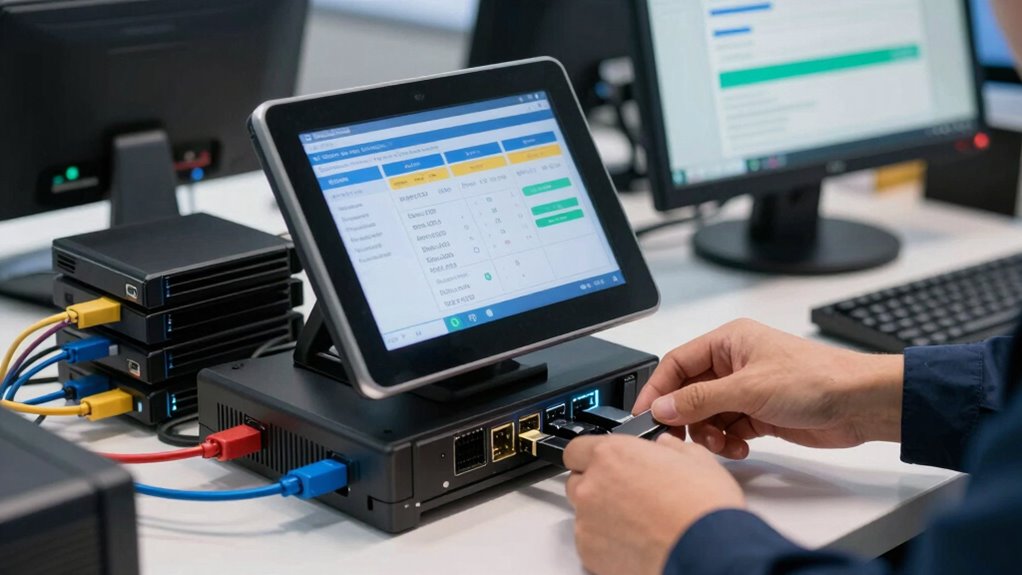
In today’s retail environment, protecting your POS hardware data is essential for maintaining smooth operations and preventing costly disruptions. Data backups serve as your safety net, ensuring that if hardware fails or data gets compromised, you can quickly recover and continue serving customers. One of the most effective strategies is leveraging cloud storage for your backups. Cloud storage provides off-site security, so even if physical hardware is damaged or stolen, your critical data remains safe and accessible. It also offers scalable space, allowing you to expand your backup capacity as your business grows without investing in expensive local infrastructure. With automatic syncing and scheduled backups, you minimize human error and guarantee your data is consistently protected.
Protect your POS data with cloud backups and hardware redundancy for seamless retail operations.
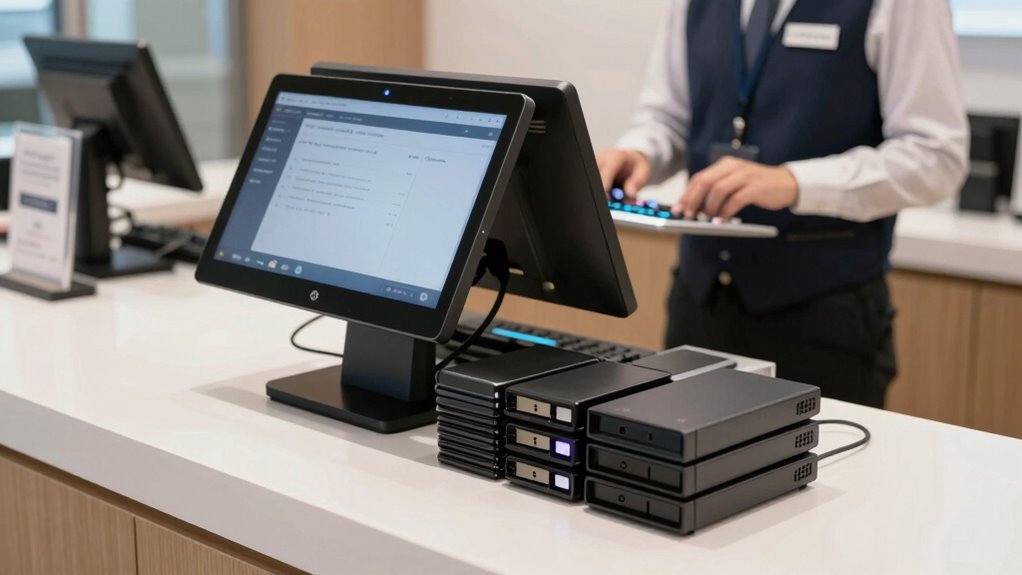
Hardware redundancy plays a vital role in safeguarding your POS data. By implementing redundant hardware components—such as dual hard drives, backup servers, or failover systems—you create a resilient infrastructure that keeps your POS system running smoothly even if a component fails. Redundancy minimizes downtime and prevents data loss by ensuring that a backup system instantly takes over when the primary hardware encounters issues. When combined with regular backups stored in the cloud, hardware redundancy provides a comprehensive safety net. You’re not just protecting against data corruption but also ensuring business continuity in the face of hardware failure or cyber threats. Disaster recovery planning is a crucial part of this strategy, helping you prepare for unforeseen events.
You should establish a routine for performing these backups consistently. Relying on ad-hoc or infrequent backups leaves your business vulnerable. Set up automated backup schedules that run during off-peak hours to avoid disrupting daily operations. Confirm that each backup completes successfully and verify the integrity of your backup files periodically. This way, you’re confident that, when needed, your data restores are reliable and complete. Keep multiple backup copies—preferably in different locations—so you can recover quickly from any disaster, whether it’s hardware malfunction, theft, or a cyberattack.
Furthermore, integrating cloud-based solutions with your hardware redundancy measures allows you to recover data rapidly without relying solely on physical hardware. This layered approach ensures that even if one backup method fails, others are in place to protect your business. Remember, the goal isn’t just to back up data but to do so efficiently, reliably, and regularly. By establishing a disciplined backup routine that leverages cloud storage and hardware redundancy, you’re investing in peace of mind, knowing your POS data is protected, and your operations can bounce back swiftly from any unforeseen setbacks.
As an affiliate, we earn on qualifying purchases.
Frequently Asked Questions
What Are the Common Causes of POS Data Loss?
You face POS data loss mainly due to hardware vulnerabilities and employee errors. Hardware vulnerabilities like outdated components or power surges can corrupt or erase data. Employee errors, such as accidental deletions or incorrect updates, also pose risks. To prevent this, regularly back up your data, train staff on proper procedures, and guarantee your hardware is secure and up-to-date. Staying vigilant helps protect your business from costly data loss.
How Often Should I Back up My POS Data?
Imagine losing weeks of sales data overnight because you didn’t back up. You should back up your POS data daily, especially if you process transactions every day. Use cloud storage for automatic backups and perform manual backups weekly to guarantee data safety. Regular backups protect you from hardware failures, theft, or accidental deletions, saving you time and stress when issues arise. Consistency is key to keeping your business protected.
What Backup Methods Are Most Reliable for POS Hardware?
You should use cloud integration and hardware redundancy for the most reliable POS backups. Cloud backups automatically save your data off-site, protecting against hardware failures or theft. Hardware redundancy, like mirrored drives, guarantees your data remains accessible even if one component fails. Combining these methods assures your POS data is secure, accessible, and resilient, minimizing disruptions and saving you time during emergencies.
How Do I Securely Store Backup Copies of POS Data?
Think of your POS data as treasure, and you’re the safekeeper. You secure it by storing backup copies in a cloud vault protected with top-tier encryption protocols. Guarantee your cloud security is robust—use strong passwords and multi-factor authentication. Regularly update your security settings, and choose reputable providers. This way, your data stays protected from theft or loss, giving you peace of mind and quick recovery when needed.
Can Automated Backups Prevent All Data Loss Incidents?
Automated backups considerably reduce data loss risks, but they can’t prevent all incidents. Using cloud storage with strong encryption techniques guarantees your data stays secure and accessible during emergencies. Regular automated backups mean your POS data is consistently saved without manual effort, minimizing human error. However, it’s essential to combine these backups with other security measures and contingency plans to fully protect your business from unforeseen data loss events.
Conclusion
By prioritizing regular data backups for your POS hardware, you’ll safeguard your business against disasters that could wipe out years of progress in seconds—truly a lifesaver. This routine might seem small, but it’s your ultimate shield against unforeseen failures and data loss. Don’t wait for a catastrophe to strike; make backups your daily ritual. Trust me, neglecting this could turn your entire week into chaos faster than you can blink.
Halloween Picks
halloween
As an affiliate, we earn on qualifying purchases.