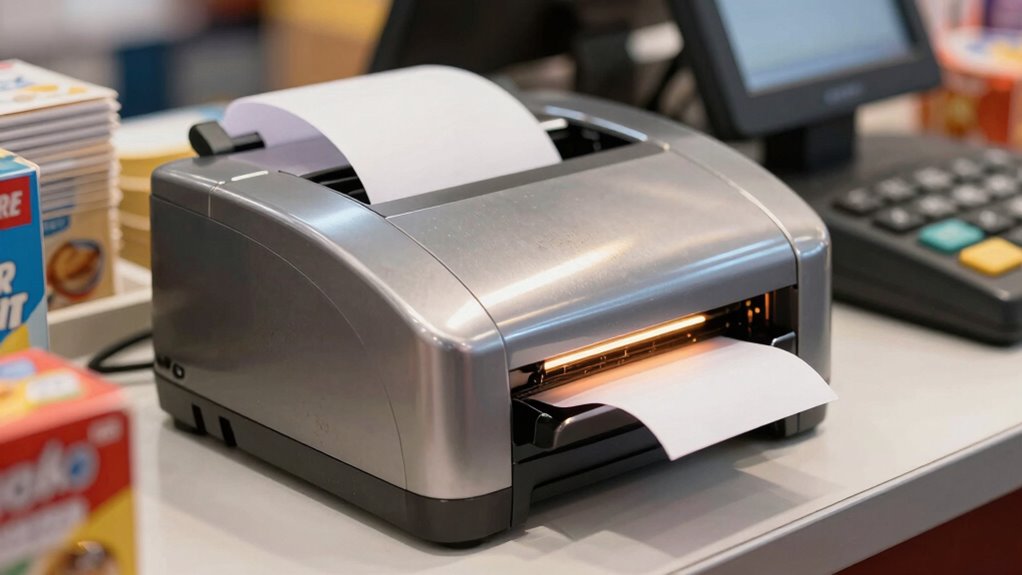

Thermal receipt printers often go unnoticed at your front counter because they operate quietly and reliably until they break down. When they function properly, they handle receipts, returns, and order slips seamlessly, keeping transactions smooth. But a malfunction can cause delays, frustration, and disrupt your business flow. Regular maintenance and understanding their features help prevent issues. Keep them in good shape, and you’ll avoid unexpectedly losing the backbone of your customer service—if you’re curious, there’s more to uncover.

Get kitchen staples and gadgets delivered free with Prime
- Fast, free delivery on millions of items
- Prime Video, Amazon Music and more included
- Member-only deals all year
Key Takeaways
- Thermal receipt printers are vital for fast, reliable transactions but often overlooked until they malfunction.
- Their wireless connectivity offers flexibility but can introduce security risks if not properly managed.
- Regular maintenance prevents paper jams, print quality issues, and unexpected breakdowns, ensuring continuous operation.
- Neglecting printer upkeep or security can cause delays, data breaches, and customer dissatisfaction.
- A well-maintained printer supports smooth customer service and overall operational efficiency behind the scenes.
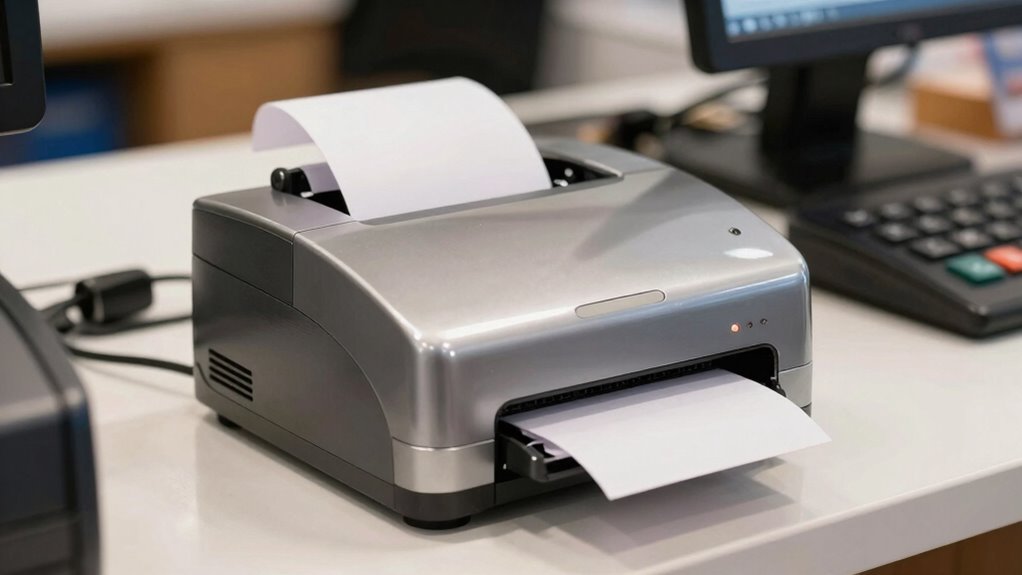
Thermal receipt printers have become essential tools for businesses that need quick, reliable, and high-quality transaction printing. You might not notice them until they stop working, but they’re the backbone of smooth transactions at your counter. When functioning properly, they silently handle receipts, returns, and order slips without fuss. However, their importance becomes glaring when they malfunction, causing delays and frustration. That’s why understanding how they operate, especially with features like wireless connectivity and proper maintenance routines, can save you headaches.
Thermal receipt printers are essential for smooth, reliable transactions and operational efficiency at your business counter.
Wireless connectivity is a game-changer for thermal receipt printers. It allows you to place the printer anywhere within your Wi-Fi range, freeing you from the constraints of tangled cords and limited placement options. If you’re running a busy restaurant or a retail store, this flexibility can streamline your workflow, making it easier to keep the printer accessible and out of the way. Plus, wireless models simplify updates and troubleshooting, as you can send firmware updates remotely or diagnose issues without physically connecting the device. This reduces downtime and keeps your transactions flowing smoothly.
That said, wireless printers require diligent maintenance routines to stay in top shape. Regularly checking the connection strength guarantees that signal issues don’t interrupt your printing. Keep firmware updated to benefit from the latest features and security patches. Clean the print head and rollers frequently to prevent paper jams and maintain print quality. Dust and debris can accumulate over time, impairing the printer’s performance and causing costly repairs if neglected. Incorporating routine maintenance into your daily or weekly operations can help prevent these issues before they escalate. Proper network security is crucial to prevent unauthorized access and potential data breaches. Proper security measures can safeguard sensitive transaction data transmitted over the network.
Another critical aspect of maintenance is managing paper supplies and replacing them promptly. Running out of thermal paper can halt transactions altogether, so establish a system to monitor inventory levels. When replacing paper rolls, do so carefully to avoid damaging the print head, which is a common cause of print quality issues. Proper handling, combined with routine cleaning, extends the life of your printer and ensures clear, crisp receipts every time. Staying attentive to these paper supply management practices can prevent unexpected disruptions and keep your operations running smoothly.
In essence, your thermal receipt printer’s reliability hinges on understanding its features—like wireless connectivity—and committing to consistent maintenance routines. When you prioritize these practices, you prevent unexpected breakdowns and keep your business running smoothly. Remember, these devices might be small, but their role is significant. A well-maintained printer becomes an invisible hero behind every successful transaction, quietly supporting your customer service and operational efficiency.
wireless thermal receipt printer
As an affiliate, we earn on qualifying purchases.
As an affiliate, we earn on qualifying purchases.
Frequently Asked Questions
How Long Do Thermal Receipt Printers Typically Last?
Thermal receipt printers typically last around 3 to 5 years, but this depends on proper printer maintenance and usage. Regular cleaning and replacing parts can extend their lifespan. If you want to avoid downtime, consider ink alternatives like thermal paper instead of ink cartridges, which reduces maintenance needs. Keep an eye on print quality and be prepared for eventual replacement to prevent service disruptions at your front counter.
Are Thermal Printers Environmentally Friendly?
You might think thermal printers are eco-friendly because they produce less waste, but their environmental impact is mixed. They often use eco-friendly materials in construction, yet their high energy consumption during printing adds up. Plus, the thermal paper itself can contain chemicals harmful to the environment when disposed of improperly. So, while some aspects are greener, overall, thermal printers aren’t entirely eco-friendly, and mindful use is essential.
Can Thermal Printers Print in Multiple Colors?
Thermal printers typically can’t print in multiple colors because they rely on heat-sensitive paper that produces only monochrome images. If you need color printing or multi-color capability, you’ll want to contemplate inkjet or laser printers instead. Thermal printers excel at fast, high-quality black-and-white receipts but lack the ability for color printing, making them ideal for straightforward transactions rather than colorful graphics or multi-color labels.
What Are Common Signs of a Failing Thermal Printer?
You’ll notice your thermal printer failing if prints become faint, streaked, or inconsistent, indicating print head maintenance is needed. Paper quality issues, like jams or smudges, can also signal problems. Additionally, frequent paper feed errors or delayed printing may point to internal faults. Keeping the print head clean and using high-quality paper can prevent these signs, ensuring smooth operation and extending your printer’s lifespan.
How Do I Troubleshoot Paper Jams in Thermal Printers?
To troubleshoot paper jams in thermal printers, first check the paper alignment, ensuring the paper feeds smoothly and is properly loaded. Gently remove any jammed paper, avoiding tearing it. Then, follow cleaning procedures by carefully cleaning the rollers and paper path to prevent future jams. Make sure the paper roll isn’t too tight or too loose, and always use compatible thermal paper for smooth operation.
Conclusion
You might not give your thermal receipt printer a second thought—until it suddenly stops working. Then, chaos erupts, and your entire front counter grinds to a halt like a well-oiled machine collapsing into chaos. Don’t wait for that disaster to strike. Keep it running smoothly, or risk facing a customer stampede, lost sales, and reputation damage. Because, in the end, this tiny device is the heartbeat of your business—ignore it at your peril.
Fall Picks
fall essentials
As an affiliate, we earn on qualifying purchases.