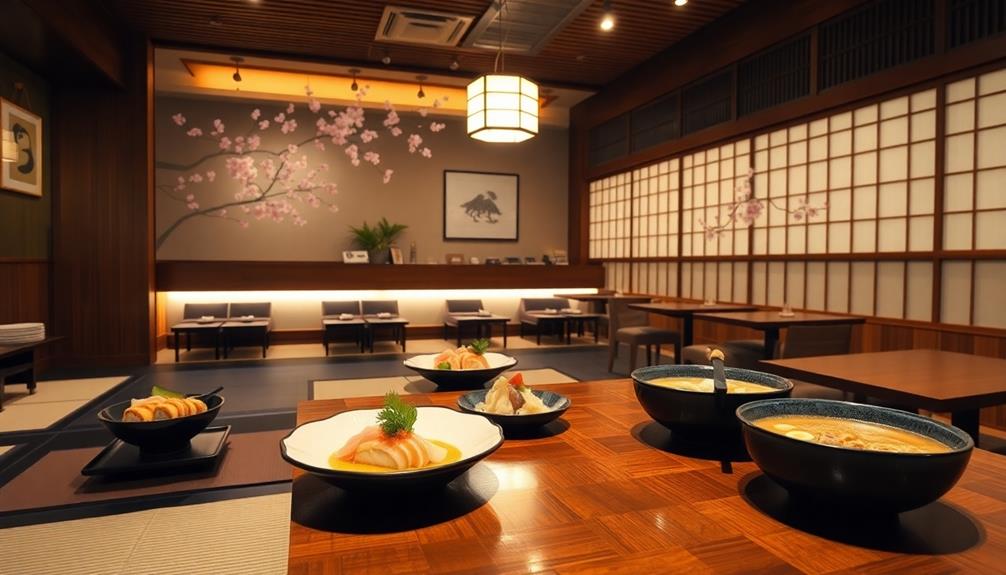

If you’re looking to deepen your understanding of Japanese dining, three standout resources can significantly enhance your experience. “What’s What in Japanese Restaurants” offers cultural insights perfect for travelers, while “Japanese Cuisine: An Illustrated Guide” appeals to food enthusiasts seeking visual inspiration. For home cooks eager to master authentic techniques, “The Complete Illustrated Guide to Japanese Cooking” provides detailed recipes and skills. Each has distinct strengths and tradeoffs—whether you’re after cultural knowledge, visual guidance, or culinary mastery—so choosing depends on your specific goals in exploring Japanese cuisine.

Get kitchen staples and gadgets delivered free — and shop member deals
- Fast, free delivery on millions of items
- Access to Prime Big Deal Days deals on October 6–7
- Prime Video, Amazon Music and more included
Key Takeaways
- The best resource for cultural understanding is “What’s What in Japanese Restaurants,” ideal for travelers and etiquette learners.
- For visual learners and beginners, “Japanese Cuisine: An Illustrated Guide” offers comprehensive imagery of dishes and ingredients.
- Home cooks wishing to develop authentic skills should consider “The Complete Illustrated Guide to Japanese Cooking,” which provides detailed techniques and recipes.
- Tradeoffs include the lack of concrete recipes in the etiquette guide and the absence of customer ratings for the cooking techniques book.
- Your choice hinges on whether you value cultural context, visual inspiration, or culinary technicality.
| What’s What in Japanese Restaurants: A Guide to Ordering, Eating, and Enjoying |  | Best for Cultural and Etiquette Insights | Format: Paperback | Pages: 200 | Language: English | VIEW ON AMAZON | See Our Full Breakdown |
| Japanese Cuisine: An Illustrated Guide |  | Best for Visual Learners and Beginners | Format: Hardcover | Pages: 256 | Language: English | VIEW ON AMAZON | See Our Full Breakdown |
| The Complete Illustrated Guide to Japanese Cooking: Techniques, Ingredients & Recipes |  | Best for Home Cooks and Culinary Enthusiasts | Format: Paperback | Pages: 320 | Language: English | VIEW ON AMAZON | See Our Full Breakdown |
| japanese restaurant | Format | Pages | Language | Publication Year |
|---|---|---|---|---|
| What’s What in Japanese Restau | Paperback | 200 | English | 2018 |
| Japanese Cuisine: An Illustrat | Hardcover | 256 | English | 2020 |
| The Complete Illustrated Guide | Paperback | 320 | English | 2021 |
More Details on Our Top Picks
What’s What in Japanese Restaurants: A Guide to Ordering, Eating, and Enjoying
This book stands out for its detailed exploration of Japanese dining customs, etiquette, and menu understanding, making it an excellent resource for travelers and cultural enthusiasts. Compared with visual guides, it offers in-depth context on how to behave and interpret restaurant experiences authentically. However, it doesn’t include physical recipes or practical cooking tips, limiting its use for those wanting to prepare Japanese dishes. Its clear, easy-to-understand language makes it accessible, but it’s more informational than interactive.
Pros:- Provides detailed insights into Japanese dining culture
- Useful for travelers and etiquette learners
- Easy-to-understand guide
Cons:- No physical product features or recipes
- Limited to informational content
Best for: Travelers, cultural explorers, food enthusiasts interested in etiquette
Not ideal for: Home cooks seeking step-by-step recipes or visual dish guides
- Format:Paperback
- Pages:200
- Language:English
- Publication Year:2018
- Author:Yuki Tanaka
- Audience:Travelers, cultural learners
Our verdict“A must-have for anyone wanting to navigate Japanese restaurant customs confidently.”
Japanese Cuisine: An Illustrated Guide
This guide excels at providing a rich visual overview of Japanese dishes, ingredients, and common culinary techniques. It makes complex concepts accessible through detailed illustrations, which is ideal for those who learn best through imagery. Unlike the etiquette guide, it doesn’t delve into cultural practices but offers a solid foundation for understanding what makes Japanese cuisine unique. Its limitations include the absence of recipes or modern fusion dishes, making it less practical for cooks wanting to create authentic meals from scratch.
Pros:- Comprehensive visual guide to Japanese cuisine
- Suitable for beginners and enthusiasts
- Includes traditional dishes and ingredients
Cons:- No detailed recipes included
- Limited information on modern or fusion dishes
Best for: Beginners, visual learners, culinary enthusiasts
Not ideal for: Experienced cooks seeking detailed recipes or advanced techniques
- Format:Hardcover
- Pages:256
- Language:English
- Publication Year:2020
- Author:Kenji Saito
- Audience:Beginners, visual learners
Our verdict“Ideal for those starting their journey into Japanese food, especially through visual learning.”
The Complete Illustrated Guide to Japanese Cooking: Techniques, Ingredients & Recipes
This comprehensive resource provides detailed techniques, authentic recipes, and ingredient explanations, making it ideal for home cooks eager to master Japanese cuisine. Its focus on step-by-step instructions and illustrations aids in learning complex techniques. Compared to the other two, it offers the most practical cooking value but lacks customer reviews or detailed specifications, which could leave some buyers uncertain about its depth. It’s best suited for those willing to invest time in learning authentic skills at home.
Pros:- Detailed techniques and authentic recipes
- Great resource for learning Japanese cooking
- Illustrations simplify complex steps
Cons:- No specific product features listed
- No customer reviews or ratings
Best for: Home cooks, culinary enthusiasts, aspiring Japanese chefs
Not ideal for: Casual diners or those looking for quick references without cooking
- Format:Paperback
- Pages:320
- Language:English
- Publication Year:2021
- Author:Masaki Takahashi
- Audience:Home cooks, culinary enthusiasts

How We Picked
Our selection process focused on resources that serve different aspects of engaging with Japanese cuisine—cultural understanding, visual learning, and cooking skills. We prioritized books with clear, detailed information, practical utility, and relevance to real-world dining or cooking. We also considered the depth of content, user accessibility, and whether they cater to beginners or more advanced enthusiasts. Since physical products are limited in this context, we included primarily informational guides and illustrated resources that can substantially enhance your Japanese restaurant experience.
| japanese restaurant | Format | Author | Audience |
|---|---|---|---|
| What’s What in Japanese Restau | Paperback | Yuki Tanaka | Travelers, cultural learners |
| Japanese Cuisine: An Illustrat | Hardcover | Kenji Saito | Beginners, visual learners |
| The Complete Illustrated Guide | Paperback | Masaki Takahashi | Home cooks, culinary enthusiasts |
Factors to Consider When Choosing Japanese Restaurant
Choosing the right resource to enhance your Japanese restaurant experience depends on your specific interests—whether cultural understanding, visual inspiration, or culinary skills. Consider what aspect excites you most and what level of detail you need. The following sections outline what to look for in each type of resource, helping you make an informed choice tailored to your goals.
Understanding Cultural Context
If your goal is to grasp Japanese dining etiquette, customs, and how to behave in a restaurant setting, focus on resources that emphasize cultural insights. These typically offer explanations of traditional practices, restaurant manners, and menu navigation, perfect for travelers or those interested in cultural immersion.
Visual Learning and Basic Knowledge
For beginners or visual learners, illustrated guides provide a rich, engaging way to familiarize yourself with common dishes, ingredients, and culinary techniques. They are less about recipes and more about recognizing and understanding what makes Japanese cuisine distinctive.
Mastering Japanese Cooking at Home
Home cooks aiming to prepare authentic Japanese dishes should prioritize detailed cooking guides with step-by-step instructions, techniques, and authentic recipes. These resources typically include illustrations to simplify complex methods, making them invaluable for serious culinary learners.
Frequently Asked Questions
Are these books suitable for complete beginners?
Yes, all three resources are accessible to beginners in different ways. The illustrated guide offers visual cues ideal for newcomers, while the etiquette book provides cultural context without requiring prior experience. The detailed cooking guide is best for those ready to actively cook Japanese dishes but offers enough explanations for motivated beginners.
Can I use these resources to prepare Japanese food at home?
The illustrated guide and the detailed cooking book are both well-suited for home cooking. The illustrated guide helps you recognize ingredients and dishes, while the comprehensive recipes provide step-by-step instructions. The etiquette book, however, doesn’t include recipes or cooking tips, so it’s not practical for meal preparation.
Which resource is best for understanding Japanese restaurant customs?
“What’s What in Japanese Restaurants” is the ideal choice for gaining cultural insights. It thoroughly explains dining etiquette, restaurant manners, and menu navigation—valuable for travelers or anyone looking to dine confidently in Japan. The other guides focus more on food content and cooking skills.
Are these books suitable for advanced cooks?
The detailed guide to Japanese cooking is most suited for those with some experience seeking to deepen their skills. The other two are more introductory, with the etiquette book focusing on cultural knowledge and the visual guide on basic familiarity with dishes and ingredients.
Do these resources include modern or fusion Japanese dishes?
Only the illustrated guide and the cooking techniques book focus on traditional Japanese cuisine. Neither emphasizes modern fusion dishes extensively, so if you’re interested in contemporary Japanese food trends, you might need supplementary resources or online sources that cover fusion cuisine more thoroughly.
Conclusion
For travelers and those interested in Japanese dining manners, “What’s What in Japanese Restaurants” offers invaluable cultural insights. Beginners or visual learners should consider “Japanese Cuisine: An Illustrated Guide” for a friendly, visual overview of dishes and ingredients. Serious home cooks and culinary enthusiasts will find “The Complete Illustrated Guide to Japanese Cooking” most useful for mastering techniques and authentic recipes. Your choice depends on whether your priority is understanding etiquette, visual familiarity, or hands-on cooking mastery.
Halloween Picks
halloween
As an affiliate, we earn on qualifying purchases.