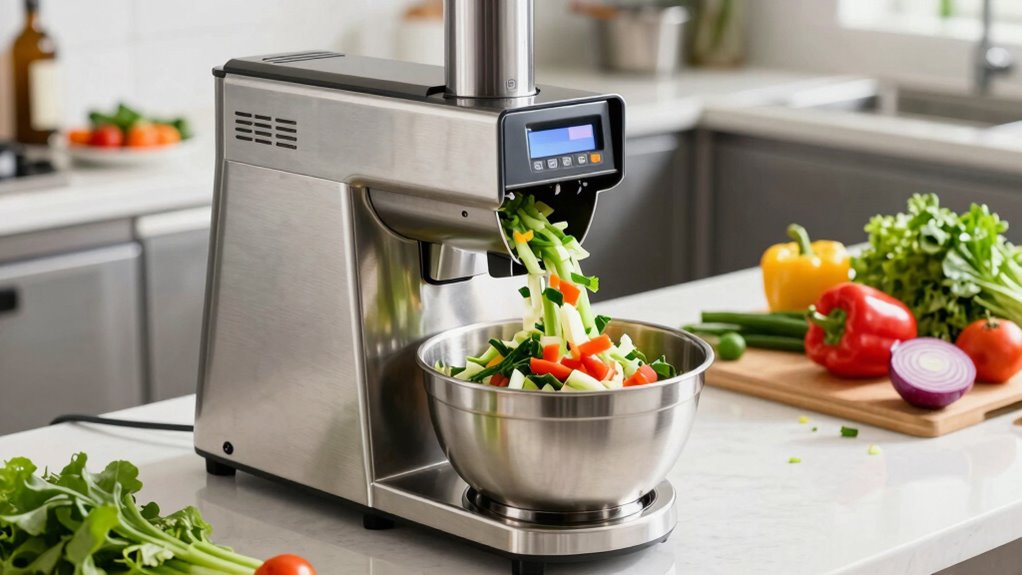

Matching your prep equipment to your menu design guarantees you get consistent quality and maximize efficiency. Properly selected continuous feed processors handle ingredients specific to your recipes, reducing waste and speeding up production. They help maintain the right texture, flavor, and appearance your customers expect. Regular maintenance and calibration keep everything running smoothly. Keep these points in mind, and you’ll see how aligned equipment can make a big difference—proceed on to discover how to optimize your setup even further.

Get kitchen staples and gadgets delivered free with Prime
- Fast, free delivery on millions of items
- Prime Video, Amazon Music and more included
- Member-only deals all year
Key Takeaways
- Matching equipment to menu needs ensures ingredient consistency and preserves desired product texture and appearance.
- Properly selected processors reduce waste and improve efficiency aligned with specific menu items.
- Equipment calibration and maintenance maintain optimal performance, ensuring uniform quality and reducing variability.
- Hygiene and safety are enhanced when equipment is suitable for menu ingredients, simplifying cleaning and minimizing contamination risks.
- Investing in the right equipment supports long-term reliability, scalability, and consistent high-quality outputs.
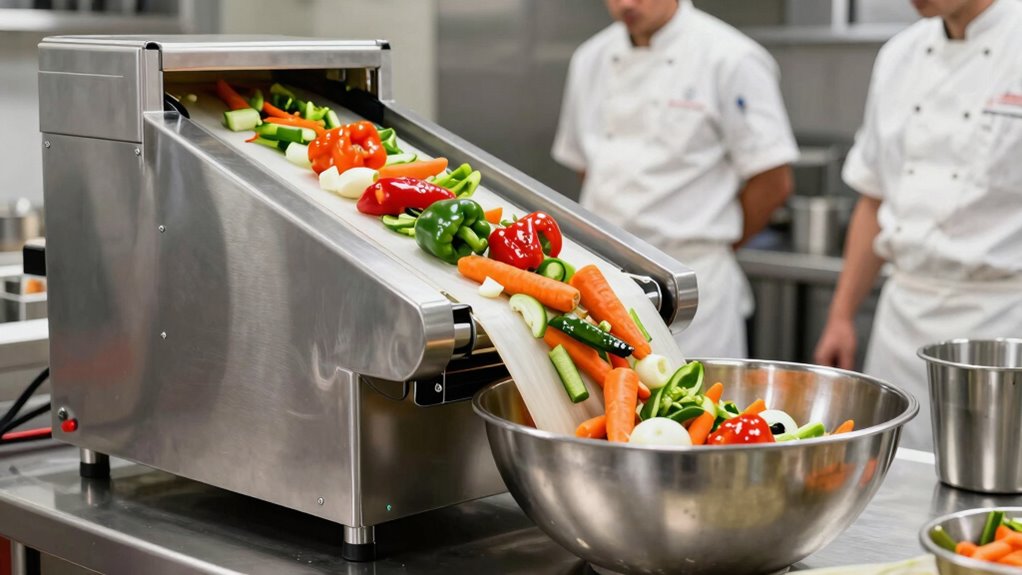
Have you ever wondered how large-scale food production stays efficient and consistent? It all comes down to choosing the right equipment, especially continuous feed food processors, and making sure they match your menu’s needs. When you use equipment designed for your specific application, ingredient consistency becomes much easier to maintain. Consistent ingredients mean your final product will have the same texture, flavor, and appearance every time, which is vital for customer satisfaction and brand reputation. A continuous feed processor that’s properly matched to your menu allows for smooth, uninterrupted operation, reducing variability caused by manual handling or incompatible machinery.
But maintaining this consistency isn’t just about the initial equipment choice; it’s also about diligent equipment maintenance. Regular upkeep keeps your continuous feed food processor running at peak performance, preventing breakdowns that could compromise ingredient quality or halt production altogether. When machines are well-maintained, they deliver uniform results, ensuring each batch meets your standards. Neglecting maintenance can lead to worn blades, clogged feed mechanisms, or inconsistent mixing, all of which disrupt ingredient consistency. Preventative maintenance routines help catch issues early, minimizing downtime and ensuring your operation continues to run smoothly. Properly tracking maintenance schedules can also help extend the lifespan of your equipment, further safeguarding your investment. Additionally, understanding how proper equipment matching impacts overall productivity can assist in planning future upgrades or expansions. Recognizing the importance of equipment calibration ensures your machinery operates within optimal parameters, further supporting product consistency.
It’s also important to select a processor designed for your specific menu requirements. For example, if you’re making processed meats, you need equipment capable of handling high fat contents and ensuring even mixing. If your focus is on producing uniform vegetable purees, the machine should be designed for gentle yet thorough processing to preserve texture. Matching equipment to your menu’s needs means you’re not just buying a powerful machine, but one that integrates seamlessly into your workflow, optimizing efficiency and quality. This alignment reduces waste, speeds up production, and helps keep ingredient quality consistent across batches.
Furthermore, an equipment system that fits your menu encourages better hygiene and easier cleaning. Properly maintained processors are less likely to harbor residues or bacteria, ensuring food safety and prolonging the lifespan of your machinery. Additionally, understanding the benefits of proper equipment matching can help you make more informed purchasing decisions and improve overall productivity. When you invest in equipment that matches your menu design and commit to regular maintenance, you’re setting yourself up for a reliable, efficient operation that consistently produces high-quality products. This proactive approach helps you meet customer expectations, adapt to changing demands, and maintain a competitive edge.
continuous feed food processor for commercial kitchens
As an affiliate, we earn on qualifying purchases.
As an affiliate, we earn on qualifying purchases.
Frequently Asked Questions
How Do Continuous Feed Processors Improve Kitchen Efficiency?
Continuous feed processors improve your kitchen efficiency by increasing processing speed and ensuring ingredient consistency. They allow you to handle large quantities quickly, reducing prep time and minimizing manual labor. With consistent results, your dishes maintain quality, and you can serve more customers faster. This equipment aligns perfectly with busy kitchens that demand fast turnaround times and uniform ingredients, making your workflow smoother and more productive.
What Maintenance Is Required for Continuous Feed Food Processors?
You need to follow proper cleaning protocols regularly to keep your continuous feed food processor running smoothly. This involves cleaning blades, feeds, and surfaces to prevent residue buildup. Also, monitor for wear and tear on parts like blades and motors, replacing them as needed. Regular maintenance guarantees peak performance, reduces downtime, and extends the lifespan of your equipment, keeping your kitchen efficient and safe.
Are These Processors Suitable for Small-Scale Food Operations?
Yes, continuous feed food processors can be suitable for small-scale or home use, but it depends on your needs. If you have limited space and a smaller volume of ingredients, these machines might be too large or powerful. However, if you want efficient, consistent processing for occasional use, a smaller model can work well. Just make certain it matches your menu design and volume requirements to avoid unnecessary expense or complexity.
How Do They Impact Food Safety and Hygiene Standards?
You impact food safety and hygiene standards by ensuring continuous feed food processors promote proper sanitation practices, reducing the risk of food contamination. Regular cleaning and maintenance are essential to prevent bacteria buildup, and using equipment designed for your menu minimizes cross-contact. When you match the processor to your menu, you also make it easier to maintain strict hygiene, safeguarding your customers’ health and upholding your establishment’s reputation.
Can Continuous Feed Processors Handle All Types of Food Products?
You can’t judge a book by its cover, and continuous feed processors aren’t a one-size-fits-all solution. While they excel at handling many food products, their processing speed and ability to manage different food textures vary. Delicate items may require gentler equipment, whereas tougher textures need more robust machinery. So, you must match your processor to your menu’s specific needs to guarantee efficiency and quality.
Conclusion
Choosing the right continuous feed food processor isn’t just about keeping up with modern kitchen trends—it’s about ensuring your prep equipment aligns perfectly with your menu needs. Think of it as arming yourself like a true knight for the culinary joust ahead. When your equipment matches your menu design, you’ll work faster, smarter, and consistently serve exceptional dishes. So, don’t be a digital damsel—equip yourself wisely and conquer your kitchen challenges with confidence!
NFL season / tailgating Picks
team gear
As an affiliate, we earn on qualifying purchases.