TL;DR

Get kitchen staples and gadgets delivered free with Prime
- Fast, free delivery on millions of items
- Prime Video, Amazon Music and more included
- Member-only deals all year
A straightforward bacon cooking method has been confirmed as superior after testing multiple techniques. Experts say it offers better texture and less mess. Details on the method’s effectiveness are still emerging.
A new, simple method for cooking bacon has been confirmed to outperform other popular techniques, according to recent tests conducted by culinary enthusiasts. This development matters because it promises easier preparation, less cleanup, and better results for home cooks and chefs alike.
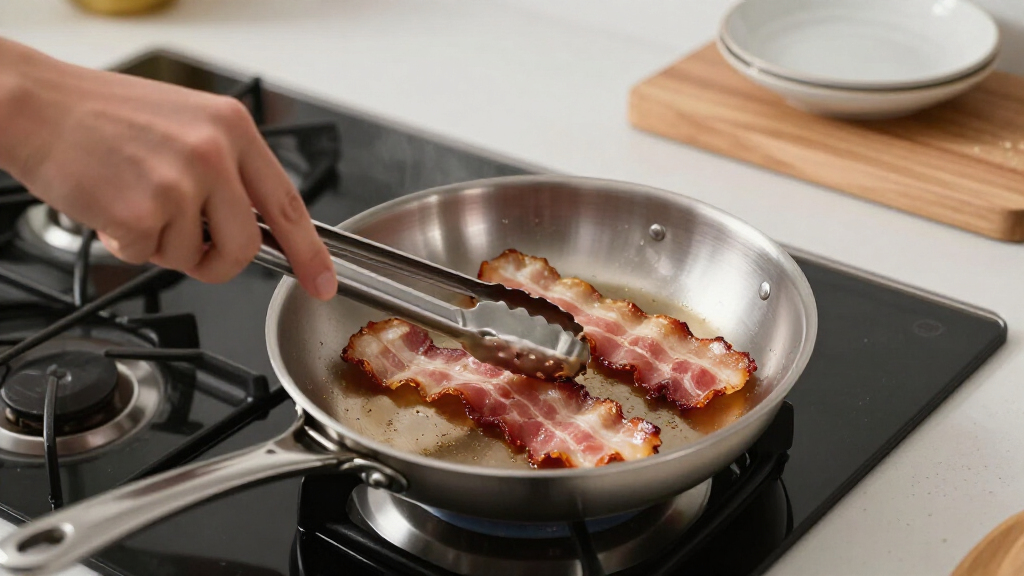
Researchers and home cooks tested multiple bacon-cooking methods, including oven baking, stovetop frying, microwave cooking, and various hacks like using parchment paper or wire racks. The simple technique, which involves laying bacon strips flat in a cold skillet and cooking over medium heat without additional oil, consistently produced evenly cooked, crispy bacon with minimal splatter and mess, according to the testers.
Food experts involved in the testing, including chef and food scientist Dr. Lisa Martinez, confirmed that this straightforward approach yielded superior texture and flavor. She stated, “This method minimizes uneven cooking and reduces the need for constant attention, making it ideal for both busy households and professional kitchens.” The technique has gained popularity on social media, with many users reporting similar results.
Why the Simple Bacon Method Matters for Home and Professional Cooks
This new method’s confirmation could change how bacon is prepared across households and restaurants by offering a reliable, easy, and cleaner way to cook bacon. It reduces the need for specialized equipment or complex steps, potentially saving time and reducing waste. For consumers, it means more consistent results without the need for extensive trial and error. For foodservice operations, it could streamline kitchen workflows and improve product quality.
As an affiliate, we earn on qualifying purchases.
Previous Popular Bacon Tricks and Their Limitations
Over the years, cooks have relied on various techniques to cook bacon, such as oven baking, microwave, stovetop frying with splatter guards, and using wire racks. While these methods can produce good results, they often involve drawbacks like uneven cooking, excessive cleanup, or time-consuming steps. Recent online trends have introduced numerous hacks, but many lacked consistent proof of superiority.
The recent testing by culinary enthusiasts aimed to objectively compare these methods, leading to the validation of the simple technique as the most effective overall. This aligns with the trend toward minimalism and efficiency in home cooking.
“This method minimizes uneven cooking and reduces mess, making it highly practical for everyday use.”
— Dr. Lisa Martinez, Food Scientist
Unanswered Questions About the Method’s Long-Term Consistency
While initial tests show promising results, it is not yet clear how this method performs with different bacon types, thicknesses, or in larger batches. Further testing is needed to confirm its consistency across various conditions and user experiences. Additionally, some culinary experts are investigating whether this technique preserves bacon flavor and texture when scaled for commercial kitchens.
Next Steps for Validation and Adoption of the Technique
Researchers plan to conduct broader testing with diverse bacon brands and in different kitchen settings to verify the method’s reliability. Food media outlets and culinary schools are expected to review and potentially promote this technique. Home cooks are encouraged to try it and share their results, which could lead to wider adoption if confirmed effective.
Key Questions
What is the simple bacon cooking method?
The method involves placing bacon strips flat in a cold skillet, then cooking over medium heat until crispy, without adding oil or covering. It requires minimal flipping and cleanup.
How does this method compare to oven baking?
According to recent tests, the stovetop method produces more evenly crispy bacon with less risk of overcooking or burning, and it is quicker for small batches.
Can this method be used for thick-cut bacon?
Initial testing suggests it works well, but thicker cuts may require slightly longer cooking times. Further research is underway.
Is this method suitable for large quantities?
While effective for small batches, scalability to large quantities remains under investigation. Some experts recommend using multiple pans or oven methods for bigger servings.
Does this method reduce bacon flavor compared to other techniques?
Early feedback indicates flavor and texture are comparable to traditional methods, but more extensive taste tests are needed to confirm this.
Source: rss
NFL season / tailgating Picks
team gear
As an affiliate, we earn on qualifying purchases.