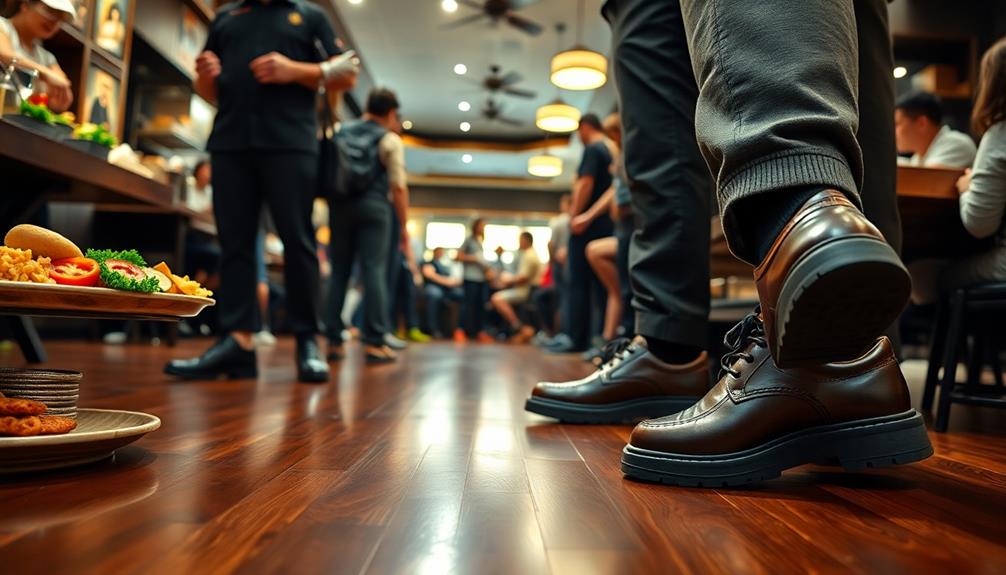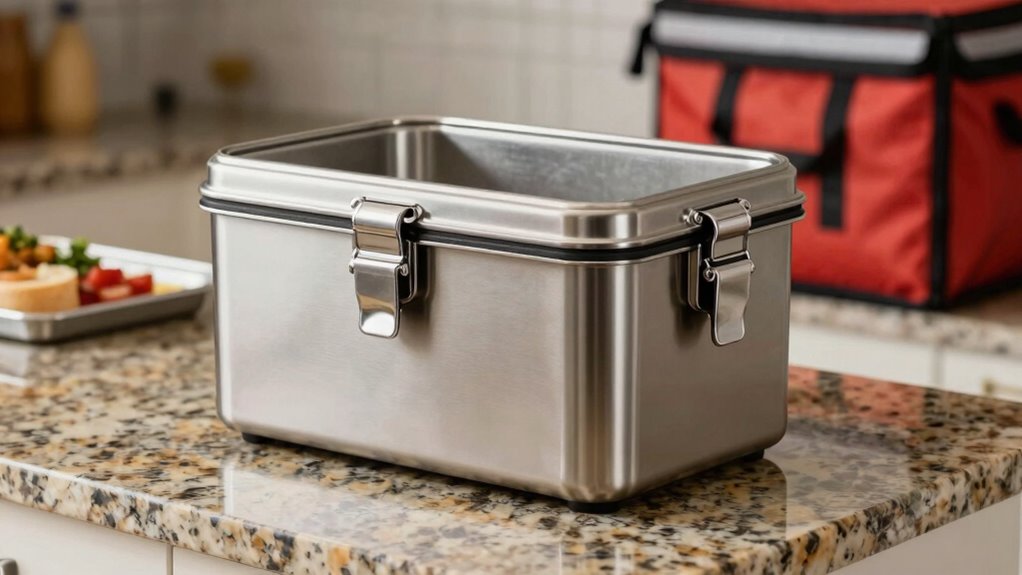

Insulated food carriers are designed to keep your meals hot or cold during transit, preventing spoilage and ensuring fresh quality upon delivery. They offer durability, with sturdy materials that resist wear and protect your investments. Their smart design features, like secure locks and insulation layers, make transportation easier and more reliable. This helps boost customer satisfaction and supports your business reputation. Want to discover how these features can improve your service? Keep exploring to find out more.

Get kitchen staples and gadgets delivered free with Prime
- Fast, free delivery on millions of items
- Prime Video, Amazon Music and more included
- Member-only deals all year
Key Takeaways
- Maintain optimal food temperatures during transit to ensure freshness, safety, and appealing presentation.
- Provide durable, insulated construction to withstand daily handling and prolong carrier lifespan.
- Incorporate practical features like secure locks and compartments for organized, spill-free transportation.
- Enhance delivery efficiency by reducing spoilage risks and ensuring timely, high-quality meal arrival.
- Support business reliability and reputation through consistent performance and long-term durability.
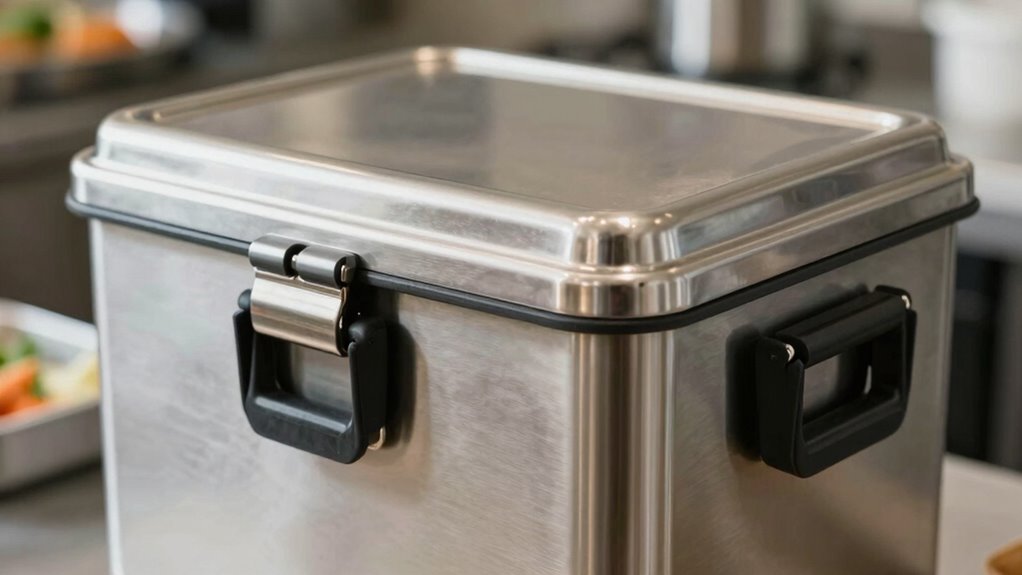
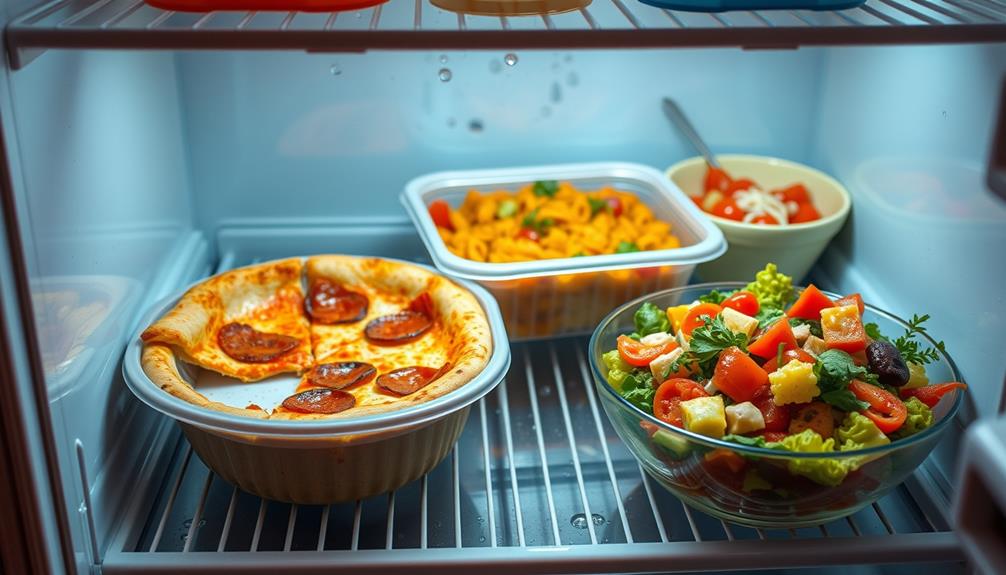
Insulated food carriers are essential for keeping your meals fresh and at the right temperature, whether you’re heading to a picnic, a workplace, or a catered event. They are designed to maintain the quality of your food by effectively managing temperature retention, ensuring hot dishes stay warm and cold items stay chilled until they’re served. This feature is especially crucial in catering and delivery, where the journey from kitchen to customer can vary in duration and conditions. When choosing an insulated carrier, you want one that consistently preserves the freshness of your food, preventing spoilage or temperature loss during transit.
Material durability plays a significant role in the performance of these carriers. You need a product built to withstand daily wear and tear, from rough handling to exposure to the elements. High-quality materials like reinforced plastics, stainless steel, or tough fabrics ensure your carrier won’t easily crack, warp, or tear. This durability translates into longer-lasting equipment that protects your food and your investment. A well-constructed insulated carrier not only keeps your food at the right temperature but also endures the rigors of frequent use, making it a dependable component of your catering or delivery operations. Additionally, choosing materials with thermal insulation properties can further enhance their effectiveness in maintaining optimal temperatures.
Design features also contribute to solving common challenges faced during food transportation. For instance, secure locking mechanisms prevent accidental openings, maintaining an ideal environment inside. Insulation layers—often foam or vacuum-sealed panels—are critical for maximizing temperature retention, especially during longer journeys. Additionally, ergonomic handles and lightweight construction make it easier for you to carry and maneuver the carrier without strain. Some carriers include compartments or dividers, which help organize different food items, preventing spills and mixing of flavors or textures.
In the domain of catering and delivery, time is always of the essence. Insulated food carriers help you stay ahead by reducing the risk of food arriving at the right temperature, which is essential for customer satisfaction and safety. Their ability to lock in temperature and withstand frequent use ensures that your meals arrive fresh and appealing, even after hours of transit. Plus, their durable build means you won’t constantly replace them, saving you money in the long run.
Ultimately, selecting an insulated food carrier that excels in temperature retention and material durability makes your catering or delivery business more efficient and dependable. You provide your clients with meals that look and taste as good as when they left your kitchen, reinforcing your reputation for quality and reliability. Regularly investing in material durability can significantly enhance the longevity and performance of your carriers, ensuring your operations run smoothly over time.
insulated food carriers for catering
As an affiliate, we earn on qualifying purchases.
As an affiliate, we earn on qualifying purchases.
Frequently Asked Questions
How Long Can Insulated Carriers Keep Food Hot or Cold?
You can typically expect insulated carriers to keep food hot or cold for about 4 to 8 hours, depending on the quality of the insulation technology. Their advanced insulation maximizes temperature retention, ensuring your food stays fresh and safe during transport. Factors like outside temperature, how often you open the carrier, and the initial food temperature can influence this duration. To maximize effectiveness, choose high-quality carriers with superior insulation technology.
Are Insulated Food Carriers Microwave-Safe?
No, insulated food carriers aren’t microwave-safe because of their material durability. Imagine delivering hot meals; if you try to microwave them, the container could warp or release harmful chemicals. For example, a catering business used a plastic-insulated carrier, but when microwaved, it melted. Always remove food from the carrier before reheating. Check labels for microwave safety and opt for containers specifically designed for microwave use.
What Materials Are Best for Insulated Carriers?
You should choose insulated carriers made from durable materials like high-quality plastics, stainless steel, or foam, which withstand frequent use and transportation. Eco-friendly options, such as biodegradable plastics or recycled materials, are also great for sustainability. These materials offer excellent thermal insulation, ensuring your food stays hot or cold. Prioritize durability for longevity and eco-friendliness to reduce environmental impact, making your catering or delivery service both efficient and responsible.
How Easy Is It to Clean Insulated Food Carriers?
Cleaning insulated food carriers is straightforward if you follow some simple tips. Use mild soap and warm water to wipe down the interior and exterior regularly, avoiding harsh chemicals that can damage the insulation. For maintenance best practices, dry thoroughly after cleaning to prevent mold or odors. Remove any leftover food promptly, and check seals and hinges for dirt or debris. With consistent care, your carriers stay clean and functional for long-term use.
Are Insulated Carriers Suitable for All Types of Food?
Insulated carriers are suitable for most types of food, but their effectiveness depends on food carrier durability and insulation quality. You can customize insulated carriers to better suit different foods, ensuring temperature control and freshness. For delicate items, choose a sturdy, well-insulated carrier to prevent spills and spoilage. Customization options also help you optimize the carrier for specific food types, making them versatile and reliable for various catering and delivery needs.
Conclusion
With insulated food carriers, you hold the power to keep hot foods steaming like a volcano or cold foods icy enough to freeze time itself. They’re the superheroes of catering and delivery, saving your meals from the chaos of temperature chaos. Imagine your dishes arriving as perfect as when they left your kitchen, no matter the journey. With these carriers, you’re not just delivering; you’re delivering perfection on a silver platter, every single time.
Halloween Picks
halloween
As an affiliate, we earn on qualifying purchases.