When choosing cheese shredders or vegetable cutters, consider your prep speed needs versus control and safety. Manual tools are slower but give you more control and are safer to handle, making them ideal for small tasks. Electric tools work faster and are better for large quantities but require caution due to their powerful blades. To find the perfect balance and get tips on making the best choice, keep exploring what suits your kitchen style best.

Get kitchen staples and gadgets delivered free with Prime
- Fast, free delivery on millions of items
- Prime Video, Amazon Music and more included
- Member-only deals all year
Key Takeaways
- Manual cheese shredders and vegetable cutters offer precise control but require more time for large quantities.
- Electric models significantly speed up prep work, ideal for high-volume tasks.
- Manual tools are safer and less complex, reducing injury risk during quick, small-scale use.
- Electric devices provide uniform results quickly but need careful handling and maintenance.
- Choosing between manual and electric depends on balancing speed, control, safety, and volume needs.
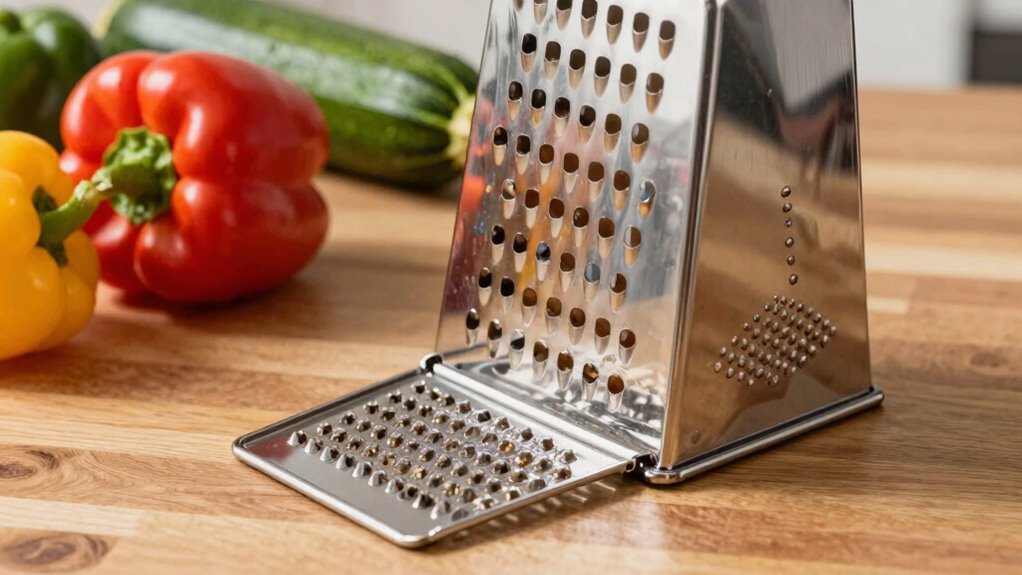
When it comes to meal prep, choosing the right tools can substantially impact your efficiency, but there’s often a trade-off between speed and quality. This is especially true when selecting cheese shredders and vegetable cutters. You have to decide between manual versus electric options, knowing that each comes with its own set of advantages and safety considerations. Manual tools are straightforward, lightweight, and often more affordable. They give you control over the process, allowing you to adjust the pressure and speed at your own pace. However, they can be labor-intensive, especially when shredding large quantities, leading to fatigue and longer prep times. On the other hand, electric tools dramatically cut down your prep time. With a simple push of a button, you can shred cheese or chop vegetables in seconds, making them ideal for bulk prep or busy days. But electric devices tend to be heavier, more expensive, and require electricity, which limits their portability. Also, safety considerations are crucial here. Manual tools generally have fewer moving parts and pose less risk of injury, provided you handle them carefully and keep fingers clear of blades. Electric models, however, have powerful motors and sharp blades that can cause injuries if mishandled or used improperly. You need to pay close attention to safety features such as safety locks, blade guards, and automatic shut-offs to prevent accidents. Proper maintenance and cleaning are essential for both types, but electric tools demand extra caution due to their electrical components and more complex mechanisms. To ensure longevity and safe operation, understanding the proper cleaning and maintenance procedures for each type is vital. When choosing between manual versus electric, think about your typical prep volume and how much time you want to save. If you’re only doing small amounts occasionally, a manual shredder or cutter might be sufficient and safer. But if you regularly prepare large meals, investing in an electric model could significantly boost your efficiency, despite the initial cost and safety considerations. It’s also worth noting that manual tools often give you more precision and control, which can be important for certain textures or fine shredding. Electric options tend to deliver uniform results quickly, but you might sacrifice some finesse. Additionally, ergonomics and ease of use can significantly influence your overall experience with these tools, especially if you have any physical limitations or preferences. Ultimately, the right choice hinges on balancing your need for speed against safety and control. Prioritize safety by reading all instructions carefully and using the tools as intended, whether manual or electric. By understanding these prep speed trade-offs, you can select the tools that best fit your cooking style, ensuring your meal prep is both fast and safe.
Products Worth Considering

Ninja Artisan 5-in-1 Portable Electric Pizza Oven, Blue & Gold

Instant Pot Pro 8 Qt 10-in-1 Electric Pressure Cooker, Black

Le Creuset Signature 6.5-Quart Deep Round Dutch Oven with Light Gold Crucible Knob, Enameled Cast Iron, Bleu Riviera
As an affiliate, we earn on qualifying purchases.
Frequently Asked Questions
Which Tool Is Safer for Beginner Cooks?
You’ll find that vegetable cutters are generally safer for beginner cooks due to their safety features, like enclosed blades and non-slip bases, which enhance user experience. Cheese shredders, especially handheld ones, can be riskier because they expose blades, increasing the chance of slips or cuts. For a safer experience, choose a vegetable cutter with safety features, as it reduces the risk of accidents and makes prep simpler for beginners.
How Do Cleaning Requirements Differ Between Tools?
You’ll find that cleaning requirements differ quite a bit between cheese shredders and vegetable cutters. With cheese shredders, you need to focus on residue removal, especially from the small blades, and clean them after each use to prevent cheese buildup. Vegetable cutters often require more frequent maintenance to remove vegetable fibers and avoid clogging. Regularly washing and inspecting both tools helps maintain their sharpness and safety, ensuring they stay in good condition.
Are There Specific Cheeses Better Suited for Shredders?
Certain cheeses elevate shredding efficiency, making your prep smoother. Hard cheeses like Parmesan, aged Cheddar, and Pecorino are ideal, as they shred effortlessly without clogging the blades. Soft cheeses, such as Brie or Ricotta, tend to be more challenging, often sticking or clogging the shredder. The choice of cheese impacts not only shredding ease but also the quality of your final dish, so select wisely for the perfect texture and taste.
Can Vegetable Cutters Handle All Types of Vegetables?
Vegetable cutters can handle many vegetables, but their versatility depends on the cutter’s design and blade types. For a wide vegetable variety, choose a cutter with multiple attachments or blades, ensuring it can tackle everything from soft tomatoes to tough carrots. While some cutters excel at certain tasks, others offer better versatility. Assess your needs and select a model that provides the cutter versatility required for your favorite vegetables.
What Are the Storage Considerations for Each Tool?
Storing shreds and slicers demands diligent dedication. A compact design cuts clutter, conserving precious space, while ensuring your tools stay organized. Consider designated drawers or hangers for cheese shredders and vegetable cutters, allowing easy access and quick cleanup. Keep blades dry and protected from moisture, preventing rust. When not in use, tuck tools into tidy storage spots, making your kitchen efficient and clutter-free, ready for your next culinary creation.
Conclusion
Ultimately, mastering the match-up between cheese shredders and vegetable cutters means you’re the maestro of meal prep. By balancing speed with skill, you can quickly craft creative, colorful cuisine without compromising quality. Remember, your choice of tools transforms tedious tasks into tasty triumphs. So, stay sharp, select smart, and savor your speedy, satisfying kitchen successes. With a little practice, you’ll perfect the prep process, producing plenty of plates in a flash!