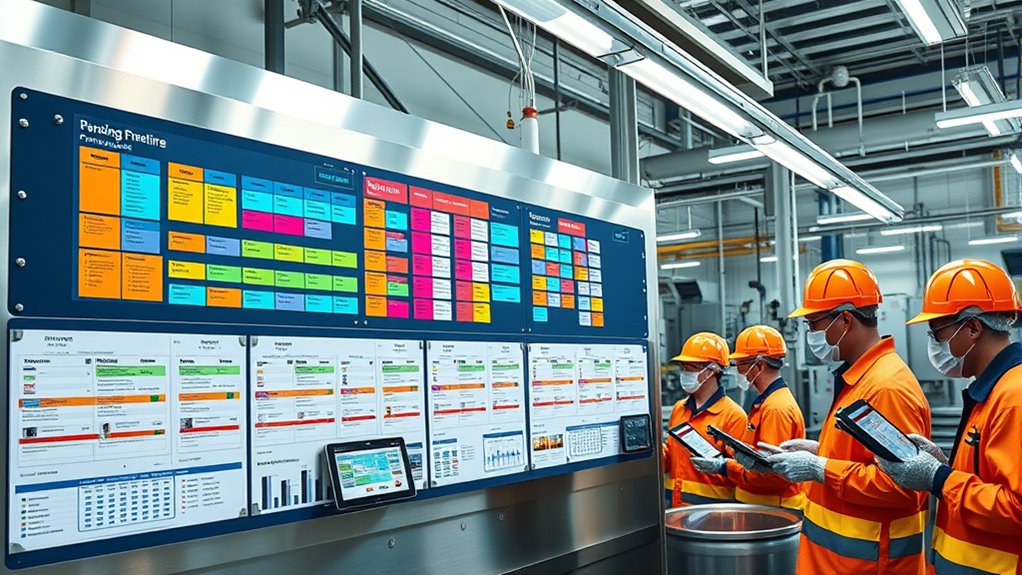

Prep list management using par-based production planning helps you stay organized and makes certain you have the right amount of inventory for each task. By tracking supplies accurately and automating updates, you can prioritize urgent steps, meet deadlines, and avoid delays caused by shortages or overstocking. Good automation also keeps your team aligned and allows quick adjustments when needed. Keep going to discover how to optimize your prep process for smoother, more efficient production.
Key Takeaways
- Par-based planning ensures inventory levels meet production demands, preventing shortages and overstocking.
- Automated prep lists dynamically adjust based on real-time inventory data and production schedules.
- Prioritizing tasks by par levels streamlines workflow and reduces delays in production.
- Real-time alerts for low inventory or overdue tasks facilitate proactive adjustments and resource allocation.
- Collaborative access to automated prep lists enhances communication, accountability, and flexibility within production teams.

Effective prep list management is essential for staying organized and ensuring tasks get completed on time. When you manage your prep list efficiently, you reduce the risk of forgetting critical steps and can keep production flowing smoothly. One of the key elements in this process is inventory tracking. By accurately monitoring your supplies and materials, you can prevent delays caused by shortages or overstocking. Keeping an up-to-date inventory allows you to prioritize tasks based on what’s available, ensuring that each step in your process is adequately prepared for. This not only saves time but also minimizes waste and unnecessary expenses. Incorporating Pimple Patch technology into your inventory can even streamline product management by highlighting best-sellers and popular items.
To streamline your prep list, consider leveraging process automation. Automating repetitive tasks, such as updating inventory levels or generating task assignments, helps you focus on more strategic activities. Automation tools can remind you of upcoming deadlines, reorder supplies before they run out, and update your prep list automatically as work progresses. This reduces manual errors and frees up your mental bandwidth, so you can concentrate on quality control and problem-solving. When your prep list is integrated with automated systems, it becomes a dynamic, real-time document that adapts to your workflow, rather than a static list that quickly becomes outdated.
Effective prep list management also involves establishing clear priorities and deadlines. By categorizing tasks based on urgency and importance, you ensure that critical steps are addressed first. When combined with inventory tracking, this helps you avoid bottlenecks caused by missing materials. Process automation further enhances this prioritization by alerting you when specific tasks are overdue or when inventory levels fall below a set threshold. As a result, you’re better equipped to allocate resources efficiently and keep your production schedule on track.
Another benefit of managing your prep list properly is improved communication within your team. When everyone has access to an up-to-date, automated prep list, misunderstandings decrease. Your team members know exactly what needs to be done, when, and with what materials. This clarity fosters collaboration and accountability, ensuring that tasks are completed as planned. It also allows for quick adjustments if unforeseen issues arise, such as supply delays or equipment failures, because your prep list reflects real-time data.
Frequently Asked Questions
How Does Par-Based Planning Adapt to Demand Fluctuations?
You adapt par-based planning to demand fluctuations by closely monitoring demand variability and adjusting stock levels accordingly. When demand spikes, you increase par levels to prevent stockouts, while during slow periods, you reduce them to avoid excess inventory. This dynamic approach guarantees your inventory stays balanced, allowing you to make timely stock adjustments that align with current demand, keeping operations efficient and responsive to changing market conditions.
What Are Common Challenges in Implementing Prep List Management?
Implementing prep list management can feel like taming a wild stallion, especially with training challenges. You might struggle with staff training, as employees resist change or lack familiarity with new systems. This resistance can slow down adoption and cause errors. To overcome this, you need patience and clear communication, guiding your team through the process like a seasoned rider, ensuring everyone understands their role in maintaining smooth, efficient production.
How Does Automation Impact Par-Based Production Scheduling?
Automation boosts efficiencies in par-based production scheduling by streamlining tasks and reducing manual errors. It enables you to quickly adjust par levels based on real-time data, ensuring ideal inventory. System integration allows seamless communication between your scheduling tools and other operational systems, providing a cohesive overview. This combination helps you respond faster to demand changes, minimize waste, and maintain smooth production flows, ultimately improving overall productivity and responsiveness.
What Industries Benefit Most From Prep List Management?
You benefit most from prep list management if you’re in retail optimization or healthcare logistics. While retail stores streamline inventory and reduce waste with precise par-based scheduling, healthcare facilities ensure timely supply of critical materials through efficient prep lists. This method balances demand with production, minimizing overstock and shortages. By automating and optimizing these processes, you can improve operational efficiency and responsiveness, essential in fast-paced retail environments and sensitive healthcare settings.
How Is Inventory Accuracy Maintained With Par-Based Systems?
You maintain inventory accuracy in par-based systems by closely monitoring inventory tracking and performing regular stock reconciliation. By consistently updating your records with real-time data, you guarantee stock levels reflect actual inventory. Frequent reconciliation helps you identify discrepancies early, preventing stockouts or overstocking. This approach keeps your inventory data reliable, supporting efficient production planning and reducing waste or delays caused by inaccurate stock information.
Conclusion
By mastering par-based production planning, you’ll find that your prep list management aligns almost by chance with your needs. It’s like the system anticipates your workflow, making adjustments seamlessly when unexpected demands arise. When your prep list adapts effortlessly, it feels less like work and more like a natural rhythm. So, embrace this approach, and you might just discover that efficient production planning isn’t a coincidence—it’s a well-orchestrated dance you’ve learned to lead.