
Restaurant phone etiquette affects reservations, takeout orders, guest questions, and the first impression a caller gets before arriving. I compared these three resources for how directly their advice can help a restaurant team speak clearly, listen carefully, and handle calls with courtesy. Telephone Customer Service: 20 Proven Tips is my closest fit for frontline staff because it centers on customer-service situations. Telephone Etiquette: Sending and Receiving the Right Message suits managers who want a more structured professional-skills course, while Phone Etiquette: Skills, Principles, and Practice in Daily Life is the approachable starting point for general mobile and phone manners.

Get kitchen staples and gadgets delivered free with Prime
- Fast, free delivery on millions of items
- Prime Video, Amazon Music and more included
- Member-only deals all year
The tradeoff is focus: restaurant-specific scripts and operating procedures are not described for any of the three, so buyers will need to adapt the guidance to their menu, reservation policy, and service standards. I rank the customer-service guide first for practical call handling, the course second for broader speaking-and-listening development, and the everyday guide third as an accessible foundation. Choose by the calls your team handles most, not by assuming any one resource replaces staff practice.
Key Takeaways
- Closest match for restaurant-facing calls: Telephone Customer Service focuses on concise, practical advice for customer-service situations, though teams must adapt it to reservations and orders.
- Best for structured professional development: Telephone Etiquette is an online course covering both sending and receiving messages, but it requires self-direction and offers limited interactive feedback.
- Best starting point for basic manners: Phone Etiquette uses accessible principles and relatable examples, yet may not offer enough depth for experienced staff.
- None is a restaurant operations manual: The supplied descriptions do not promise restaurant-specific scripts, reservation procedures, or escalation policies.
- Pair reading or training with practice: Teams should rehearse greeting callers, confirming details, placing people on hold politely, and closing calls warmly.
| Telephone Customer Service: 20 Proven Tips for Professional Phone Etiquette |  | Best Overall for Restaurant Customer-Service Calls | Format: Guide | Focus: Professional telephone etiquette | Approach: Twenty actionable tips | VIEW ON AMAZON | See Our Full Breakdown |
| Telephone Etiquette: Sending and Receiving the Right Message – A Soft Skills Training Course | 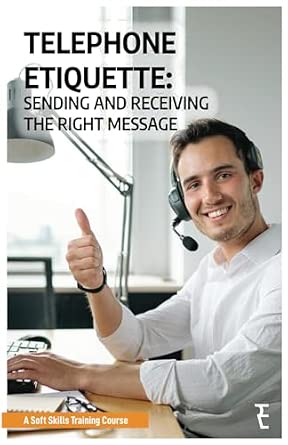 | Best for Structured Professional Training | Product type: Online training course | Subject: Soft skills and communication | Format: Self-paced online learning | VIEW ON AMAZON | See Our Full Breakdown |
| Phone Etiquette: Skills, Principles, and Practice in Daily Life – A Simple Guide to Polite Communication and Modern Mobile Manners |  | Best for Beginners Building Everyday Phone Manners | Format: Simple guide | Focus: Everyday phone etiquette | Communication scope: Traditional and modern mobile scenarios | VIEW ON AMAZON | See Our Full Breakdown |
| practices for restaurant phone etiquette | Format | Restaurant-specific coverage | Focus | Approach |
|---|---|---|---|---|
| Telephone Customer Service: 20 | Guide | Not stated in the supplied description | Professional telephone etiquette | Twenty actionable tips |
| Telephone Etiquette: Sending a | Self-paced online learning | Not stated in the supplied description | — | — |
| Phone Etiquette: Skills | Simple guide | Not stated in the supplied description | Everyday phone etiquette | Principles with real-world examples |
More Details on Our Top Picks
Telephone Customer Service: 20 Proven Tips for Professional Phone Etiquette
This is my first pick for restaurant teams because its stated emphasis is customer-service situations and concise, actionable advice. That focus maps more closely to a host or counter worker answering a reservation question, clarifying a takeout request, or responding politely when a guest is unhappy than a general guide to mobile manners does. Its twenty tips also suggest a format that could be easier to discuss in short staff huddles than a broad course.
Compared with Telephone Etiquette: Sending and Receiving the Right Message, this guide appears more directly oriented toward day-to-day service interactions, while the course offers a more explicit training format and attention to both speaking and listening. Compared with Phone Etiquette: Skills, Principles, and Practice in Daily Life, it narrows the focus to professional calls rather than covering everyday communication more broadly. That makes it the strongest fit here for frontline restaurant work, but the description does not say its examples are restaurant-specific.
The limitation is its narrow scope: it focuses on telephone etiquette rather than broader communication skills, and the supplied details do not confirm coverage of reservations, menu allergens, order verification, or complaint policies. I would use it as a source of call-handling prompts, then write restaurant-specific scripts and practice them with the team. It offers the clearest service-oriented starting point, not a complete staff-training system.
Pros:- Customer-service focus aligns with guest-facing restaurant calls.
- Twenty concise tips offer a clear structure for team discussion.
- Practical scenarios are described as relevant to professional service.
- Advice is framed for immediate application to phone interactions.
Cons:- The supplied description does not confirm restaurant-specific examples or scripts.
- Its focus is limited to telephone etiquette rather than wider communication skills.
Best for: Restaurant hosts, takeout staff, and customer-service teams seeking concise professional phone tips they can adapt to guest calls.
Not ideal for: Managers who need a restaurant-specific operations manual, extensive communication training, or documented interactive coaching.
- Format:Guide
- Focus:Professional telephone etiquette
- Approach:Twenty actionable tips
- Primary audience:Customer-service teams and sales professionals
- Scenario emphasis:Common customer-service situations
- Skill themes:Confidence, clarity, and courtesy
- Restaurant-specific coverage:Not stated in the supplied description
Our verdict“I rank this first for restaurant teams because its customer-service focus is the closest match to daily guest calls, provided managers add restaurant-specific procedures.”
Telephone Etiquette: Sending and Receiving the Right Message – A Soft Skills Training Course
This option stands apart because it is an online soft-skills course, not simply a guide. Its stated coverage of both sending and receiving messages gives managers a useful frame for teaching staff to speak clearly and listen for details. In a restaurant, that can support habits such as repeating a reservation time, confirming a pickup name, or accurately passing a caller’s message to the right person. Those examples are applications of the course’s stated skills, not confirmed course modules.
Compared with Telephone Customer Service: 20 Proven Tips, this course seems better suited to planned professional development than quick reference during a shift. The customer-service guide is the more direct match for frontline scenarios and may be easier to introduce in a short team meeting. Compared with the everyday manners guide, this course places more emphasis on business relationships and structured skill development, which can suit a manager coaching a team rather than an individual seeking basic phone habits.
The tradeoff is that self-paced learning depends on each learner’s follow-through, and the supplied description notes limited interactive feedback compared with live workshops. A restaurant that needs employees to demonstrate a consistent greeting or reservation workflow will still need role-play, feedback, and written standards. This is the strongest training-format choice, but less convenient than a concise tip guide when the immediate need is a quick staff reference.
Pros:- Online, self-paced format allows learners to work around shifts.
- Covers both sending and receiving messages.
- Focuses on professional communication and business relationships.
- Can support a planned staff-development program.
Cons:- Offers limited interactive feedback compared with a live workshop.
- Learners need self-discipline to complete the course.
- The supplied details do not identify restaurant-specific lessons.
Best for: Restaurant managers or team leads who want self-paced professional phone-skills development covering both speaking and listening.
Not ideal for: Teams that need live coaching, immediate shift-ready scripts, or a short reference with little independent study.
- Product type:Online training course
- Subject:Soft skills and communication
- Format:Self-paced online learning
- Communication focus:Sending and receiving messages
- Stated setting:Corporate and professional communication
- Feedback format:Limited interactive feedback compared with live workshops
- Restaurant-specific coverage:Not stated in the supplied description
Our verdict“I recommend this course for managers building a deliberate training routine, while teams needing fast customer-service tips may prefer the first-ranked guide.”
Phone Etiquette: Skills, Principles, and Practice in Daily Life – A Simple Guide to Polite Communication and Modern Mobile Manners
This guide earns its place as the beginner-friendly choice through its clear principles and relatable examples. It covers traditional and modern mobile communication, which can help newer staff think about courtesy, attention, and appropriate phone behavior before they apply those habits to guest calls. For a restaurant employee with little formal phone training, a simple introduction may be easier to absorb than a business course or a narrower set of professional customer-service tips.
Its breadth is also its main difference from the other two options. Telephone Customer Service: 20 Proven Tips is more directly aimed at professional service calls, so I would choose that first for hosts and takeout staff who already handle guests daily. Telephone Etiquette: Sending and Receiving the Right Message provides a more structured business-training format, making it a stronger fit for managers building a formal learning plan. This guide instead offers a general foundation that could support new hires or individuals who want to improve basic habits.
The limitation is depth and specificity. The product description warns that it may feel too basic to readers seeking advanced etiquette strategies, and it does not identify restaurant workflows or scripts. Managers should not treat general mobile manners as sufficient guidance for taking reservations, communicating wait times, or handling sensitive guest concerns. Use it to establish a polite baseline, then supplement it with restaurant procedures and coached practice.
Pros:- Clear, actionable principles suit beginners.
- Relatable examples make the material approachable.
- Covers traditional and modern mobile communication.
- Can serve as a basic etiquette foundation for new staff.
Cons:- May be too basic for readers seeking advanced strategies.
- The supplied description does not confirm restaurant-focused guidance.
- Broader everyday coverage may be less targeted to customer-service calls.
Best for: New restaurant employees or individuals who want an accessible introduction to polite phone use before learning workplace-specific procedures.
Not ideal for: Experienced staff or managers seeking advanced customer-service techniques, restaurant scripts, or a structured professional course.
- Format:Simple guide
- Focus:Everyday phone etiquette
- Communication scope:Traditional and modern mobile scenarios
- Approach:Principles with real-world examples
- Primary audience:Readers improving everyday communication habits
- Experience level:Beginner-friendly
- Restaurant-specific coverage:Not stated in the supplied description
Our verdict“I would choose this as an accessible first step for beginners, but experienced restaurant teams will get a closer fit from the customer-service guide.”

How We Picked
I ranked these options by their usefulness for the real demands of restaurant calls: welcoming a caller, identifying what they need, listening without rushing, communicating accurate information, and ending the exchange courteously. I gave the most weight to material described as practical and relevant to customer-service scenarios, because restaurant employees often need advice they can apply while taking reservations, answering menu questions, or relaying an order.
I also considered the format and likely audience. A concise guide can be easier to share with a small team, while an online course may support a more deliberate staff-development routine. General etiquette content can help newer employees build sound habits, but it ranks below customer-service-focused material when the goal is handling guest calls. The provided product information does not identify restaurant-specific coverage, detailed scripts, or evaluation tools, so I do not assume those are included. My order reflects stated focus, format, and practical fit, not claims of firsthand testing.
| practices for restaurant phone etiquette | Format | Focus | Approach | Primary audience |
|---|---|---|---|---|
| Telephone Customer Service: 20 | Guide | Professional telephone etiquette | Twenty actionable tips | Customer-service teams and sales professionals |
| Telephone Etiquette: Sending a | Self-paced online learning | — | — | — |
| Phone Etiquette: Skills | Simple guide | Everyday phone etiquette | Principles with real-world examples | Readers improving everyday communication habits |
Factors to Consider When Choosing Practices For Restaurant Phone Etiquette
Restaurant phone etiquette is less about sounding formal and more about making the call easy for the guest. I would use any of these products as a starting point, then match the guidance to the restaurant’s actual call volume, service style, and policies.
Match the resource to the calls your team handles
Start by listing the most common reasons people call: reservations, hours, menu details, takeout, delivery questions, directions, or a concern about a recent visit. The customer-service guide is the closest fit when staff need concise reminders for professional caller interactions. The online course is a better choice when the goal is a planned learning routine around speaking and listening. The everyday etiquette guide can help newer employees build basic courtesy, but it is less targeted to guest-service tasks.
Since none of the supplied descriptions promises restaurant-specific instructions, I would create a one-page companion sheet with approved answers, transfer steps, and details staff must verify. This keeps general advice from being mistaken for policy.
Prioritize listening and accurate confirmation
A pleasant greeting matters, but errors often happen when staff guess what they heard or rush to end the call. Teach employees to let the caller finish, ask a short clarifying question, and repeat important details such as names, times, party size, order items, pickup times, and callback numbers. The course’s stated focus on receiving messages makes it relevant to this skill, while the customer-service guide offers a more direct service-oriented frame.
For details that affect safety or service, staff should follow restaurant policy rather than rely on a general etiquette resource. The best phone manner combines warmth with accurate information.
Set standards for holds, transfers, and busy periods
Phone etiquette needs to hold up when the dining room is busy. Give staff a short approved phrase for asking permission to place a caller on hold, a realistic update interval, and a clear process for transferring calls. If the team cannot answer immediately, teach employees to acknowledge the caller, explain the next step, and avoid leaving the line silent without warning.
The customer-service guide’s concise tip structure may be useful for team reminders; the course may suit managers who can schedule learning time. Neither product description confirms a restaurant-specific busy-period workflow, so managers should write and rehearse one.
Choose a format staff can actually use
A short guide can be easier to revisit before or during a shift, while a self-paced course supports more deliberate study. A beginner-oriented guide may be approachable for new hires, but it may not challenge experienced employees. The right format depends on whether the problem is a lack of basic manners, uneven customer-service responses, or a need for structured skills development.
I would pair reading or coursework with brief role-play: one employee acts as the caller, another answers, and a supervisor gives specific feedback on clarity, pace, listening, and courtesy. That practice fills the feedback gap noted for the online course and turns general principles into consistent restaurant habits.
Check whether the guidance fits your service policy
Before adopting a recommendation, compare it with how your restaurant handles reservations, wait estimates, menu questions, accessibility requests, complaints, and order changes. A useful etiquette resource should help staff communicate your policy clearly; it should not replace the policy itself. For topics employees cannot answer confidently, define who to ask and how to take a message.
This matters especially when several employees answer the phone. Consistent wording can reduce confusion without making staff sound robotic. Keep scripts short, allow natural conversation, and refresh them when hours, menus, or procedures change.
Frequently Asked Questions
Which of these products is the best fit for restaurant phone etiquette?
I rank Telephone Customer Service: 20 Proven Tips for Professional Phone Etiquette first because its stated emphasis on customer-service situations most closely matches guest-facing calls. It is still not described as a restaurant-specific manual, so I would pair it with house procedures for reservations, orders, menu questions, and complaints.
Do any of these products include restaurant-specific scripts?
The supplied descriptions do not confirm restaurant-specific scripts for any of the three. They describe general phone etiquette, professional communication, or customer-service advice. I would prepare approved phrases for greetings, hold requests, transfers, reservation confirmations, and call closures as a separate restaurant resource.
Should I choose a guide or the online course for staff training?
Choose a guide if your team needs concise material that can support a quick discussion or serve as a basic reference. Choose Telephone Etiquette: Sending and Receiving the Right Message if you want self-paced learning with a broader professional-skills focus. Its limited interactive feedback means managers should add role-play and coaching rather than relying on course completion alone.
What phone habits should restaurant staff practice first?
I would begin with a warm, clear greeting; attentive listening; accurate repetition of names, times, and order details; and a courteous close that confirms the next step. Staff should also practice asking before placing callers on hold and explaining when they need to check with a colleague. Restaurant policy should guide answers about menu ingredients, availability, and service commitments.
Is the everyday phone-etiquette guide enough for an experienced restaurant team?
It may be a useful baseline, especially for new employees, but its description presents it as an accessible guide to everyday phone manners and warns that it may be too basic for readers seeking advanced strategies. An experienced team is more likely to benefit from customer-service-focused material, coached practice, and written procedures tailored to its own calls.
Conclusion
For frontline hosts, counter staff, and takeout teams, I recommend Telephone Customer Service: 20 Proven Tips as the closest match to guest-facing calls. For managers planning self-paced professional development, the online course offers a more structured format and explicit speaking-and-listening focus, with role-play needed to make up for limited interaction. For new hires or individuals learning basic phone manners, the everyday etiquette guide is the gentlest starting point.
No option is presented as a complete restaurant phone manual. Whichever resource you choose, write down your service policies, train staff to confirm important details, and rehearse realistic calls. That combination gives employees a dependable way to sound courteous while protecting accuracy during busy shifts.
Columbus Day / Indigenous Peoples' Day Picks
long weekend sales
As an affiliate, we earn on qualifying purchases.