When choosing between QR codes, feedback cards, or email surveys for guest feedback, consider how each method fits your setting and goals. QR codes offer quick, contactless responses right on guests’ smartphones, making instant feedback easy. Physical cards are traditional and don’t depend on technology but may delay responses. Email surveys allow for detailed input after the stay. To optimize your approach and discover effective strategies, keep exploring the options available.
Key Takeaways
- QR codes offer quick, contactless feedback collection via smartphones, encouraging instant responses and real-time insights.
- Cards are traditional, simple, and do not require internet access but often result in delayed or incomplete responses.
- Email surveys enable detailed, thoughtful feedback post-stay but depend on guest contact information and participation.
- Combining QR codes, cards, and email surveys maximizes response rates and balances immediate and comprehensive guest insights.
- Each method varies in privacy considerations, digital engagement, and response quality, influencing overall feedback effectiveness.
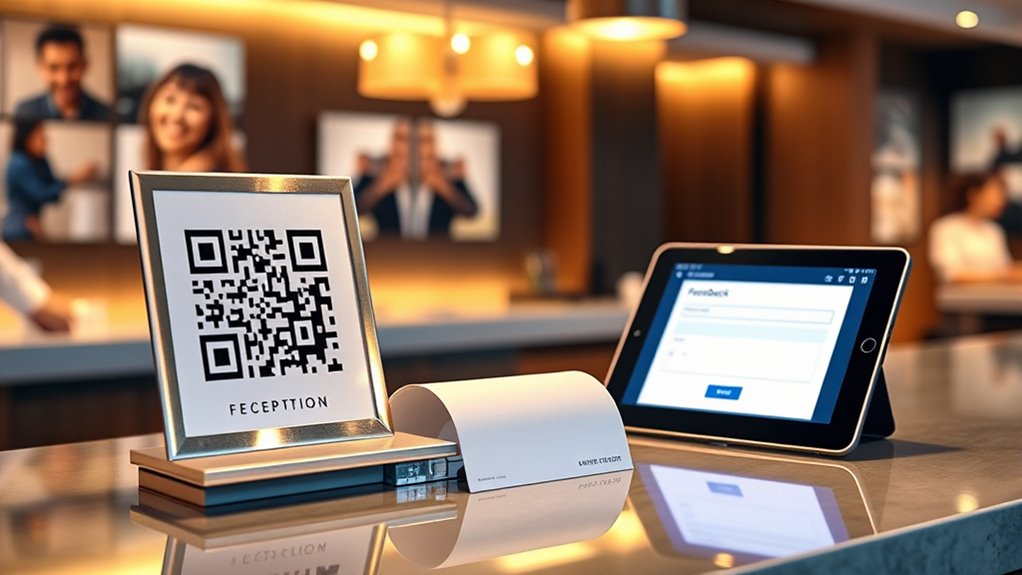
Gathering guest feedback is essential for improving your service, but choosing the right method can make a big difference. With so many options available, like QR codes, cards, and email surveys, it’s important to consider how each method fosters digital engagement while respecting data privacy. Your goal is to gather honest, actionable insights without making guests feel uncomfortable or overwhelmed.
QR codes are increasingly popular because they streamline the feedback process. Guests can simply scan a code with their smartphones, instantly accessing a survey or feedback form. This method encourages quick, on-the-spot responses, boosting your chances of capturing fresh impressions. Plus, QR codes support digital engagement by making feedback effortless and contactless—especially important in today’s health-conscious environment. However, you’ll need to ensure that the digital platforms behind your QR codes are secure and compliant with data privacy standards. Guests are more likely to provide honest feedback if they trust that their information is protected, so transparency about data handling is crucial.
Cards offer a more traditional approach, often handed out at check-in or placed on tables. They’re easy to distribute and don’t require guests to have smartphones or internet access, which can be advantageous in certain settings. However, collecting feedback via cards can be less efficient, as responses might be delayed or incomplete. Cards also pose challenges in data collection and analysis, making it harder to track trends over time. From a privacy standpoint, you must be clear about how guest information will be used, especially if personal details are collected. Ensuring confidentiality and providing options for anonymous feedback can help build trust.
Email surveys strike a balance between convenience and depth. After a guest’s stay, you can send a personalized email requesting feedback. This method leverages digital engagement by allowing guests to respond at their convenience, often resulting in more thoughtful responses. Nonetheless, the effectiveness depends on your ability to reach guests and encourage participation. When using email, protecting guest data is vital; you need to comply with privacy regulations like GDPR or CCPA and clearly communicate how their data will be used. Offering options to opt-out or remain anonymous can also reassure guests that their privacy is a priority.
Ultimately, the best approach depends on your audience and operational context. Combining methods—such as QR codes for immediate feedback and email surveys for detailed insights—can maximize engagement while safeguarding data privacy. By thoughtfully choosing your feedback channels, you not only gather valuable insights but also demonstrate your commitment to respecting guest privacy and fostering digital engagement.
Frequently Asked Questions
How Do Guest Demographics Influence Feedback Method Effectiveness?
Your guest demographics markedly influence feedback method effectiveness. You’ll find that demographic preferences and cultural influences guide how guests respond. For example, tech-savvy younger guests prefer QR codes for quick feedback, while older guests might favor traditional cards or email. By understanding these differences, you can tailor your approach, ensuring higher engagement and more valuable insights, ultimately improving your guest experience and satisfaction across diverse demographic groups.
What Are the Security Concerns With QR Code Feedback?
You should be aware that QR code feedback poses security concerns like data breaches and fraud. To protect guest information, implement data encryption to secure transmitted data. Additionally, use fraud prevention measures such as verification checks and secure links to prevent malicious activities. Ensuring these security practices helps maintain guest trust and safeguards sensitive feedback, reducing the risk of unauthorized access or data misuse through QR code systems.
How Can Businesses Measure Response Rate Accuracy?
You can measure response rate accuracy by analyzing feedback metrics and response tracking methods. Use unique identifiers or timestamps to distinguish genuine responses from duplicates or spam. Regularly review your data for inconsistencies and cross-reference responses with other engagement metrics. Implement automated tools to monitor response patterns, ensuring your feedback metrics truly reflect guest interactions. This approach helps you identify trends and improve the reliability of your feedback collection process.
Are There Industry-Specific Preferences for Feedback Methods?
Imagine steering a maze where industry preferences and regional differences are your guiding stars. You’ll find that hospitality favors QR codes for quick, contactless feedback, while retail leans on cards to keep things personal. Regional differences influence choices too—some areas prefer email for convenience, others favor in-person methods. By tuning into these subtle currents, you can craft feedback strategies that resonate deeply with your specific industry and locale.
What Are Best Practices for Integrating All Three Feedback Options?
You should digitally integrate QR codes, cards, and email options to enhance user experience and gather all-encompassing feedback. Place QR codes prominently, include clear instructions on cards, and send follow-up emails promptly. Make the process seamless by ensuring all methods direct guests to a consistent feedback platform. Regularly analyze the data from each method, optimizing your approach to maximize engagement and insights across all channels.
Conclusion
So, after all this, it’s amusing how we chase the latest tech to gather guest feedback, thinking it’s savvier than a simple card or email. Ironically, the most “innovative” method might just be the one that feels most familiar. Whether QR codes, cards, or emails, it’s your guests’ honesty that truly matters—regardless of the technology. Sometimes, the simplest approach still wins, proving that in the quest for feedback, old tricks can be the most insightful.