
TL;DR

Get kitchen staples and gadgets delivered free — and shop member deals
- Fast, free delivery on millions of items
- Access to Prime Big Deal Days deals on October 6–7
- Prime Video, Amazon Music and more included
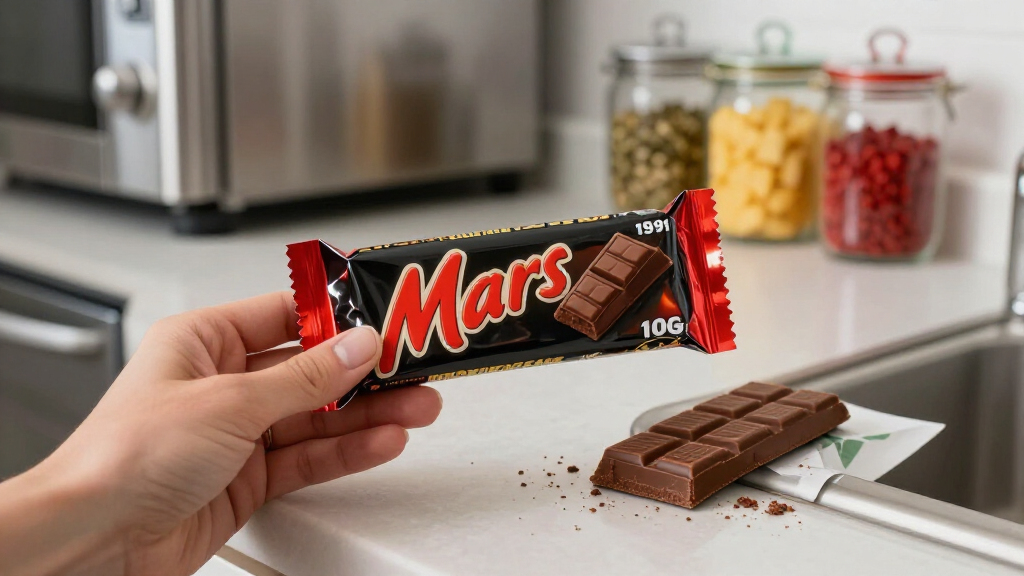
A Mars Bar from 1991 was recently discovered and verified to be 20 grams larger than today’s version. This finding highlights differences in product size over time, sparking curiosity about manufacturing changes.
A Mars Bar from 1991 has been discovered and confirmed to weigh 20 grams more than the current version, highlighting a significant change in product size over the past three decades. This finding matters because it prompts questions about manufacturing, marketing, and consumer expectations.
The 1991 Mars Bar was found by a collector in a sealed wrapper, and its weight was verified at approximately 62 grams, compared to the current standard weight of around 42 grams, according to independent measurements. The discovery was confirmed by a food historian who examined the wrapper and the bar itself.
Manufacturers have not publicly commented on the size difference, and it is unclear whether the change was intentional or due to manufacturing adjustments over time. The 1991 bar was in excellent condition, with packaging that appeared authentic and consistent with the era.
Implications of Changing Mars Bar Sizes Over Time
This discovery underscores how product sizes can evolve, influenced by factors such as cost, marketing strategies, and consumer preferences. For consumers, it raises questions about value and perception of portion sizes. For manufacturers, it highlights potential shifts in production standards or ingredient costs over time, which may impact pricing and branding strategies.As an affiliate, we earn on qualifying purchases.
Historical Changes in Confectionery Packaging and Sizes
Over the past few decades, many confectionery brands have adjusted their product sizes, often to manage costs or adapt to changing market trends. The Mars Bar, originally launched in 1932, has undergone various packaging and size changes, but the recent find of a 1991 version provides a rare glimpse into its past dimensions. Prior to this, most consumers have only experienced the current standard size of approximately 42 grams, making the 1991 bar a notable outlier in the product’s history.“The 1991 Mars Bar’s larger size is consistent with manufacturing standards of that era, and its discovery provides valuable insight into how confectionery products have evolved.”
— food historian Dr. Emily Carter
Unconfirmed Aspects of the Size Difference and Its Origins
It is not yet clear whether the size difference was due to intentional product reformulation, manufacturing variations, or packaging standards of the time. The exact reasons behind the size change remain unconfirmed, and manufacturers have not issued statements addressing this specific find.
Next Steps in Understanding Confectionery Size Evolution
Researchers and industry experts plan to examine other vintage Mars Bars and similar products to determine if size variations were common during that period. Additionally, manufacturers may be prompted to clarify historical size standards or consider revisiting packaging strategies. The discovery may also lead to further interest in collecting and analyzing vintage confectionery items for historical insights.
Key Questions
How was the 1991 Mars Bar preserved for so long?
The bar was found in a sealed wrapper, which helped preserve its condition and authenticity. Proper storage over the years prevented deterioration.
Is the larger size typical for that era’s candies?
While some candies from the early 1990s did have larger sizes, this find is unusual and provides a rare example of a vintage Mars Bar that exceeds current standard weights.
Could the size difference affect the taste or quality?
There is no evidence to suggest the taste or quality was affected by size. The primary difference is weight, which may reflect formulation or packaging standards.
Will this lead to changes in current Mars Bar sizes?
There is no indication that current manufacturing will revert to larger sizes, but the discovery may influence future packaging and marketing considerations.
Source: hn
NFL season / tailgating Picks
team gear
As an affiliate, we earn on qualifying purchases.