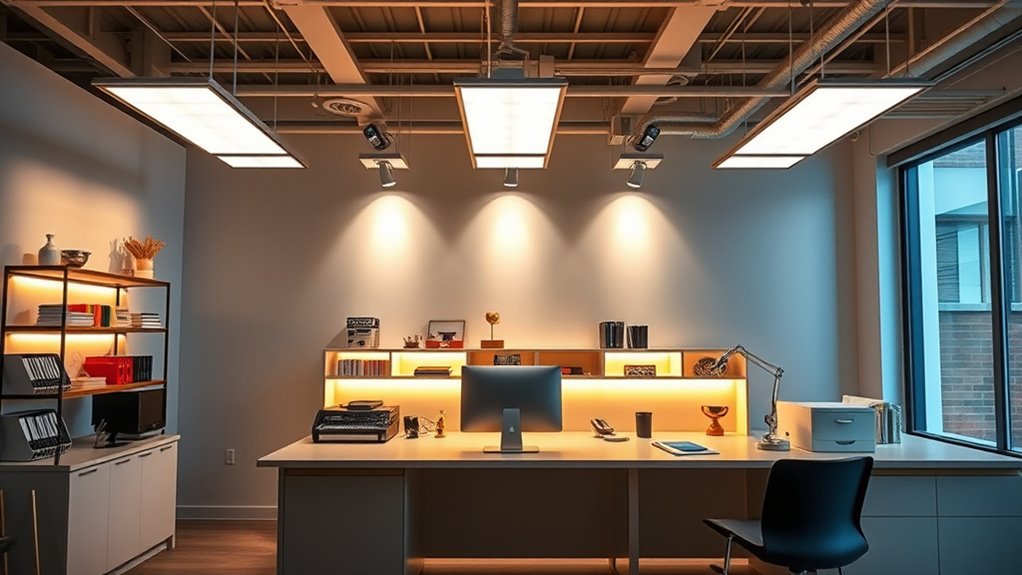

A well-designed lighting plan boosts your service speed by providing bright, even illumination that improves visibility and safety across all areas. It reduces missteps and errors, helping your team work more efficiently. Layered lighting, including ambient, task, and accent lights, ensures each zone is clearly lit for smooth operations. Incorporating smart controls like sensors and dimmers can further enhance energy use while maintaining ideal brightness—discover how these strategies can transform your space.
Key Takeaways
- Implement layered lighting (ambient, task, accent) to enhance visibility and reduce service delays.
- Use bright, well-distributed fixtures at key service points for quick and accurate customer interactions.
- Incorporate motion sensors and dimmers to adapt lighting levels based on activity, improving efficiency.
- Design pathways and workstations with proper illumination to ensure safety and swift movement.
- Utilize automated lighting controls to optimize brightness and reduce downtime during low-traffic periods.
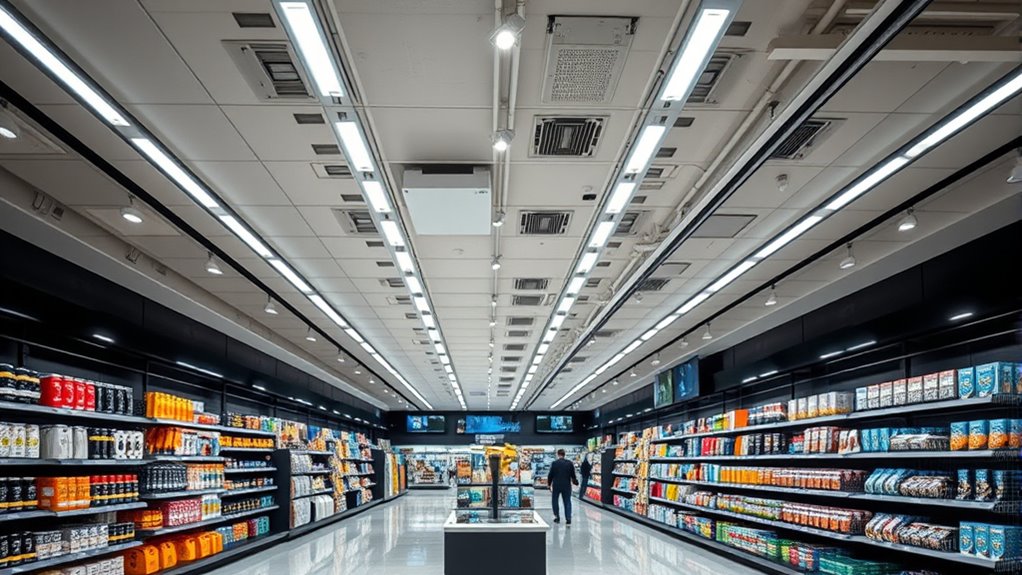
Have you ever wondered how the right lighting can transform a space? Proper lighting isn’t just about aesthetics; it plays an essential role in supporting service speed and overall efficiency. When designing a lighting plan, you need to focus on creating an environment that promotes quick, safe, and effective service delivery. Energy efficiency is a key component here, as it guarantees that your space remains cost-effective to operate while delivering ideal illumination. By choosing energy-efficient fixtures and bulbs, you reduce energy consumption, which not only lowers utility costs but also supports sustainability goals. This means you’re doing your part to minimize environmental impact while maintaining bright, reliable lighting that doesn’t hinder workflow. Studies show that well-planned lighting can significantly enhance safety and operational efficiency in various environments.
Proper lighting boosts efficiency, safety, and sustainability in your space.
Safety standards are equally critical in a lighting plan aimed at boosting service speed. Ensuring that your lighting setup complies with safety regulations minimizes risks of accidents and injuries. Properly lit pathways, workstations, and entry points help staff and customers navigate the space with confidence, reducing delays caused by confusion or hazards. Emergency lighting and backup systems should also be integrated seamlessly into your plan, so in case of power outages, service can continue without disruption. This focus on safety standards not only protects everyone in the space but also reassures clients and employees that their well-being is a priority.
Achieving an effective lighting plan requires a strategic approach. You should assess the specific needs of each area—whether it’s a checkout counter, storage room, or customer lounge—and tailor lighting levels accordingly. Bright, well-distributed lighting speeds up tasks by improving visibility, reducing errors, and minimizing the time spent searching for items or reading labels. Dim or uneven lighting, on the other hand, can slow down service and increase frustration. Incorporating layered lighting—combining ambient, task, and accent lighting—ensures that every zone is properly illuminated for its purpose, supporting quick and accurate service. Additionally, implementing lighting controls such as timers and sensors can optimize energy use and enhance safety further.
Furthermore, technology plays a significant role in enhancing your lighting plan. Motion sensors, dimmers, and automated controls allow you to adjust lighting dynamically based on activity, conserving energy when demand is low. These features help maintain safety and efficiency without unnecessary energy waste. When you prioritize energy efficiency and safety standards in your lighting plan, you create an environment that’s not only quicker to serve but also more sustainable and safer for everyone involved. This balanced approach ensures your space operates at peak performance, supporting your goals of delivering fast, reliable service with minimal complications.
Frequently Asked Questions
How Do Lighting Plans Impact Customer Wait Times?
Lighting plans greatly impact your customer wait times by enhancing ambient lighting and boosting aesthetic appeal. When you use well-designed lighting, it creates a welcoming atmosphere, making customers feel comfortable and confident in your service. Proper ambient enhancement ensures visibility and safety, reducing confusion and delays. As a result, customers experience faster service, shorter wait times, and an overall improved impression of your business, encouraging repeat visits.
What Lighting Levels Are Ideal for Quick Service?
You should aim for lighting levels around 200-300 lux in service areas to promote quick service. This range guarantees good visibility, helping staff work efficiently while maintaining energy efficiency. Also, consider the aesthetic appeal to create a welcoming environment, encouraging customers to stay comfortable and reducing perceived wait times. Proper lighting balances functionality and ambiance, ultimately speeding up service and enhancing overall customer experience.
How Can Lighting Reduce Staff Response Times?
You can reduce staff response times by implementing well-lit areas that enhance visibility and safety, encouraging faster movement and decision-making. Proper lighting also minimizes errors and confusion, allowing staff to work efficiently. Combine this with staff training on lighting use and energy efficiency practices to optimize response times further. Bright, strategically placed lighting not only speeds up service but also promotes a safer environment, boosting overall operational efficiency.
What Are the Best Lighting Practices for High-Traffic Areas?
To optimize high-traffic areas, you should use an ambient glow combined with focused task illumination. Make certain the lighting is bright enough to prevent shadows and reduce accidents while maintaining a comfortable atmosphere. Use even light distribution and avoid glare that can cause visual fatigue. Strategically position fixtures to illuminate paths and key touchpoints, making it easier for staff and visitors to navigate efficiently and respond quickly when needed.
How Does Lighting Influence Overall Customer Satisfaction?
Lighting acts like a welcoming smile, setting the tone for your customers’ experience. When you enhance the ambient lighting, it creates a warm, inviting atmosphere, boosting aesthetic appeal and making customers feel comfortable. Good lighting influences mood and perception, increasing satisfaction. By thoughtfully designing your lighting, you turn an ordinary space into an engaging environment, encouraging customers to linger longer and leave happier, knowing they’re in a space that’s both functional and visually pleasing.
Conclusion
By designing your lighting plans thoughtfully, you create a guiding star that leads customers smoothly through your space. When every light is purposefully placed, it’s like crafting a well-choreographed dance where each step flows seamlessly. Your lighting becomes the silent conductor, orchestrating service speed and customer satisfaction. In this symphony of illumination, clarity and efficiency shine brightest, turning everyday spaces into vibrant pathways where service moves effortlessly, lighting the way to success.