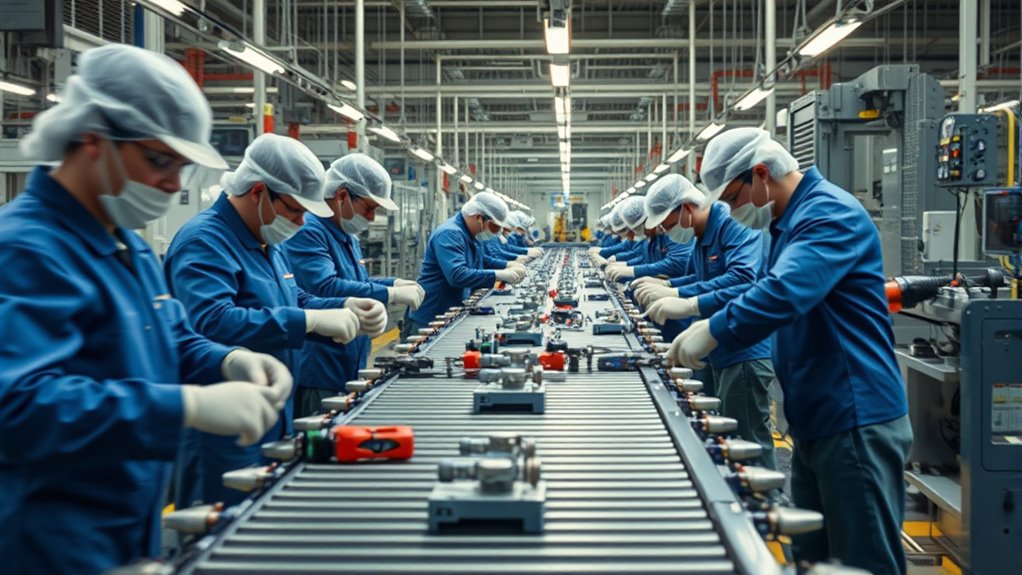

Time-and-motion studies analyze work processes on the assembly line to identify inefficiencies and optimize workflows. You’ll observe worker movements, break tasks into smaller actions, and measure timings to find delays and unnecessary motions. Advanced tools like high-speed cameras and sensors make this process more precise. By continuing, you’ll discover how new technologies and case studies have transformed process improvements and what future trends can further boost efficiency on the line.
Key Takeaways
- Time-and-motion studies analyze worker movements along assembly lines to identify inefficiencies and optimize workflow.
- They use tools like stopwatches, video recordings, and process charts to measure individual task durations and motions.
- The studies focus on reducing unnecessary movements, awkward postures, and duplicated efforts to improve productivity.
- Technological advancements such as motion capture and real-time data analysis enhance accuracy and speed of assessments.
- Implementing findings from these studies can reorganize workstation layouts and automate tasks to streamline line operations.
The Origins and Evolution of Time-and-Motion Studies
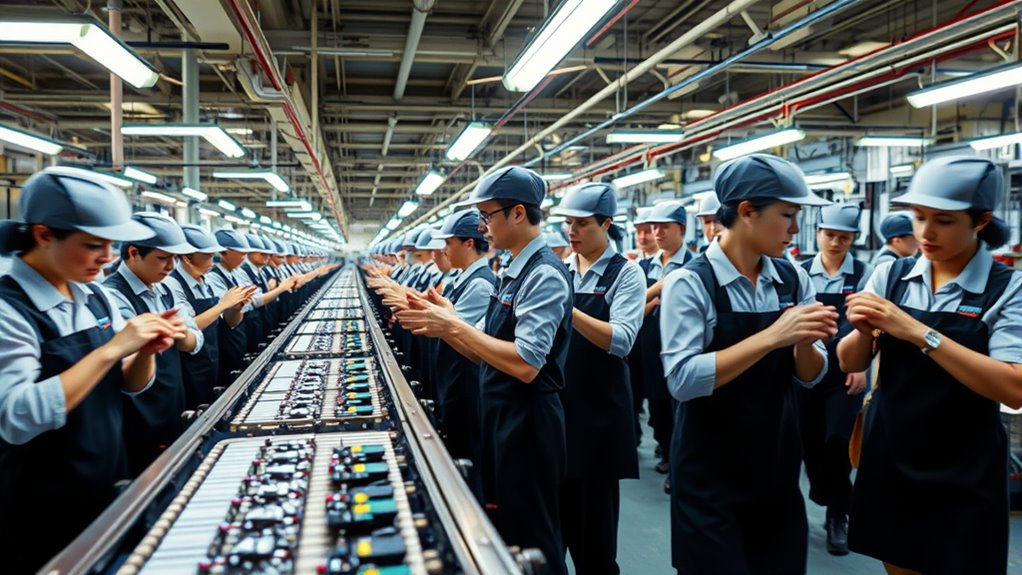
Time-and-motion studies originated in the early 20th century as a way to improve industrial efficiency. You might see these studies as a response to the rapid growth of factories and mass production. Pioneers like Frederick Taylor and Frank and Lillian Gilbreth developed methods to analyze work processes, aiming to eliminate waste and optimize worker productivity. Initially, these studies focused on breaking tasks into smaller segments, measuring how long each took, and identifying inefficiencies. Over time, the approach evolved from simple stopwatch timing to more sophisticated techniques, laying the groundwork for scientific management. These early efforts sparked a movement to standardize work procedures, making industries more systematic and productive. The use of essential oils for process improvement in modern industrial settings reflects an ongoing interest in optimizing environments and workflows. Their influence still shapes industrial practices today, emphasizing efficiency and process improvement.
Key Techniques and Methodologies
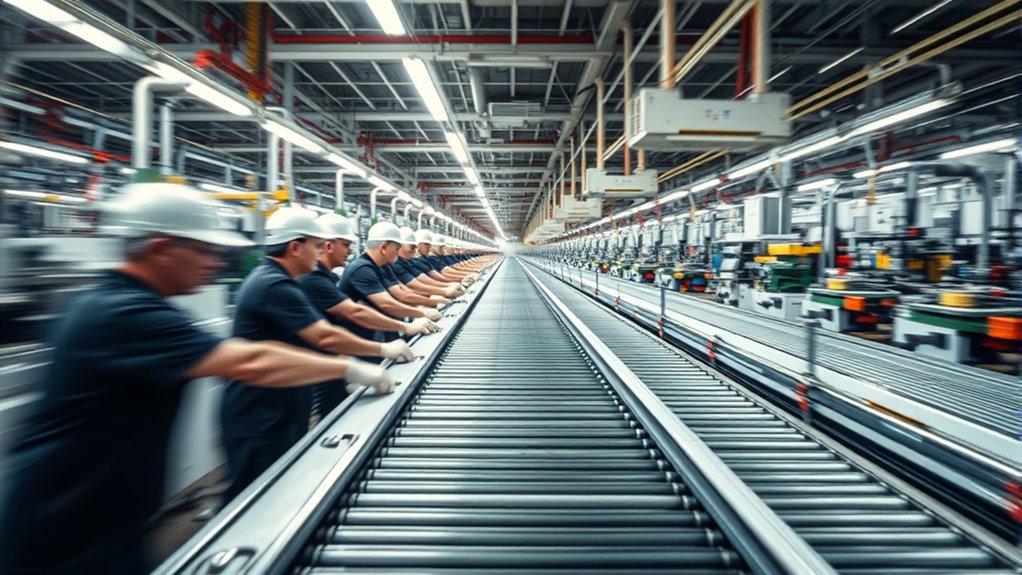
To analyze work processes effectively, you employ a variety of key techniques and methodologies that focus on precise measurement and systematic observation. One essential method is timing each task using a stopwatch or specialized timing devices, ensuring accurate data collection. You also break down tasks into smaller elements, observing each step carefully to identify inefficiencies. Video recording can supplement your observations, providing a visual record for detailed analysis. Additionally, you utilize process charts and flow diagrams to visualize workflows, making it easier to spot bottlenecks or redundancies. Standardized procedures and checklists help maintain consistency and accuracy across observations. Employing these quantitative analysis techniques allows for objective assessment of work methods, leading to targeted improvements in productivity and efficiency. By applying these techniques, you gather reliable data that forms the foundation for meaningful improvements in work methods and productivity.
Implementing Time Studies in Manufacturing
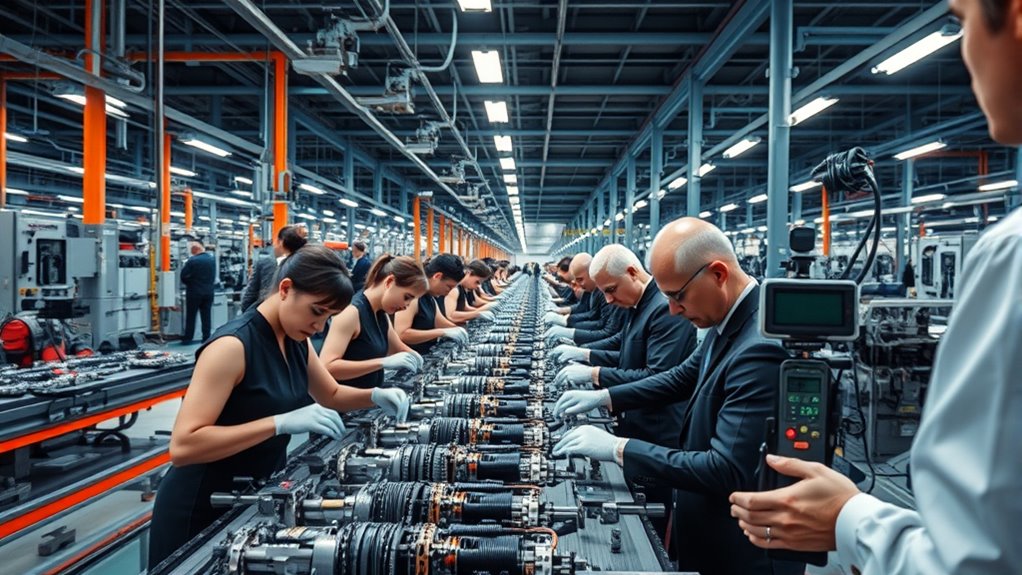
To effectively implement time studies in manufacturing, you need to start by clearly defining your study objectives. Then, focus on analyzing worker movements to identify inefficiencies and opportunities for improvement. This approach guarantees your time studies lead to actionable insights and increased productivity.
Setting Study Objectives
Have you ever wondered how to guarantee your time study yields meaningful insights? The key is setting clear, specific objectives before you begin. Decide what you want to learn—are you measuring task durations, identifying delays, or improving workflow? Clearly defining your goals helps you focus your observations and collect relevant data. Without precise objectives, you risk gathering unnecessary information or missing critical issues. Establish measurable targets, such as reducing cycle time by a certain percentage or pinpointing bottlenecks. Communicate these objectives to your team so everyone understands the purpose. Setting well-defined goals ensures your study stays on track, providing actionable insights that lead to effective improvements in your manufacturing process. Incorporating time‑and‑motion studies can further enhance your understanding of workflow efficiencies.
Analyzing Worker Movements
Ever wondered how observing worker movements can reveal inefficiencies in manufacturing? By carefully analyzing each step a worker takes, you identify unnecessary motions, delays, and bottlenecks. Watch how they reach for tools, move between stations, or handle materials. Are movements smooth or awkward? Are there wasted steps or excessive motions? Recording these details helps you pinpoint where time is lost. You can then suggest adjustments, like reorganizing workstations or automating repetitive tasks. This analysis isn’t about criticizing workers but about optimizing processes. When you understand exactly how tasks are performed, you can streamline workflows, reduce fatigue, and improve productivity. Time‑and‑motion studies provide valuable insights that can lead to significant improvements. Ultimately, analyzing worker movements allows you to make data-driven decisions that enhance efficiency and ensure smoother operations on the manufacturing floor.
Analyzing Worker Movements and Tasks

You can improve efficiency by identifying motions that waste time or effort. Look for unnecessary movements and see where tasks can be combined or rearranged. Simplifying these processes helps workers complete tasks faster and more smoothly. Incorporating best practices for workflow optimization ensures that all steps are streamlined for maximum productivity.
Identifying Inefficient Motions
To identify inefficient motions during work tasks, it’s essential to observe and analyze how workers move and perform their activities. Watch for unnecessary movements, such as reaching too far, bending repeatedly, or lifting objects inefficiently. Pay attention to motions that cause fatigue or delay, like excessive walking or duplicated steps. Look for signs of awkward postures or repetitive actions that don’t add value. Note any motions that seem excessive or redundant, which could be eliminated or combined. Focus on tasks where workers seem to exert more effort than necessary or take longer than expected. By pinpointing these inefficient movements, you can develop strategies to reduce waste, improve ergonomics, and streamline workflows—making work faster, safer, and less tiring. Additionally, understanding Beach Body principles can help in designing ergonomic solutions that promote healthier movement patterns.
Streamlining Task Sequences
Analyzing worker movements and tasks is essential for identifying opportunities to streamline workflows. By carefully observing each step, you can reorganize tasks to reduce unnecessary motions and delays. Focus on the sequence of activities to ensure a logical flow that minimizes backtracking or redundant actions. Consider grouping related tasks to improve efficiency and reduce fatigue. Use the table below to evaluate task durations, motions, and overlaps, helping you pinpoint where adjustments can make a difference: color accuracy directly impacts how well visual information is perceived and understood in the workflow.
Identifying Bottlenecks and Waste

Identifying bottlenecks and waste is essential for streamlining processes and improving efficiency. You start by observing each step closely, noting where delays or excessive movements occur. Look for tasks that slow down overall flow or cause pile-ups. Waste can appear as unnecessary motions, waiting times, or duplicated efforts. Use time measurements to pinpoint where time is lost and ask why these delays happen. Focus on areas where a single slow step hampers the entire process. Once identified, analyze whether these bottlenecks are due to equipment, layout, or procedures. Eliminating or reducing these inefficiencies frees up resources and speeds up production. Regularly reviewing processes helps you stay proactive in managing waste, ensuring continuous improvement and smoother operations. Incorporating performance upgrades into key areas can further enhance overall efficiency and output.
Technological Advancements in Motion Analysis
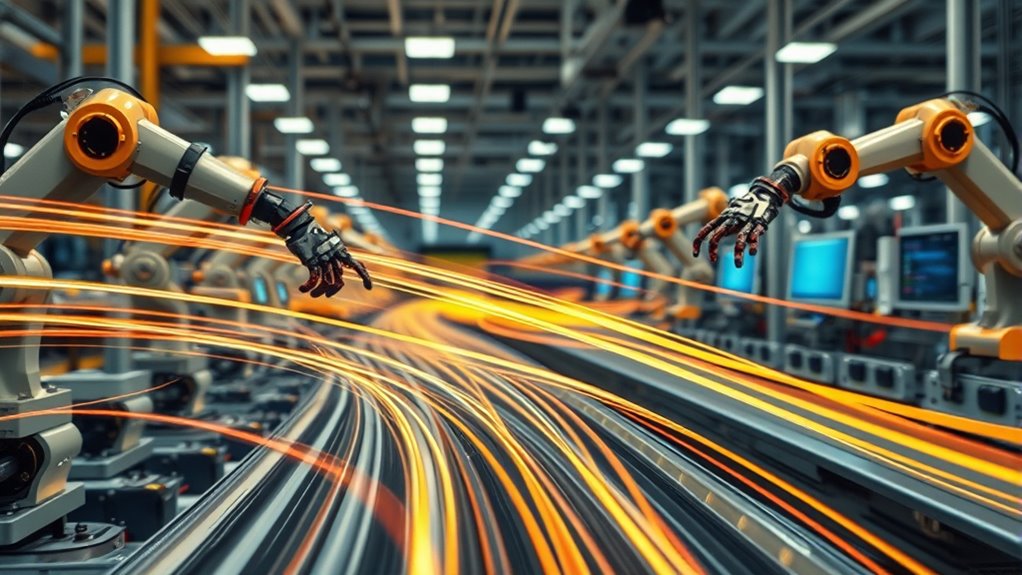
Advancements in technology have revolutionized how you assess motion within processes, providing more precise and efficient tools for analysis. High-speed cameras and motion capture systems now allow you to record movements in real-time with incredible detail. Wearable sensors and RFID tags enable you to track individual actions seamlessly, reducing manual measurement errors. Software algorithms analyze data instantly, highlighting inefficiencies and patterns you might miss otherwise. Virtual reality and 3D modeling offer immersive views of workflows, helping you identify bottlenecks more intuitively. These innovations minimize disruption during studies and increase accuracy, empowering you to make data-driven decisions faster. As technology continues to evolve, your ability to optimize processes through detailed motion analysis becomes more accessible, precise, and impactful. Incorporating advanced storage methods can further enhance the accuracy and reliability of collected data, ensuring long-term effectiveness of your analysis.
Case Studies: Improving Efficiency Through Time-and-Motion Studies

Many organizations have substantially boosted their efficiency by applying time-and-motion studies to real-world processes. For example, a manufacturing plant analyzed assembly line tasks and identified unnecessary movements that slowed production. By redesigning workstations and training employees on optimized motions, they reduced cycle times and increased output. Similarly, a warehouse improved its picking process by studying worker movements, leading to the reorganization of storage areas and the introduction of ergonomic tools. These changes cut down walking distances and motion fatigue, resulting in faster order fulfillment. In each case, detailed observations and measurements revealed inefficiencies, enabling targeted improvements. Additionally, applying privacy policies and managing cookies effectively can support data-driven process improvements while respecting user privacy. These success stories demonstrate how applying time-and-motion studies directly impacts productivity, minimizes waste, and enhances overall operational efficiency.
Future Trends in Process Optimization
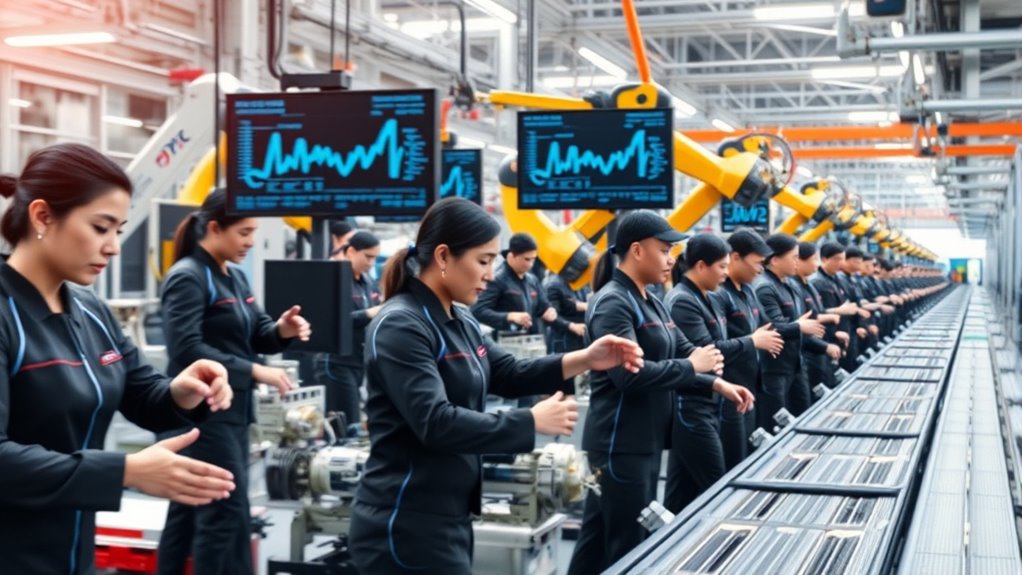
As technology continues to evolve, process optimization is increasingly driven by innovative tools like artificial intelligence, machine learning, and real-time data analytics. These advancements allow you to monitor workflows more precisely, identify inefficiencies instantly, and adapt processes on the fly. You’ll leverage predictive analytics to forecast bottlenecks before they occur, enabling proactive improvements. Automation will become more sophisticated, reducing manual interventions and freeing your team for higher-value tasks. Virtual and augmented reality may also play a role, offering immersive training and process simulations. As these trends develop, your ability to optimize operations will become faster, more accurate, and more dynamic. Embracing these innovations will give you a competitive edge, ensuring your processes stay efficient amid ever-changing demands.
Frequently Asked Questions
How Do Cultural Differences Impact Motion Study Effectiveness?
Cultural differences can considerably impact how effective motion studies are because they influence communication, work habits, and perceptions of efficiency. When you consider diverse cultural norms, you realize that what’s seen as productive in one culture might not be in another. This can lead to misunderstandings or resistance. To succeed, you need to adapt your approach, respecting these differences, and guarantee your methods align with the cultural context of your team.
What Ethical Considerations Arise During Worker Observation?
When you’re observing workers, ethical considerations focus on respecting their privacy and dignity. You should avoid intrusive monitoring that could cause discomfort or mistrust. Transparency is key—inform workers about the purpose of observation and how their data will be used. Ensuring confidentiality and obtaining consent helps maintain morale and trust. Remember, ethical practices protect workers’ rights and foster a positive environment during the observation process.
Can Time-And-Motion Studies Adapt to Modern Automation?
Imagine trying to fit a square peg into a round hole—that’s what adapting time-and-motion studies to automation feels like. You can tweak these studies to analyze robot efficiency or streamline digital workflows, but the core principles need updating for modern tech. You’ll find it’s about blending human insight with machine precision, ensuring productivity soars without losing sight of the worker’s role or ethical boundaries.
How Do Employee Reactions Influence Study Outcomes?
You might find that employee reactions considerably impact study outcomes because they can alter behavior, productivity, and engagement. When employees feel scrutinized or threatened, they may act differently, skewing the data. Conversely, positive reactions can lead to more genuine responses and accurate results. Recognizing these reactions helps you interpret data better and implement changes that genuinely improve efficiency without causing stress or resistance.
Are There Industry-Specific Challenges in Applying These Studies?
You face an almost impossible task when applying these studies across industries because each sector has unique challenges. Manufacturing might struggle with repetitive motions, while healthcare deals with complex, unpredictable tasks. You must adapt your approach to fit these industry-specific demands, or risk skewed results. Recognizing these challenges helps you refine your methods, ensuring more accurate timing and motion analysis tailored to each industry’s nuances.
Conclusion
By applying time-and-motion studies, you can boost productivity and reduce waste substantially. For example, studies have shown that implementing these methods can increase efficiency by up to 30%. Embracing technological advancements like motion analysis tools allows you to pinpoint bottlenecks swiftly. As you optimize workflows, you’ll not only improve output but also create safer, more satisfying work environments. So, harness these insights to stay competitive and drive continuous improvement in your operations.